
Legislature
Senate Tightens Grip on FinTech Sector, Probes CBEX, Other Ponzi Schemes

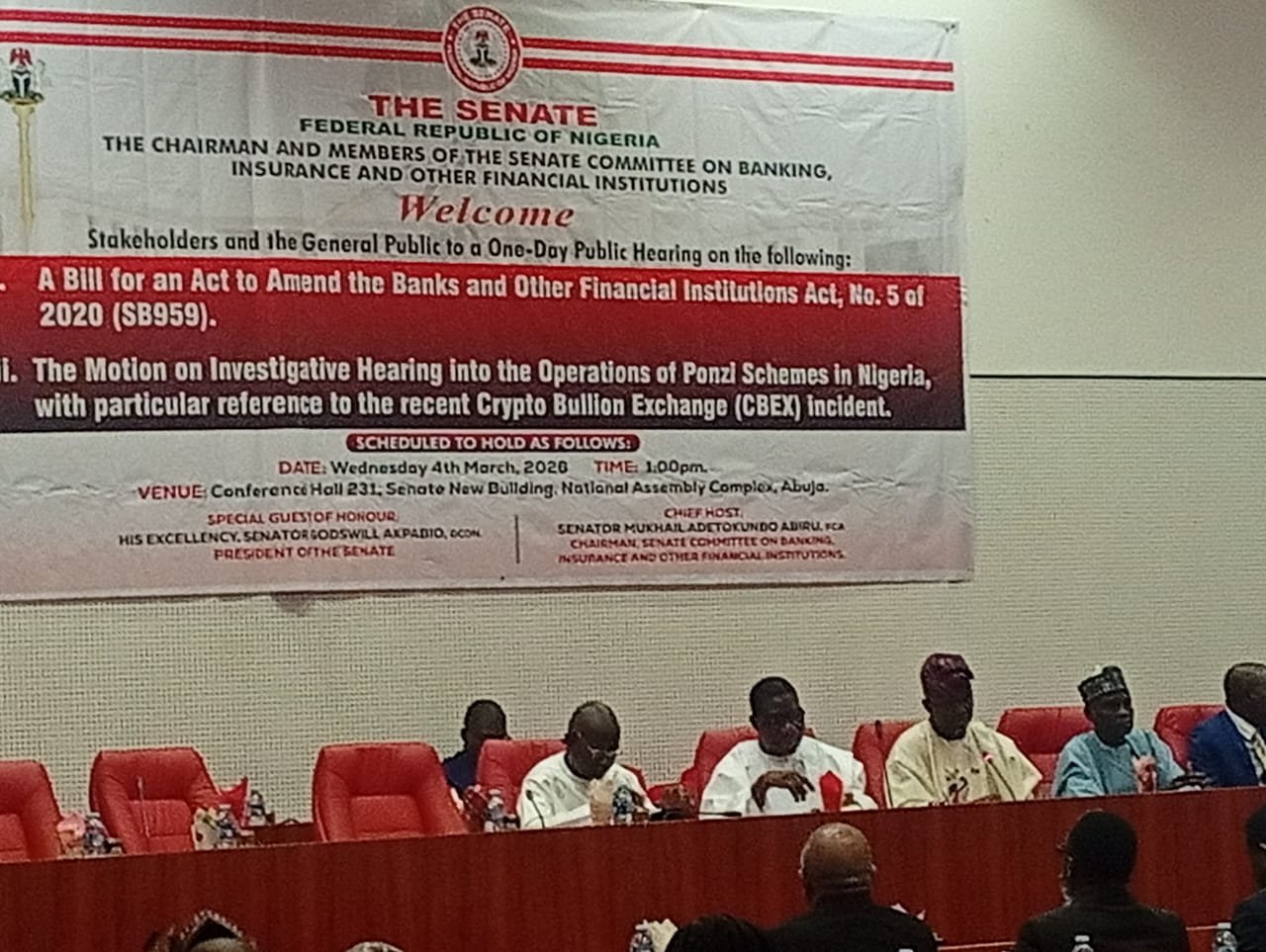
The Nigerian Senate has stepped up moves to fortify the country’s financial regulatory architecture, holding a public hearing on a proposed amendment to the Banks and Other Financial Institutions Act (BOFIA) and launching an investigation into the operations of Ponzi schemes across the country.
At the session, Senator Opeyemi Bamidele represented Senate President Godswill Akpabio, underscoring the upper chamber’s resolve to strengthen oversight of Nigeria’s fast-growing financial technology (FinTech) space.
The hearing examined a Bill for an Act to Amend BOFIA 2020 (SB959), alongside an investigative motion addressing the proliferation of fraudulent investment platforms, particularly the recent Crypto Bullion Exchange (CBEX) controversy.
In his remarks, Bamidele said the amendment is designed to enhance regulatory supervision of FinTech institutions, noting that the rapid expansion of digital finance requires stronger legal and institutional safeguards. He stressed that effective oversight is critical to protecting investors and maintaining systemic stability.
He added that the Senate intends to empower the Central Bank of Nigeria and other regulatory bodies with broader authority to monitor operators, enforce compliance, and close gaps that could expose the financial system to abuse.
On the issue of Ponzi schemes, lawmakers expressed concern over the growing number of Nigerians falling prey to fraudulent platforms promising unrealistic returns. They warned that persistent scams could weaken trust in the formal financial system, which thrives on credibility and transparency.
The Senate resolved to carry out a comprehensive probe into CBEX and similar schemes, with a view to curbing financial crimes, preventing money laundering, and shielding unsuspecting investors from further losses. It also called for stronger inter-agency collaboration and proactive enforcement measures.
Chairman of the Senate Committee on ICT and Cybersecurity, Shuaib Afolabi Salisu, commended FinTech operators for advancing financial inclusion and supporting economic growth. However, he urged them to reinforce internal compliance mechanisms and sustain constructive engagement with regulators to preserve public confidence.
Representatives of key institutions attended the hearing, including the Bank of Industry, Stanbic IBTC Bank, the Federal Inland Revenue Service, the Economic and Financial Crimes Commission, and the Federal Ministry of Industry, Trade and Investment.
The upper chamber directed the Central Bank of Nigeria, Moniepoint, the EFCC, and other relevant bodies to submit detailed memoranda within two weeks to support further legislative action.
Lawmakers concluded that tighter regulation, improved enforcement, and coordinated oversight are essential to sustaining confidence and stability in Nigeria’s rapidly evolving digital economy.