Business
TINUBU APPROVES FISCAL INCENTIVES TO UNLOCK $20 BILLION BONGA SOUTHWEST APARO DEEPWATER PROJECT
President Bola Ahmed Tinubu has approved a targeted fiscal incentive designed to unlock the long awaited Final Investment Decision (FID) on the Bonga Southwest Aparo (BSWA) deepwater project, marking a milestone in Nigeria’s ongoing drive to attract strategic investments and accelerate sustainable economic growth.
The project is estimated to attract about $20 billion in Foreign Direct Investment and position Nigeria for a new era of deepwater production.

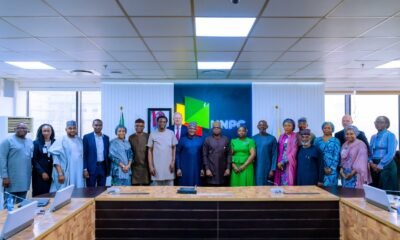
A statement signed by Chief Corporate Communications Officer, NNPC Limited, Andy Odeh, stated that the approval followed months of intensive technical and commercial negotiations involving NNPC Limited as the concessionaire, the Nigeria Revenue Service (NRS), the Special Adviser to the President on Energy, Olu Verheijen, and the Shell CEO Mr. Wael Sawan. It represents the culmination of the President’s directive, issued during a courtesy visit by Shell CEO, Mr. Wael Sawan, to fast-track the enablers required to move this strategic national asset to FID. It signals renewed confidence in Nigeria’s policy direction and its resolve to translate reform momentum into tangible investment outcomes.
Speaking on the development, the Group Chief Executive Officer of NNPC Limited, Engr. Bashir Bayo Ojulari, stated: “This approval is a testament to the President’s leadership, NNPC’s disciplined execution and our ability to structure complex, bankable transactions that deliver value for Nigeria. For nearly two decades, the Bonga Southwest project remained stalled. Today, under President Tinubu’s reform-driven leadership and through NNPC’s sustained advocacy, we have broken that logjam. This is what partnership, persistence, and policy clarity can achieve.”
Ojulari further stated, “This milestone further affirms NNPC’s commitment, under the President’s leadership, to unlocking Nigeria’s vast energy potential through partnerships, disciplined innovation and execution excellence”.
The Bonga Southwest project will be the first FID on a Nigeria deepwater Production Sharing Contract asset since 2008, re-establishing Nigeria as a premier deepwater investment destination. The fiscal package approved by President Tinubu includes an enhanced Production Tax Credit and resolution of the 2021 dispute settlement agreement, creating a competitive framework that balances national value with investor returns.
NNPC Limited, as concessionaire, worked closely with SNEPCo and the broader contractor party to develop alternative fiscal solutions that address structural constraints while protecting Nigeria’s long-term interests. The approval was granted following rigorous evaluation by the National Revenue Service and submission of recommendations to the Presidency.
This milestone reinforces NNPC’s strategic pivot toward partnership-driven growth. By aligning with global majors like Shell and securing the enabling fiscal environment, NNPC Ltd is translating the President’s investment reform agenda into tangible outcomes—jobs, revenues, and energy security for Nigerians.
With Presidential approval secured, NNPC Limited and its partners will now progress toward FID, triggering the multi-billion-dollar capital commitment that will transform Nigeria’s deepwater landscape and deliver enduring value to the nation.
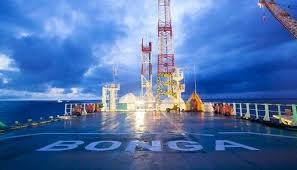
The Bonga Southwest Aparo project, operated by Shell with all IOCs in Nigeria as partners, will create over 5,000 direct and indirect jobs, and deliver 150,000 barrels per day of crude oil and 140 million standard cubic feet per day of gas upon completion.
Business
Nigerian Stock Market Falls 0.08% As Investors Lose N101bn
The Nigerian equities market returned to negative territory on Wednesday as investors lost about N101 billion following sell-offs in several major stocks after two straight sessions of gains.
Losses in key equities including Dangote Sugar Refinery Plc, Jaiz Bank Plc, Chemical and Allied Products Plc, Union Dicon Salt Plc and Haldane McCall Plc weighed on overall market performance.
At the close of trading on the Nigerian Exchange Limited, market capitalisation declined to N126.097 trillion from N126.198 trillion recorded in the previous session, representing a loss of N101 billion or 0.08 per cent.
Similarly, the All-Share Index (ASI) dropped by 158.74 points, or 0.08 per cent, to settle at 196,463.22 points, down from 196,621.96 points recorded on Tuesday. Despite the decline, the market maintained a year-to-date return of 26.25 per cent.
Market breadth closed negative as 37 stocks recorded losses compared to 22 gainers.
On the losers’ chart, Dangote Sugar Refinery Plc and Jaiz Bank Plc topped the list after each shed 10 per cent to close at N74.70 and N10.80 per share respectively.
Chemical and Allied Products Plc declined by 9.97 per cent to N84.85 per share, while Union Dicon Salt Plc dropped 9.94 per cent to N14.95. Haldane McCall Plc also fell by 9.89 per cent to close at N3.92 per share.
On the gainers’ side, Premier Paints Plc led the table with a 10 per cent increase to close at N12.10 per share. Fortis Global Insurance Plc rose by 9.73 per cent to N1.24, while UAC of Nigeria Plc gained 7.78 per cent to close at N115 per share.
Other notable gainers included Eterna Plc, which advanced by 6.38 per cent to N35, and Custodian Investment Plc, which added 6.06 per cent to close at N70 per share.
Trading activity weakened compared to the previous session. Total volume traded declined by eight per cent, while the value of transactions dropped by 14 per cent. The number of deals also fell by 18 per cent.
Investors exchanged 805.3 million shares worth N38.4 billion in 71,312 deals, compared with 880 million shares valued at N44.5 billion traded in 86,761 deals on Tuesday.
Veritas Kapital Assurance Plc recorded the highest trading volume with 56.42 million shares, accounting for 7.01 per cent of the total market turnover.
Meanwhile, MTN Nigeria Communications Plc led in transaction value with trades worth N7.08 billion, representing 18.42 per cent of the total value exchanged during the session.
Business
Starlink Reopens High-Cost Business Plan in Lagos, Abuja, Port Harcourt
Starlink, the satellite internet service owned by SpaceX, has reopened its Business (Priority) subscription plan in Lagos, Abuja and Port Harcourt after months of “Sold Out” notices in Nigeria’s major urban centres.
The reopening, which took effect on February 14, 2026, restores a previously suspended service tier that was paused alongside residential subscriptions as network congestion worsened in high-demand cities. The move does not introduce a new product but reactivates access to the premium package for customers willing to pay higher fees.
Under the Business plan, subscribers are required to pay ₦159,000 (about $99.38) monthly, excluding hardware costs that can exceed ₦4 million ($2,500). This places the package significantly above the residential plan, which currently costs ₦57,000 ($36) per month.
In several high-demand neighbourhoods such as Victoria Island, Ikoyi, Lekki and Surulere in Lagos, as well as parts of Abuja, new residential subscriptions remain unavailable. Prospective users in those areas are being prompted to either upgrade to the Priority plan or place deposits to join a waitlist without a definite activation date.
A review of multiple Lagos locations on Starlink’s website indicates that only Priority plans are currently accessible in many districts due to sustained demand pressures.
The development comes amid rising competition in Nigeria’s satellite broadband market. In January 2026, Amazon secured regulatory approval to operate its satellite internet service, Project Kuiper, in Nigeria—signalling intensifying rivalry in the sector.
Starlink’s capacity constraints in Nigeria, similar to challenges faced in Kenya, have been building since late 2024. After reaching capacity in major cities, the company became embroiled in a pricing dispute with the Nigerian Communications Commission over proposed tariff adjustments that had not received final regulatory clearance.
The disagreement contributed to an eight-month nationwide freeze on new residential subscriptions between November 2024 and June 2025. Although residential orders resumed in mid-2025 at moderated rates, demand in densely populated areas has continued to outpace available bandwidth, leaving several parts of Lagos and Abuja effectively closed to new home users since September 2025.
The Business plan offers either 1TB or 2TB of Priority Data monthly, after which speeds may be deprioritised, though data usage remains technically unlimited. Business subscribers also receive priority technical support and a publicly routable IPv4 address, a feature considered critical for organisations operating servers and secure enterprise networks.
Hardware requirements vary. While the standard Starlink kit costs approximately ₦590,000 ($369), business customers are advised to purchase the Flat High Performance dish, priced between ₦3.15 million ($1,969) and ₦4.1 million ($2,563), to ensure more stable connectivity in demanding environments.
Globally, Starlink has accelerated satellite deployment. As of February 24, 2026, SpaceX had completed 18 Starlink missions this year, launching about 428 satellites. The active constellation now exceeds 9,700 satellites, including newer Direct-to-Cell units designed to connect directly to smartphones.
By reopening its premium tier in Nigeria’s commercial hubs, Starlink appears to be capitalising on sustained urban demand while managing network congestion through higher-priced offerings.
Business
Tinubu Extends Ban on Raw Shea Nut Export for One Year
President Bola Ahmed Tinubu has approved a one-year extension of the ban on the export of raw shea nuts, effective from February 26, 2026, to February 25, 2027.
The approval, disclosed on February 25, 2026, by the Special Adviser to the President on Information and Strategy, Bayo Onanuga, reinforces the administration’s commitment to accelerating industrial development, promoting domestic value addition, and advancing the Renewed Hope Agenda.
According to the statement, the extension is aimed at strengthening Nigeria’s local processing capacity, improving livelihoods in shea-producing communities, and boosting export earnings through value-added products rather than raw commodity sales.
To ensure effective implementation, President Tinubu has directed the two Ministers of the Federal Ministry of Industry, Trade and Investment, in collaboration with the Presidential Food Security Coordination Unit (PFSCU), to coordinate a unified, evidence-based national framework. The framework is expected to harmonise industrialisation, trade, and investment priorities along the shea nut value chain.
The President also approved the adoption of an export framework developed by the Nigerian Commodity Exchange (NCX) and ordered the withdrawal of all existing waivers that permitted the direct export of raw shea nuts.
Under the new directive, any surplus raw shea nuts must be exported strictly through the NCX framework and in line with approved guidelines.
In addition, President Tinubu instructed the Federal Ministry of Finance to provide access to a dedicated NESS Support Window. This will enable the Ministry of Industry, Trade and Investment to pilot a Livelihood Finance Mechanism aimed at expanding production and processing capacity in the shea sector.
Shea nuts, harvested from the shea tree commonly found across Nigeria’s Savanna belt, serve as the primary raw material for shea butter. The butter is widely valued for its moisturising, anti-inflammatory, and antioxidant properties, and is used extensively in cosmetics for skin and hair care, as well as in edible cooking oil production. Processed shea butter commands between 10 and 20 times the market value of raw nuts.
The Federal Government reaffirmed its commitment to policies that promote inclusive growth, strengthen local manufacturing, and position Nigeria as a competitive player in global agricultural value chains.