
Football
CAF UNVEILS AFRICAN NATIONS LEAGUE TO REPLACE CHAN, PROPOSES MAJOR AFCON CHANGES INCLUDING FOUR-YEAR CYCLE AND 28-TEAM EXPANSION

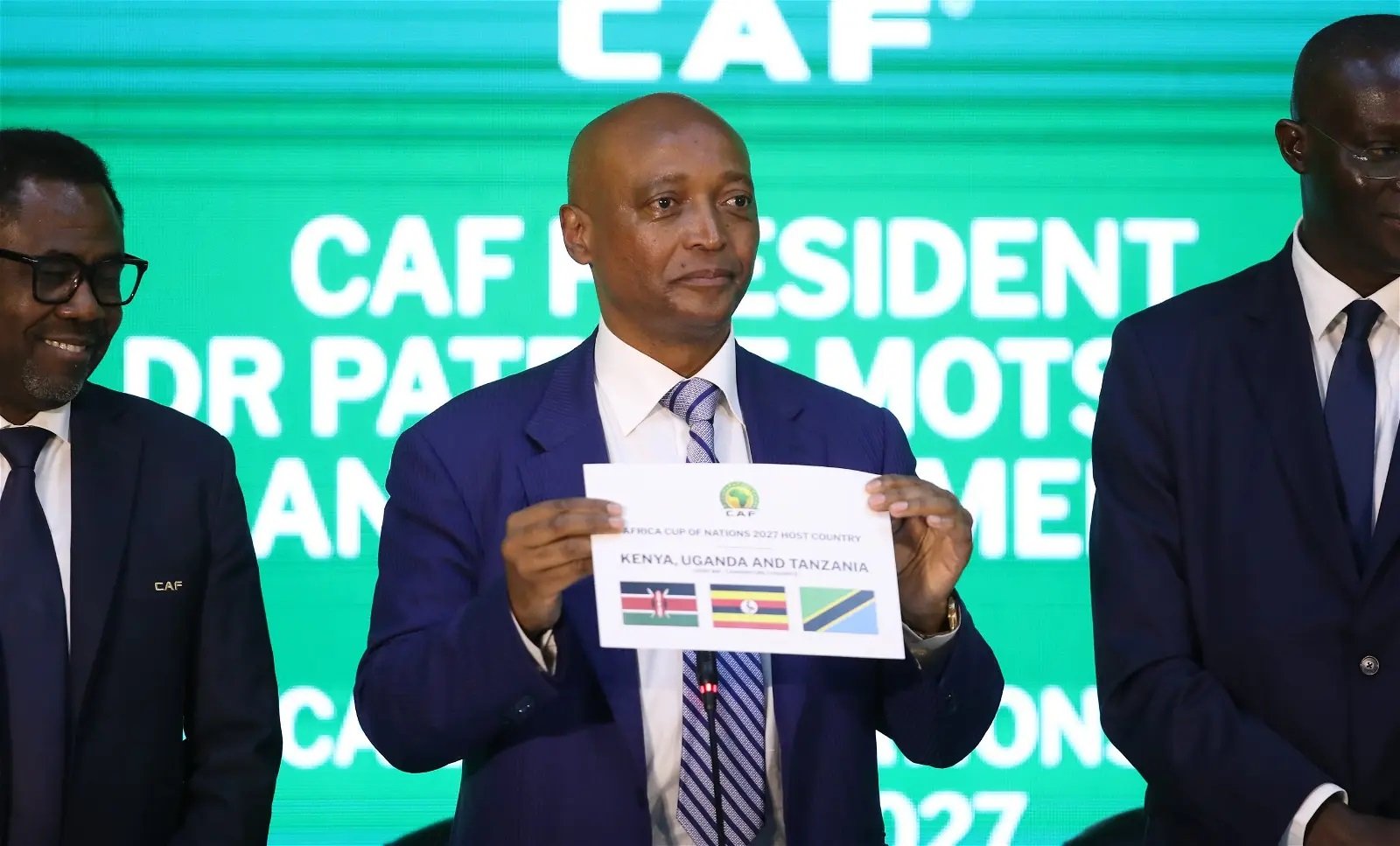
The Confederation of African Football has announced one of the most significant restructurings in the history of African football, unveiling a new African Nations League that will replace the African Nations Championship while also proposing major changes to the Africa Cup of Nations. The reform, presented after a high-level CAF executive meeting and outlined by CAF President Patrice Motsepe, signals a bold attempt to modernise the continent’s national team calendar, create more competitive fixtures, and allow more African-based and foreign-based stars to feature in continental competitions.
Under the newly announced system, CAF says the African Nations League will replace CHAN and be split into two major formats. The first is the African Nations League – Continental, which is expected to run annually. This phase will begin with zonal qualifiers, allowing national teams to compete within their regional blocs before the top sides advance to a centralised final tournament. Unlike CHAN, which was limited to players active in domestic leagues, this new model is expected to be open to all eligible players, including African internationals based in Europe and other global leagues. The second format is the African Nations League – Pan-African, a broader tournament that CAF says will be staged every two years and will closely mirror the current AFCON model. This phase is intended to provide regular, high-level competitive football for national teams while increasing the relevance of continental fixtures outside the traditional AFCON cycle.
Despite some early headlines and social media confusion, the new competition is being framed as a replacement for CHAN, not a direct abolition of AFCON. Reports clearly state that the African Nations League will replace the African Nations Championship. At the same time, AFCON remains CAF’s flagship competition but is being reworked as part of the broader reforms. CAF is discussing a dual-format Nations League model while preserving AFCON in a revised form. That distinction is crucial for fans searching whether AFCON is being replaced. Based on the available reports, AFCON is not being scrapped. Instead, CAF appears to be reducing its frequency and potentially expanding its size, while the new Nations League fills the competitive gap between editions.
According to the reports, AFCON is expected to transition from its current rhythm to a four-year cycle, reinforcing its position as the continent’s premier tournament. There is also active consideration of expanding the tournament from 24 teams to 28 teams, which would mark another major growth step after the 2019 expansion from 16 to 24 nations. However, there is an important timeline detail: the 2027 AFCON in Kenya, Tanzania, and Uganda will proceed as planned, followed by another edition in 2028, before the competition settles into its future four-year cycle. That means the transition may be gradual rather than immediate.
CAF President Patrice Motsepe said the reforms are designed to raise standards, offer more competitive opportunities, and align African football more closely with global structures. The introduction of the African Nations League is expected to solve a long-standing issue in African football: the lack of consistent, meaningful national team fixtures outside AFCON and World Cup qualifying windows. By creating annual and biennial competitions, CAF believes it can improve match sharpness, visibility for players, and commercial value across the continent. Motsepe also indicated that the new framework would allow top African players based in Europe, Asia, and the Americas to feature more regularly in continental competitions, a shift that could significantly raise the tournament’s profile and quality.
If fully implemented, the African Nations League could become one of the most transformative changes in modern African football governance. For federations, it promises more structured competition. For players, it opens the door to more frequent high-level international football. For fans, it could deliver a more predictable and commercially stronger calendar. But questions remain around scheduling, qualification details, tournament hosting, and how the new model will coexist with FIFA windows and other major competitions. For now, the biggest confirmed takeaway is this: CAF has launched a major competition overhaul, with the African Nations League replacing CHAN, while AFCON is being reshaped, not removed, through possible expansion and a long-term shift toward a four-year cycle.