
Oil and Gas
LONG QUEUES RETURN AT MRS STATIONS AS PETROL SELLS BELOW N1,000 PER LITRE

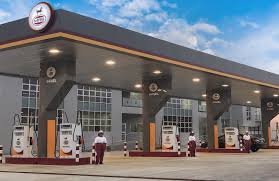
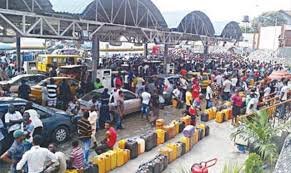
Long queues are beginning to build up at MRS filling stations where Premium Motor Spirit is sold below N1,000 per litre, as consumers hurry in search of cheaper products.
Market survey as of Saturday morning revealed that private car owners and commercial bus drivers are starting to form long lines at MRS stations, especially along the Ibadan/Lagos Expressway, for petrol currently sold at N937 per litre. Other stations along the same axis, however, do not have as many queues as the MRS station at Alapere, as most have increased pump prices above N1,000.
While Eterna Plc has hiked price to N1,040, North West Capital Oil and Fatgbems also adjusted their prices to N1,030 per litre, with Mobil Station’s a bit lower at N1,025 per litre. Despite the rush for petrol, few stations, including the Nigerian National Petroleum Company Limited, have shut their gates against buyers. The state oil company’s station at OPIC Estate remains shut as of 7:00 AM Saturday. It could not be ascertained whether the move was due to product shortages or otherwise. Also, some of TotalEnergies stations along the Expressway were not selling product as of the time of filing this report, while others recorded just a few buyers lurking at their gates.
The development followed a sharp surge in global crude oil prices above the $80 per barrel threshold earlier in the week. Reports surfaced on Tuesday that Dangote Petroleum Refinery & Petrochemicals had increased the ex-depot price of petrol from N774 to N874 per litre, representing a N100 hike.
Dangote’s price hike was after an economist, Paul Alaje, on Monday, warned that petrol prices in Nigeria could climb to about N1,000 per litre if the ongoing conflict involving the United States, Israel, and Iran was not effectively managed. Alaje, who is the Chief Economist at SPM Professionals, appeared on Channels Television’s Politics Today, against the backdrop of escalating geopolitical tensions in the Middle East.
According to him, increases in crude oil prices typically translate into higher costs for refined petroleum products such as petrol, diesel, and aviation fuel, with broad implications for businesses and households. “While crude oil goes up, we all need to check the impact on our economy. The first thing you see is high inflation, because as crude oil goes up, the cost of PMS, diesel, and Jet-A1 will also follow. As that is going on, about nine per cent has already attracted more cost for PMS in Nigeria, and by the end of April, we project that if the war is not properly managed, it might get to N1,000 plus for PMS in Nigeria. If PMS is N1,000, you can imagine what diesel will be; you can imagine what flight tickets will be. It will affect the poor, the middle class, and, of course, the rich,” the economist said.
Oil prices shot up during the week as investors kept tabs on the Middle East as the United States and Israel continued to bombard Iran, while Tehran launched further strikes on neighbours. The attacks on the Islamic state have upended regional energy flows, with the crucial Strait of Hormuz through which about a fifth of global oil transits effectively closed off. The conflicts have also fuelled fears of a fresh energy crisis that could ramp up inflation.
Market moves have been comparatively mild amid hopes that the crisis will be short-lived and not cause a major problem for the global economy. But analysts warned that the longer it goes on, the more painful it would be on the global economy as supply chains are hit and prices surge.
Iran has responded by unleashing missiles and drones across the Middle East, including Lebanon, Saudi Arabia, Qatar, and Dubai, while explicitly threatening to drive up global energy costs. That sent oil prices soaring nearly 14 per cent Monday before slightly easing, while European natural gas prices spiked almost 40 per cent after Qatar’s state-run energy firm said it had halted liquefied natural gas production.
Meanwhile, a general in Iran’s Revolutionary Guards threatened to burn any ship seeking to navigate the Strait of Hormuz. “We will also attack oil pipelines and will not allow a single drop of oil to leave the region. Oil price will reach $200 in the coming days,” he warned. Crude rose at least two percent on Tuesday, as analysts say the rise in energy costs could give most central bankers a headache as they look to bring down inflation while also cutting interest rates to support their economies.

The South-South Governors Forum (SSGF) has described President Bola Tinubu’s Executive Order mandating the direct remittance of all oil and gas revenues to the Federation Account as a historic and landmark decision.
The SSGF Chairman and Governor of Bayelsa State, Senator Douye Diri, in a statement on Wednesday, said the region’s governors welcomed the decision as a critical shift towards the restoration of constitutional integrity in Nigeria’s petroleum sector.

The Forum said the Executive Order was comprehensive, unambiguous and heartwarming, and that it raised hope that after many years of opaque and complex deduction structures, the federal, state, and local governments would begin to receive their rightful entitlements from the Federation Account.
“The South-South region, particularly, welcomes the key provisions of the Executive Order, which would eliminate opaque deductions and effectively strip the Nigerian National Petroleum Company Limited (NNPCL) of the nebulous 30 percent Frontier Exploration Fund. This fund often led to large idle cash balances,” the statement read.
“Mandating all operators and contractors under Production Sharing Contracts to remit Royalty Oil, Tax Oil, and Profit Oil directly to the Federation Account will significantly plug revenue leakages. This decision is a positive step towards fiscal justice for sub-nationals, particularly the oil-producing states, just as it would potentially increase available funds for critical infrastructure, healthcare, education and other sectors across the three tiers of government.”

The Forum also expressed delight with Mr President’s move to undertake a comprehensive review of the Petroleum Industry Act (PIA), saying it is an affirmation that he is a leader who listens and places the interest of the people above other considerations.
It said that the states, particularly Bayelsa, had persistently advocated for a review of the PIA as the extant Act was a ticking time bomb.
“The PIA, as it was designed, is a time bomb because the Federal Government cut off states and local government councils to deal directly with communities. It is our submission that the percentage due to oil communities, which was reduced from 10 percent, as proposed by the majority of states in the region, to 3 percent, should be revisited and reviewed.
“We also urge the Federal Government to immediately review the aspect where states and local governments were excluded from administering what is due to the communities. The states and councils are closer to the communities, and it was wrong to have excluded them from the administration of these communities. The current Act is a recipe for a crisis, and we urge Mr President to review it.”
Oil and Gas
NNPC LTD AND DANGOTE GROUP FORGE STRATEGIC ALLIANCE TO BOOST ENERGY SECURITY AND DOMESTIC REFINING CAPACITY
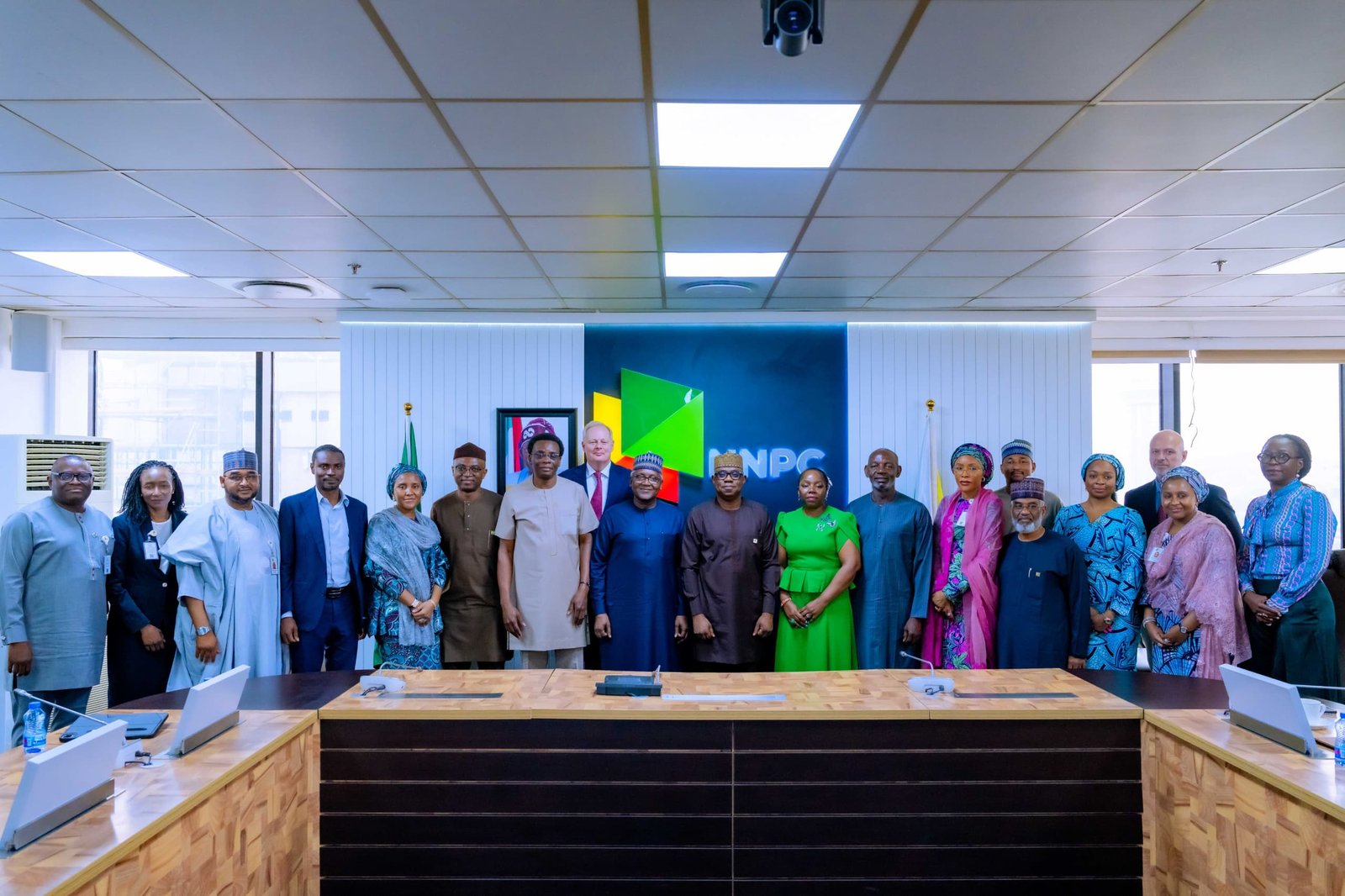
The Nigerian National Petroleum Company Limited (NNPC Ltd.) and the Dangote Group have forged a renewed strategic alliance designed to accelerate energy security, deepen domestic refining capacity and drive long-term economic prosperity. In a significant move aimed at reshaping Nigeria’s energy landscape, the two companies renewed the alliance on Saturday.
This epochal deal was reached when Mr Bashir Ojulari, Group Chief Executive Officer of NNPC Ltd., led the NNPC’s delegation to the Dangote Refinery and Petrochemical Complex in Ibeju-Lekki, Lagos State. The visit was for high-level discussions that culminated in a renewed commitment to strategic collaboration between the two companies. The visit, which included a facility tour, focused on strengthening the operational and commercial relationship between NNPC Limited and the Dangote Refinery, with both organisations reaffirming their shared vision for Nigeria’s energy future.
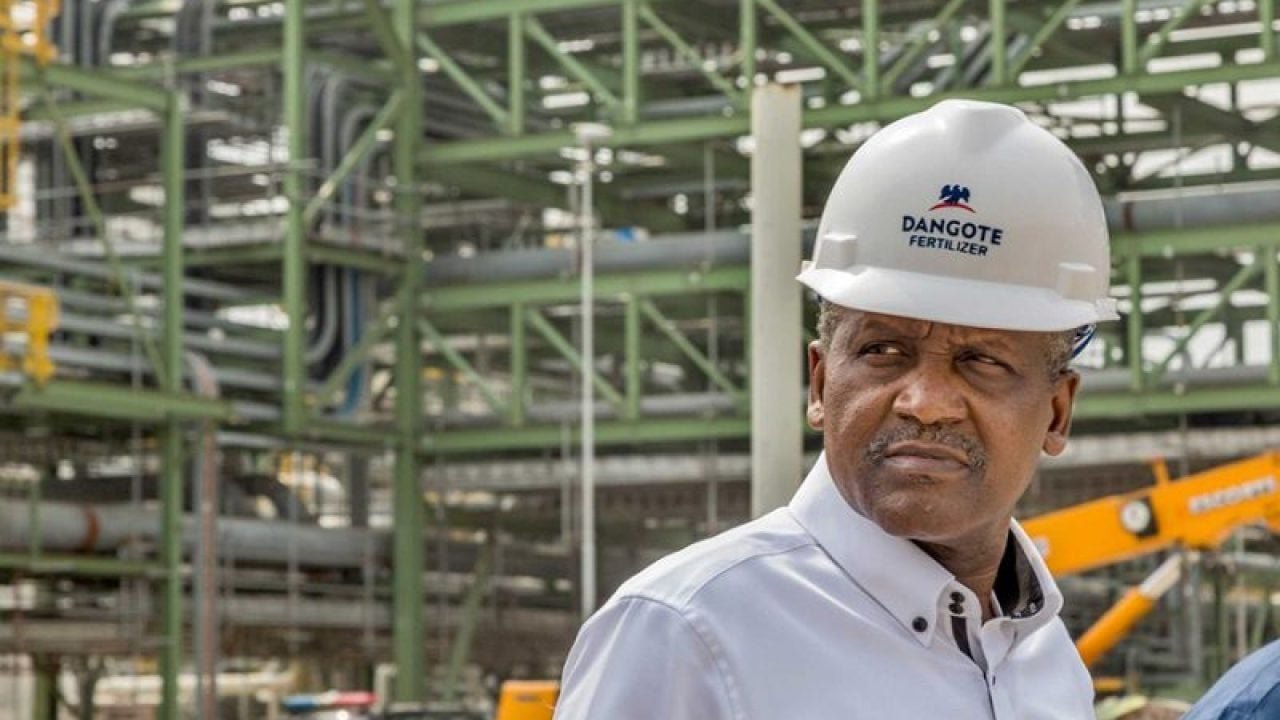
Ojulari, in a statement, commended the President of the Dangote Group, Alhaji Aliko Dangote, for his vision and perseverance in delivering the 650,000 barrels per day refinery, a project that positions Nigeria as a major downstream hub in Africa. Speaking on the breadth of the partnership, Ojulari described the strategic alliance as one that will “unlock synergies across assets, infrastructure, capital and markets. It will also provide visibility of all NNPC-Dangote business relations,” he added.
He further revealed the expansive potential of the collaboration, noting that there is huge opportunity for both companies to expand upstream, and move into trading, shipping, gas supplies, among other fronts. Ojulari expressed profound appreciation to President Bola Tinubu for his visionary leadership in the oil and gas sector. He said the president’s policy clarity, investor-friendly reforms and commitment to sectoral transformation had signalled seriousness to both domestic and international investors, creating an enabling environment for partnerships of this scale to flourish.
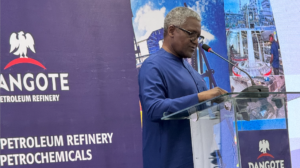
According to the Chairman of Dangote Group, Alhaji Aliko Dangote, Nigerians will be the beneficiaries of the synergy between Dangote Group and NNPC Ltd., because the collaboration will achieve economies of scale and unlock value across markets.
The visit concluded with both parties reaffirming their commitment to deepening cooperation in pursuit of shared objectives, ensuring energy security, driving industrial growth and delivering value to Nigerians. NNPC Ltd. currently holds a 7.25 per cent stake in the Dangote Refinery. The shareholding is considered to be a strategic investment that aligns with NNPC Ltd.’s downstream growth objectives and commitment to domestic refining capacity.


Efforts to boost Nigeria’s hydrocarbon reserves have received a significant lift following the confirmation of a hydrocarbon discovery at the Awodi-07 appraisal and exploration well by the Nigerian National Petroleum Company Limited (NNPC Ltd) and Chevron Nigeria Limited Joint Venture in the shallow offshore western Niger Delta.
The discovery was announced in a statement released on Monday afternoon in Abuja by the Chief Corporate Communications Officer of NNPC Ltd, Mr. Andy Odeh.
According to the statement, the Awodi-07 well, operated by Chevron Nigeria Limited, was drilled as part of the joint venture’s ongoing exploration and appraisal programme aimed at further delineating reserves and unlocking additional hydrocarbon potential across its asset portfolio.
Drilling operations commenced in late November 2025 and were successfully completed in mid-December 2025.
NNPC Ltd noted that the drilling campaign was carried out safely and efficiently, in full compliance with approved operational procedures and regulatory requirements.
The operation was conducted under the oversight of the Nigerian Upstream Petroleum Regulatory Commission (NUPRC), in line with applicable upstream petroleum regulations.
Following the completion of drilling activities, the well underwent comprehensive logging, testing, and data acquisition to evaluate reservoir characteristics.
After these processes, the well was safely secured.NNPC Ltd said data obtained from the Awodi-07 well would be submitted to the NUPRC for detailed technical review as part of the post-drilling regulatory process.
Results from the well confirmed the presence of hydrocarbons across multiple reservoir zones, which the company described as encouraging and a significant milestone for the joint venture.
The discovery further strengthens confidence in the asset and reinforces the prospectivity of the shallow offshore western Niger Delta.
Commenting on the development, the Group Chief Executive Officer of NNPC Ltd, Engr. Bashir Bayo Ojulari, said the success of the Awodi-07 well underscores the strength of the partnership between NNPC Ltd and Chevron Nigeria Limited and aligns with national efforts to grow Nigeria’s hydrocarbon reserves.
Also speaking, the Executive Vice President, Upstream, NNPC Ltd, Mr. Udy Ntia, said the results demonstrate the importance of disciplined exploration programmes, sound technical evaluation, and sustained collaboration between joint venture partners.
Under the provisions of the Petroleum Industry Act (PIA), discoveries such as Awodi-07 are required to progress through a structured appraisal and development process.
This includes further reservoir evaluation, submission of field development plans, and securing regulatory approvals from the NUPRC before any final investment decision is made.
Industry sources disclosed that the NNPC Ltd/Chevron Joint Venture is expected to review data from the Awodi-07 well to determine the scope of additional appraisal drilling and assess its commercial viability.
Subject to regulatory approvals, the discovery could be matured towards full-scale development and eventual monetisation.
The NNPC Ltd/Chevron Joint Venture operates several onshore and offshore oil and gas assets in Nigeria’s Niger Delta under a joint venture arrangement in which Chevron holds a 40 per cent participating interest, while NNPC Ltd owns the remaining 60 per cent.
The partners are targeting an increase in oil production to approximately 146,000 barrels per day, a development expected to support government revenue, job creation, and Nigeria’s energy supply.