Legislature
NATIONAL ASSEMBLY JOINT COMMITTEE COMMENCES 2026 BUDGET DEFENCE WITH YOUTH MINISTRY, SEEKS MEASURABLE OUTCOMES
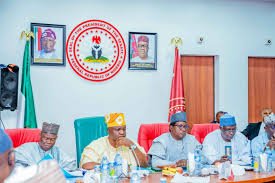
The Joint Committee of the National Assembly on Youth Development has officially commenced the 2026 budget defence session for the Federal Ministry of Youth Development, a key step in the legislative scrutiny of the 2026 Appropriation Bill. The 2026 budget proposal was submitted to the National Assembly in December 2025 by President Bola Ahmed Tinubu, after which sectoral committees began detailed assessments of allocations in line with their constitutional oversight responsibilities.
Opening the session, the Chairman of the House Committee on Youth Development, Hon. Martins Esin Etim, emphasized that the exercise goes beyond reviewing numbers. He described it as an opportunity to evaluate the Ministry’s strategic priorities, programme effectiveness, and operational capacity, stressed that youth development remained pivotal to Nigeria’s socio-economic growth and national stability. He stated that while some provisions in the 2026 Appropriation Bill are carryovers from the previous fiscal year, their committee is committed to ensuring allocations address the urgent need of Nigerian youth and strengthen the Ministry’s ability to deliver measurable outcomes.
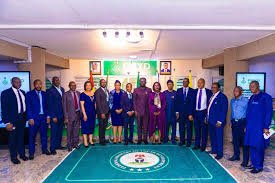
The Committee had earlier conducted defence sessions with departments and agencies under the Ministry, and the current engagement seek to consolidate submissions, ensuring coherence, accountability, and effective implementation. In his presentation, the Minister of Youth Development, Engr. Ayodele Olawande, thanked the legislature for its support and highlighted the importance of executive-legislative collaboration in advancing youth-focused programmes nationwide.
Reviewing the Ministry’s performance under the 2025 budget, the Minister detailed expenditures across personnel, overheads, and capital components, noting that capital allocations targeted infrastructure development and programme expansion. Key achievements include the expansion of the Nigerian Youth Academy under the One Youth, Two Skills initiative, the launch of the Nigerian Youth Gig Programme to equip young people for global digital employment, and the Nigerian Youth Startup Initiative, through which over 300 beneficiaries received startup grants of at least ₦1 million each.
Engr. Olawande further outlined the Ministry’s nationwide presence, including five operational departments, seven common service departments, two specialised units at headquarters, six zonal offices, and 72 National Youth Development Centres, many of which are undergoing renovation through public-private partnerships to enhance service delivery. As part of its proposals for the 2026 fiscal year, the Ministry recommended that 15 percent of national and state budget allocations be dedicated specifically to youth development programmes, in line with resolutions of the 7th National Council on Youth Development.
The Joint Committee commended the Ministry’s efforts and assured continued legislative support, pledged to rigorously carry out its oversight function to ensure funds are effectively utilized in the interest of Nigerian youth.
General News
Senate Questions Fiscal Projections, Weighs Possible Cut to N58.47trn 2026 Budget
Nigeria’s Senate has queried key members of the federal government’s economic team over what lawmakers described as unrealistic budget assumptions and persistent failures in capital project implementation, warning that the proposed N58.472 trillion 2026 budget may be reduced.
The scrutiny came Thursday during an interactive session between the Senate Committee on Appropriations and top finance officials. The panel, chaired by Solomon Olamilekan Adeola, focused on the feasibility of implementing the 2026 proposal and completing capital components of the 2024 and 2025 budgets by March 31, 2026.
The first official questioned was Wale Edun, Minister of Finance and Coordinating Minister of the Economy, whose explanation that capital components of the 2024 and 2025 budgets were still being funded failed to satisfy lawmakers.
In his defence, Zacch Adedeji, Chairman of the Nigeria Revenue Service, argued that unrealistic projections inevitably lead to poor implementation.
“Budget funding must come from realistic projections. Efficiency is not about the size of the budget but about how much can actually be implemented. If you assume you have one hundred units and spend accordingly, you may run into serious problems if the funds do not materialize,” he said.
However, Adeola countered that the budget framework originated from the executive arm, stressing that discrepancies between projected and actual oil revenues remained troubling.
He cited a wide performance gap, noting that an 18 percent revenue performance in one year contrasted sharply with a projection of 36.5 percent for the next year despite weak actual outcomes. He added that lawmakers must now decide whether to scale down the N58.472 trillion proposal or proceed with adjustments, warning that debt financing levels were already high.
According to him, asset disposal could help lower the national debt stock and reduce future borrowing costs.
Responding, Doris Nkiruka Uzoka-Anite, Minister of State for Finance, assured the committee that the remaining 30 percent capital components of both the 2024 and 2025 budgets would be fully implemented before March 31, 2026.
She disclosed that payment processes for outstanding 2024 capital projects had begun and that ministries, departments and agencies had been directed to upload their cash plans to enable releases.
“The financial management system is back online. For 2025, MDAs have been asked to upload their cash plans by Monday, after which payments will commence. We are ready to start, but the MDAs must complete their documentation requirements,” she said.
After the public session, the committee held a closed-door meeting with the economic team lasting nearly two hours. Among those present were Atiku Bagudu, Minister of Budget and Economic Planning, and Shamsedeen Babatunde Ogunjimi, Accountant-General of the Federation.
General News
NASS LAMENTS POOR FUNDING OF SECURITY AGENCIES, PLANS TINUBU SHOWDOWN
The National Assembly has declared its intention to confront President Bola Ahmed Tinubu over the chronic underfunding of security and intelligence agencies, specifically calling out the failure to release capital allocations in the current financial year.
Following high-level discussions with security chiefs, the Chairman of the National Intelligence Committee, Senator Yahaya Abdullahi, revealed that the funding crisis is crippling the operational effectiveness of agencies meant to safeguard the nation. He admitted that while the non-release of funds affects all government ministries and agencies, the impact on national security makes the situation particularly urgent.
Abdullahi stated that the committee would collate reports and propose urgent measures to plug the funding gaps, with a focus on the 2026 budget cycle. He reminded the public that President Tinubu’s declaration of a state of emergency on security must translate into real financial commitment. “President Tinubu had declared that emergency, and therefore, if there is an emergency, there should be funding to back up that emergency. So we will have to come up with a strategy to ensure that the words and declaration of the President does not go out in vain,” he said.

To ensure the matter is taken seriously, Abdullahi disclosed that the leadership of the National Assembly may seek a direct audience with the President. “We will sit down even if it means going through the leadership to meet Mr. President, to take the plight of the security and intelligence agencies into account and report directly to him so that appropriate steps are taken to ensure that the agencies are given enough funds to pursue their constitutional responsibilities,” he added.
Describing 2026 as a make-or-break year for Nigeria’s democratic journey, the lawmaker warned that insufficient funding for security agencies could trigger major disruptions as the nation gears up for general elections. He insisted that without robust financial backing, the electoral process and national peace could be jeopardized.
Senator Abdullahi also launched a blistering critique of the envelope budgeting system, calling it an archaic relic that no longer serves the country’s interests. He traced its origins to the Obasanjo era when oil revenue shortfalls forced temporary fiscal restraints, arguing that it has long outlived its purpose. “This envelope system, you know, was developed years ago, when I was in the civil service. And I think it has outlived its usefulness for me, personally, it is my own opinion. You know, we are not budgeting on needs. We are just budgeting on money, but it’s not the issue of less money, the needs of the institutions and the priorities that we have that we should fund, not just to give people money and say, Okay, go and share,” he said.
He called for a complete overhaul of the budgeting process, advocating for a system driven by national priorities rather than arbitrary financial ceilings. He revealed plans to engage the Ministry of Finance and the Budget Office to push for reforms that reflect current realities.
The committee, according to Abdullahi, has wrapped up its initial assessments and is finalizing reports to be submitted to the Appropriation Committee and National Assembly leadership for further legislative action.
Legislature
Senate Reduces Election Notice Period to 300 Days Ahead of 2027 Polls
The Nigerian Senate has amended Clause 28 of the Electoral Act Amendment Bill, cutting the statutory notice period for elections from 360 days to 300 days to give the Independent National Electoral Commission greater flexibility in scheduling the 2027 general elections.
The revised clause mandates INEC to publish election notices not later than 300 days before polling, specifying dates and locations for submission of nomination papers across all states and the Federal Capital Territory.
The amendment followed a motion for rescission and recommittal moved by Senate Leader Opeyemi Bamidele, who warned that retaining the earlier 360-day requirement could push the 2027 presidential and National Assembly elections into the Ramadan period, potentially affecting voter turnout, logistics, and stakeholder participation.
Bamidele also cited inconsistencies in the bill’s long title and multiple clauses, including issues with cross-referencing and numbering, prompting the Senate to revisit the draft legislation.
Proceedings became tense when Enyinnaya Abaribe demanded a division on Clause 60(3), which permits manual transmission of election results where electronic transmission fails.
Senate President Godswill Akpabio initially ruled that the request had been withdrawn, but opposition lawmakers objected.
Deputy Senate President Barau Jibrin cited Senate rules to oppose reopening debate, triggering further protests before lawmakers briefly entered a closed-door session.
When voting resumed, 55 senators supported retaining the manual transmission provision, while 15 opposed it. The chamber subsequently passed the Electoral Act, 2022 (Repeal and Re-Enactment) Bill 2026.
INEC had earlier scheduled the presidential and National Assembly elections for February 20, 2027, and governorship and state assembly polls for March 6, 2027.
The dates drew criticism from stakeholders, including former Vice President Atiku Abubakar, who urged reconsideration because of their overlap with Ramadan.
Responding, INEC National Commissioner Mohammed Haruna said the commission had noted the concerns and was consulting stakeholders, adding that it could seek legislative action if adjustments become necessary while remaining within constitutional and legal limits.