
Oil and Gas
NIGER DELTA STAKEHOLDERS URGE FG TO NAME TANTITA SOLE CONTRACTOR FOR OIL PIPELINE SURVEILLANCE


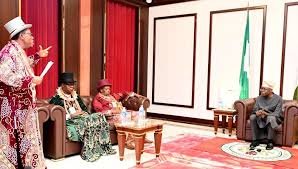
A group of stakeholders in the Niger Delta has called on President Bola Ahmed Tinubu and the National Assembly to designate Tantita Security Services Nigeria Limited as the sole contractor responsible for the surveillance of oil pipelines and other critical national assets in the region. The appeal extends to securing offshore facilities, with proponents arguing that the company has demonstrated unmatched competence.
In a joint statement, Amb. Fred Igere JP and Chief Williams Tortor, speaking on behalf of the stakeholders, emphasized that the protection of oil infrastructure is a matter of national importance that should transcend ethnic considerations. They expressed disapproval of recent attacks against the security firm, highlighting its contributions beyond its core mandate.
The stakeholders questioned the motives behind the criticism, pointing to Tantita’s record of community development. “Has any pipeline surveillance contractor before now achieved or done what Tantita is doing in terms of empowering businesses, involving more youths by creating more jobs, and building infrastructures for various institutions across the country?” they asked rhetorically, framing the firm’s work as an unprecedented contribution to national development.

According to the statement, the opposition to Tantita’s role is being fueled by individuals who are envious of its success and fearful of losing their own influence. Amb. Igere and Chief Tortor alleged that these detractors are sponsoring protests aimed at forcing the government to divide the surveillance contract among multiple parties. They warned those participating in such demonstrations against being used as tools by “enemies of progress,” cautioning that it would portray them as “shallow minded.”
The stakeholders posed a series of questions to the protesters, urging them to consider the broader context. “Those that are allowing themselves to be used to protest against Tantita, are they aware that securing oil pipelines is a national issue and not a local one? Do they know the history behind this current option that the government, having tried other alternatives and failed, settled for, because it is producing positive results?”
In light of what they describe as the company’s proven capacity, the group is urging the federal government to not only ignore the protests but to expand Tantita’s portfolio. “We are calling as well as urging the federal government to expand the surveillance scope of Tantita to include offshore surveillance of national assets as the company is more than capable to do the job,” the statement read.
The stakeholders concluded their appeal by urging national leaders to prioritize competence over ethnic sentiments when making critical decisions. “Also, if this country is to move forward, the time has come for its national leaders to base their decisions on competence, not subject such to ethnic affiliations or sentiments. He, who the cap fits, should wear it, and High Chief Government Oweizide Ekpemupolo alias Tompolo, the Chairman of Tantita, is a leader that everyone knows the cap fits,” they added.









Oil and Gas
FG MOVES TO SECURE ALTERNATIVE CRUDE SUPPLY FOR DANGOTE REFINERY AMID RISING PETROL PRICES
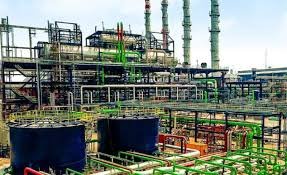
Fresh efforts are underway by the Federal Government to sustain domestic refining operations as authorities explore alternative crude oil supply channels for the Dangote Petroleum Refinery.
The intervention is being coordinated through the Nigerian National Petroleum Company Limited, which is reportedly engaging international crude traders to provide additional supply to the refinery located in Lekki, Lagos State.
Industry officials, however, indicated that the move may not immediately lead to a reduction in petrol prices as Nigerians continue to grapple with rising fuel costs following recent price adjustments by the refinery.
Market sources disclosed that the refinery recently suspended the loading of Premium Motor Spirit, also known as petrol, a development that triggered speculation of another possible price increase.
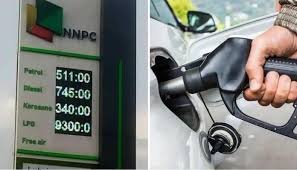
Recent pricing changes have already pushed the refinerys gantry price from about N774 to N995 per litre within a short period. As a result of the adjustments, retail pump prices in several states have climbed above N1,000 per litre, with some filling stations reportedly selling petrol for about N1,200 per litre.
Market data has also shown a shift in Nigerias crude sourcing patterns in recent months. Statistics released by global energy analytics firm Kpler revealed that Nigerias crude imports from the United States increased to 41.13 million barrels in 2025, compared with 15.79 million barrels recorded in 2024.
With fuel prices rising, motorists and business operators across Nigeria have expressed concern about the possible impact on transportation costs and the prices of goods and services.
Energy analysts have also linked the situation to volatility in the international crude oil market. Tensions in the Middle East, particularly the confrontation involving Iran and the United States, have disrupted global oil supply chains and pushed the price of Brent crude above 92 dollars per barrel. Concerns have also been raised about the security of the Strait of Hormuz, a major global energy shipping route.
Officials familiar with the arrangement explained that the national oil company is relying on its global trading network to secure third-party crude supplies for the refinery at competitive international prices. One senior official, who spoke on condition of anonymity, said the company remains committed to supporting domestic refining and strengthening Nigerias energy security.
Sources within the refinery indicated that importing crude oil may not immediately reduce petrol prices because international energy prices have risen sharply. The refinery also attributed part of the challenge to limited domestic crude supply, noting that it currently receives about five cargoes per month from NNPC. This allocation falls short of the 13 cargoes required under the naira-for-crude policy to sustain full production and meet local fuel demand. According to refinery officials, the limited allocation has forced the facility to rely partly on imported crude purchased at international market rates.
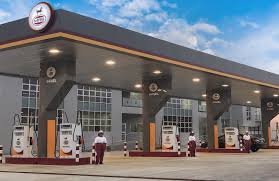
Long queues are beginning to build up at MRS filling stations where Premium Motor Spirit is sold below N1,000 per litre, as consumers hurry in search of cheaper products.
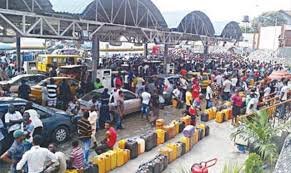
Market survey as of Saturday morning revealed that private car owners and commercial bus drivers are starting to form long lines at MRS stations, especially along the Ibadan/Lagos Expressway, for petrol currently sold at N937 per litre. Other stations along the same axis, however, do not have as many queues as the MRS station at Alapere, as most have increased pump prices above N1,000.
While Eterna Plc has hiked price to N1,040, North West Capital Oil and Fatgbems also adjusted their prices to N1,030 per litre, with Mobil Station’s a bit lower at N1,025 per litre. Despite the rush for petrol, few stations, including the Nigerian National Petroleum Company Limited, have shut their gates against buyers. The state oil company’s station at OPIC Estate remains shut as of 7:00 AM Saturday. It could not be ascertained whether the move was due to product shortages or otherwise. Also, some of TotalEnergies stations along the Expressway were not selling product as of the time of filing this report, while others recorded just a few buyers lurking at their gates.
The development followed a sharp surge in global crude oil prices above the $80 per barrel threshold earlier in the week. Reports surfaced on Tuesday that Dangote Petroleum Refinery & Petrochemicals had increased the ex-depot price of petrol from N774 to N874 per litre, representing a N100 hike.
Dangote’s price hike was after an economist, Paul Alaje, on Monday, warned that petrol prices in Nigeria could climb to about N1,000 per litre if the ongoing conflict involving the United States, Israel, and Iran was not effectively managed. Alaje, who is the Chief Economist at SPM Professionals, appeared on Channels Television’s Politics Today, against the backdrop of escalating geopolitical tensions in the Middle East.
According to him, increases in crude oil prices typically translate into higher costs for refined petroleum products such as petrol, diesel, and aviation fuel, with broad implications for businesses and households. “While crude oil goes up, we all need to check the impact on our economy. The first thing you see is high inflation, because as crude oil goes up, the cost of PMS, diesel, and Jet-A1 will also follow. As that is going on, about nine per cent has already attracted more cost for PMS in Nigeria, and by the end of April, we project that if the war is not properly managed, it might get to N1,000 plus for PMS in Nigeria. If PMS is N1,000, you can imagine what diesel will be; you can imagine what flight tickets will be. It will affect the poor, the middle class, and, of course, the rich,” the economist said.
Oil prices shot up during the week as investors kept tabs on the Middle East as the United States and Israel continued to bombard Iran, while Tehran launched further strikes on neighbours. The attacks on the Islamic state have upended regional energy flows, with the crucial Strait of Hormuz through which about a fifth of global oil transits effectively closed off. The conflicts have also fuelled fears of a fresh energy crisis that could ramp up inflation.
Market moves have been comparatively mild amid hopes that the crisis will be short-lived and not cause a major problem for the global economy. But analysts warned that the longer it goes on, the more painful it would be on the global economy as supply chains are hit and prices surge.
Iran has responded by unleashing missiles and drones across the Middle East, including Lebanon, Saudi Arabia, Qatar, and Dubai, while explicitly threatening to drive up global energy costs. That sent oil prices soaring nearly 14 per cent Monday before slightly easing, while European natural gas prices spiked almost 40 per cent after Qatar’s state-run energy firm said it had halted liquefied natural gas production.
Meanwhile, a general in Iran’s Revolutionary Guards threatened to burn any ship seeking to navigate the Strait of Hormuz. “We will also attack oil pipelines and will not allow a single drop of oil to leave the region. Oil price will reach $200 in the coming days,” he warned. Crude rose at least two percent on Tuesday, as analysts say the rise in energy costs could give most central bankers a headache as they look to bring down inflation while also cutting interest rates to support their economies.

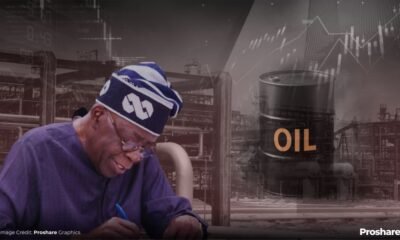
The South-South Governors Forum (SSGF) has described President Bola Tinubu’s Executive Order mandating the direct remittance of all oil and gas revenues to the Federation Account as a historic and landmark decision.
The SSGF Chairman and Governor of Bayelsa State, Senator Douye Diri, in a statement on Wednesday, said the region’s governors welcomed the decision as a critical shift towards the restoration of constitutional integrity in Nigeria’s petroleum sector.

The Forum said the Executive Order was comprehensive, unambiguous and heartwarming, and that it raised hope that after many years of opaque and complex deduction structures, the federal, state, and local governments would begin to receive their rightful entitlements from the Federation Account.
“The South-South region, particularly, welcomes the key provisions of the Executive Order, which would eliminate opaque deductions and effectively strip the Nigerian National Petroleum Company Limited (NNPCL) of the nebulous 30 percent Frontier Exploration Fund. This fund often led to large idle cash balances,” the statement read.
“Mandating all operators and contractors under Production Sharing Contracts to remit Royalty Oil, Tax Oil, and Profit Oil directly to the Federation Account will significantly plug revenue leakages. This decision is a positive step towards fiscal justice for sub-nationals, particularly the oil-producing states, just as it would potentially increase available funds for critical infrastructure, healthcare, education and other sectors across the three tiers of government.”

The Forum also expressed delight with Mr President’s move to undertake a comprehensive review of the Petroleum Industry Act (PIA), saying it is an affirmation that he is a leader who listens and places the interest of the people above other considerations.
It said that the states, particularly Bayelsa, had persistently advocated for a review of the PIA as the extant Act was a ticking time bomb.
“The PIA, as it was designed, is a time bomb because the Federal Government cut off states and local government councils to deal directly with communities. It is our submission that the percentage due to oil communities, which was reduced from 10 percent, as proposed by the majority of states in the region, to 3 percent, should be revisited and reviewed.
“We also urge the Federal Government to immediately review the aspect where states and local governments were excluded from administering what is due to the communities. The states and councils are closer to the communities, and it was wrong to have excluded them from the administration of these communities. The current Act is a recipe for a crisis, and we urge Mr President to review it.”