
Opinion
NIGERIA ELECTRICITY REFORM DIVIDEND MUST BE VISIBLE IN THE CITIZENS DAILY LIVES

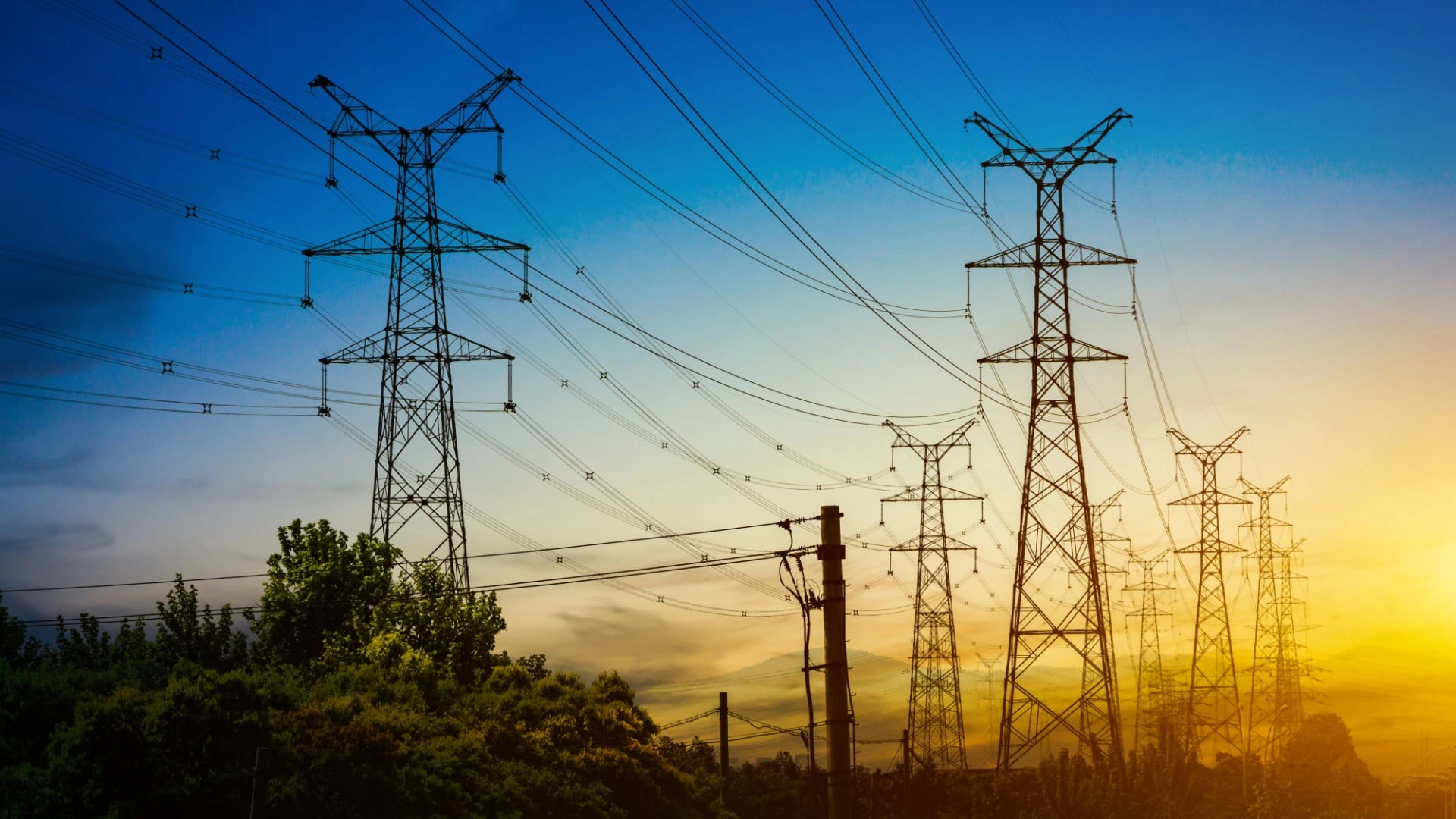
Electricity poverty in Nigeria is no longer an anomaly but a sign of economic poverty because electricity poverty can no longer be treated as a distant projection to be acknowledged and differed but as an imperative demanding urgency.
Asking Nigeria to hope and be patient for electricity to improve are no longer panacea as the country’s energy security calls for participation that must yield to performance where urgency must be embraced without panic.
Reform must be pursued without recklessness and electricity transition and improvement demanded without compromising standards.
Nigeria electricity transition must incorporate actions that function rather than frustrate because governance at its best is stewardship rather than spectacle where vision is ambitious but with restraint.
Nigeria electricity progress have always ignored unresolved pains and have therefore become progress in name only.
The absence of electricity security has prevented successive governments from aligning governance with the aspirations of the people.
Recall the United States service and nation wide actions in the investment in Inflation Reduction Act (IRA) of 2022.
The IRA is a landmark U.S. law passed in August 2022 that allocates roughly $369 billion in incentives, tax credits, and grants for climate and clean energy programs, including renewables, EVs, and manufacturing.
The funds aim to increase domestic manufacturing for solar, wind, and batteries, as well as support electric transmission development. China’s 2016–2020 Investment Plan.
In early 2017, reports indicated that China planned to invest roughly $361 billion (2.5 trillion yuan) in renewable power generation by 2020 to move away from coal.
In the case of Nigeria, public expectation for electricity security ( affordable, available and accessible) have not diminished with time but continue to sharpen annually.
The greatest challenge is 35 million people will face acute hunger in 2026 have further exacerbated the problem of electricity.
Nigerians need a state more governable than it was met, more just than it was found, more hopeful than it was entrusted with laws that serve rather than burden( bandisation).
Electricity poverty have significantly increased the unproductivity in agriculture and manufacturing which are sectors that anchor broad base prosperity, they have remained static and constrained by electricity.
From the foregoing, it is obvious that economies do not operate in the abstract space but in contested territories of energy penetration globally.
That is why electricity is a desirable economic variable, it is not a drag on growth , it is a prerequisite for it. Every economy that has sustained growth has done so on the back of energy efficiency and sustainability with predictable rules, protected investors, safe and affordable movement of electricity.
Any conditions less than this weaken economic growth.
Globally, energy security must be embedded in macroeconomic analysis and not appendages and Inflation, productivity and growth projections that ignore energy security is incomplete because energy is not external shock but an internal driver.
Energy security corridors must be treated as macro economic assets, therefore with guaranteed electricity, agricultural belts,transportation, energy infrastructure, ports and trade routes are not merely statistically sectoral concerns as electricity security underpins price stability, expert performance and employment.
AVM (RTD) AKUGBE IYAMU MNSA fsi
CONSULTANT ON CLIMATE CHANGE AND ANALYST ON ENVIRONMENTAL POLICIES
PRESIDENT ASSOCIATION OF ENVIRONMENTAL PROTECTION AND CLIMATE CHANGE PRACTITIONERS