Judiciary
Retired Justice, SAN Slam Judges over Electoral Act Breach, Interference With Political Party Affairs

A retired justice of the Court of Appeal and two Senior Advocates of Nigeria have joined the Nigerian Bar Association in criticising what they describe as a troubling pattern of judicial interference in the internal affairs of political parties, warning that such actions constitute a direct violation of the Electoral Act 2026 and pose a threat to Nigeria’s democracy.
The criticism follows a series of recent court decisions, particularly those linked to the leadership crisis within the African Democratic Congress, which legal experts argue contradict the clear provisions of Section 83 of the Electoral Act. This section explicitly bars courts from entertaining cases relating strictly to the internal affairs of political parties and precludes them from granting interim or interlocutory injunctions in such matters.
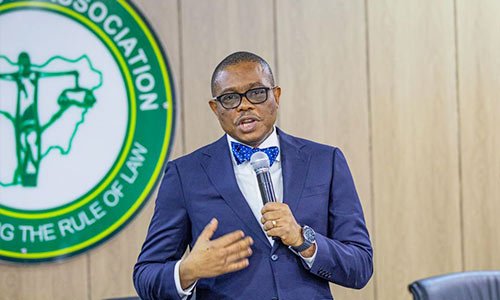
The Nigerian Bar Association had, in a statement on April 10 signed by its President, Afam Osigwe (SAN), warned that continued judicial involvement in intra-party matters could undermine democratic principles and erode public confidence in the judiciary. “These developments, particularly those arising from the interpretation and potential application of provisions of the Electoral Act 2026, raise serious constitutional, democratic, and rule-of-law concerns that require immediate intervention,” the statement read in part.
A retired Justice of the Court of Appeal, who spoke on condition of anonymity, described the trend as a direct violation of the law. “The Electoral Act is unambiguous,” he said. “Once a matter pertains strictly to the internal affairs of a political party—whether it involves congresses, leadership tussles, or candidate selection—the courts have no business intervening. Section 83 was deliberately crafted to prevent exactly what we are witnessing today.”
The retired jurist warned that the increasing willingness of some courts to assume jurisdiction in such matters suggests a deeper institutional problem. “This is not judicial activism; it is judicial overreach,” he added. “If not urgently addressed, it could delegitimise the judiciary in the eyes of the public.”
He also expressed concern over the growing incidence of conflicting court orders, describing the trend as “embarrassingly frequent” and dangerous for the rule of law. “We now see situations where one court grants an order and another court of coordinate jurisdiction sets it aside or issues a contrary order. This creates confusion, encourages forum shopping, and ultimately weakens the rule of law,” he said. “When political actors realise they can shop for favourable judgments, the courts become battlegrounds rather than temples of justice. That is dangerous for democracy.”
Senior Advocate of Nigeria Olu Daramola aligned with the NBA’s position, stressing that the principle of non-interference in party affairs has been consistently upheld by the Supreme Court. “This is clearly the position of the law as decided by the Supreme Court in several cases,” he said. “If democracy is to be sustained in Nigeria, courts and lawyers must exercise restraint in interfering in matters expressly prohibited by law.”
He emphasised that jurisdiction is fundamental to any judicial proceeding. “When a matter is filed in court, the first duty of the court is to satisfy itself that it has jurisdiction. Where it is clear from the originating processes that the court lacks jurisdiction, it must decline to entertain the suit,” he stated. Daramola warned that democracy in Nigeria remains fragile, adding: “Democracy is fragile. It must not be taken for granted. Democracy can only thrive when there is a virile opposition. The death of opposition is the death of democracy.”
Another Senior Advocate of Nigeria, Olalekan Ojo, also supported calls for judicial restraint. “The law is settled,” he said. “Courts should not interfere in the internal affairs of political parties. They are not meant to take over the management of such entities.” Ojo warned that while litigants may continue to approach courts with politically motivated cases, judges must be cautious in granting orders that effectively place them in control of party affairs. “Our judges should exercise restraint. They must avoid making orders that amount to the judiciary running the affairs of political parties,” he added.
The NBA has threatened disciplinary action against lawyers who file such cases. Osigwe stated: “We will not hesitate to present petitions before the Legal Practitioners Disciplinary Committee against any Legal Practitioner found to be engaging in such conduct. This will be pursued decisively to serve as a deterrent and to preserve the sanctity of the judicial process.”
The association also called on the National Judicial Council to sanction judges who knowingly assume jurisdiction in matters clearly barred by law. The backdrop to these concerns includes the leadership crisis within the African Democratic Congress, where a Federal High Court in Abuja has fixed April 14 for hearing of a suit challenging the leadership of Senator David Mark and Rauf Aregbesola as ADC national chairman and national secretary respectively. The Independent National Electoral Commission had earlier removed their names from its official portal following a Court of Appeal ruling that ordered parties to maintain status quo ante bellum.