Featured
ON ZIK GBEMRE’S CAMPAIGN OF CALUMNY IN HIS DIATRIBE TITLED “WHY OKPE KINGDOM & UPU MUST BEWARE OF PROF NATUFE’S DIVISIVE CAMPAIGN TO TEAR URHOBO APART”


INTRODUCTION
On June18, 2025, an Urhobo friend forwarded an article by one Mr. Zik Gbemre on the above subject. I thanked him for it. I also thank Mr. Gbemre for penning the said article, because he has broadened the debate of Okpe Union’s demand for the recognition of Okpe as a distinct ethnic nationality, outside the territory of the Okpe Kingdom.


Thus, I shall disregard his insulting outbursts against my person. We have to focus on the main ISSUE, which is the retrieval or restoration of the independence of the Okpe Nation. Let us exchange facts based on historical and cultural evidences instead of trading personal insults and falsifying History.
THE ISSUE
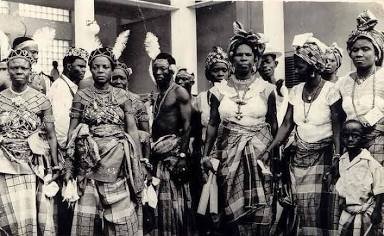
Students of Nigerian history are familiar with the British colonial policy of fusing diverse ethnic nationalities into one. Outside the contemporary Delta State, this British policy was more pronounced in the “Hausa-Fulani” phenomenon which most Nigerians, until recently, assumed to be one ethnic nationality. We are living witnesses to the awakened consciousness of the Hausas as they engage in an existential struggle to extricate themselves from the “Hausa-Fulani” appellation. It was this same British policy that birthed the false classification of Okpe as “a clan of Urhobo”. At its infancy they referred to Urhobo as “Sobo”.
Contemporary Okpe
nationals were born and raised in this falsity especially as they relate externally.
This classification has robbed Okpe of its ethnic identity, as contributions by Okpe nationals are credited to the Urhobo and not to the Okpe nationality. This cataloguing illegally extinguished Okpe ethnicity and institutionalized the assimilation of the Okpe nationality by the Urhobo.
For the benefits of Mr. Gbemre and his cohorts, it is pertinent that we recall the British fusion of Okpe with the Urhobo by providing the following excerpts from the website of the Okpe Union:
“According to R. E. Bradbury, a renowned British scholar, (The Benin Kingdom and the Edo-Speaking Peoples of South-Western Nigeria, 1970, p.128) the classification of Okpe among the Urhobo was influenced by geographic contiguity and the expediency of British colonial administration “rather than a linguistic basis.” He concluded that “Okpe is …closer to the Edo of the Benin Kingdom than are the Urhobo dialects proper”. In the 1930s the Okpe was placed in “Western Urhobo” and the Isoko in “Eastern Urhobo.” By administering the Okpe under the Urhobo umbrella, the British set in motion a process that led to the gradual but a systematic erosion of Okpe ethnicity which was erroneously subsumed under the Urhobo.
Over time, this grave error of British colonialism assumed a “truth” of its own as the outside world and several Okpe began to refer to the Okpe as “Urhobo.” This falsity was inherited by post-colonial Nigerian governments. A similar fate befell the Isoko of “Eastern Urhobo.” However, unlike the Okpe, their western counterpart, the Isokos were able to extricate themselves from the Urhobo appellation and restored their independence as a distinct ethnic nationality”.
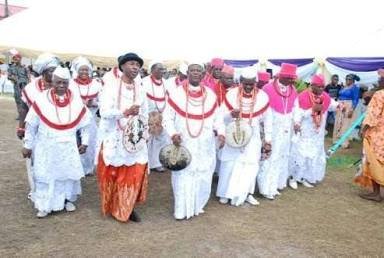
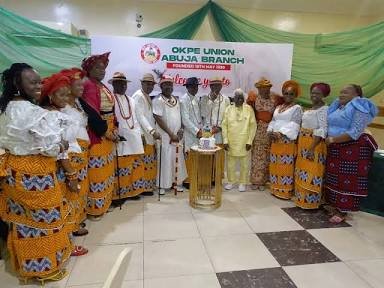
“Notwithstanding the long years of interregnum, and the attempts by some powerful leaders to establish mini kingdoms, the Okpe people remained together as a Nation, thus giving significance to the slogan “Okpe Agbamua eni” (the unity of Okpe is an Elephant or Okpe Unity enables the lifting of an elephant). The establishment of the Okpe Union on May 16, 1930, in Lagos, galvanized the Okpe people into greater resolve.
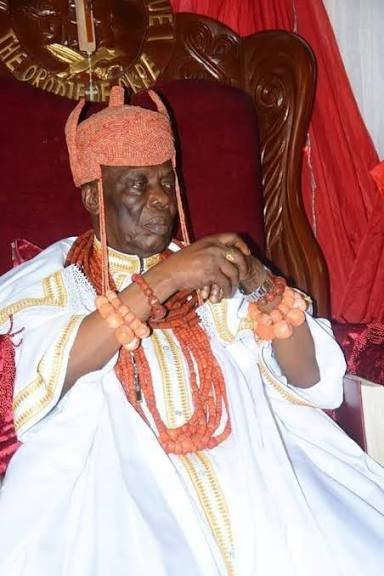
The Okpe Union, the oldest registered ethnic organization of Delta State, and in Nigeria, became the mouth piece of the Okpe Nation and a defender of Okpe Identity. It championed the fight for the restoration of the Okpe Monarchy and succeeded in doing so when the British colonial regime approved the coronation of the second Orodje of Okpe Kingdom, Esezi II on January 1, 1945.
Though the monarchy was to rotate among the four ruling houses, it was however decided by the Ruling Houses that a prince from the Esezi Ruling house be crowned the Orodje, as a way of appeasing the gods for the curse placed on Okpe
Kingdom by Esezi l”.
It is instructive to note that, during the Midwest and Bendel State regimes era, when the current Edo and Delta states were together as one state, the colonial blurring of Okpe ethnic identity receded tremendously as Okpe people became practically recognised as a people with a distinct language.
This paved the way for the use of the Okpe Language for public newscast and language requests and magazine programmes in the then Bendel Broadcasting Service Radio and Television, separate from the Urhobo Language. This was continued in Delta State in the first years of the military regime. Unfortunately, when the first Civilian Government of Delta State headed by Governor Felix Ibru came on board, there was established a policy of officially recognizing five Ethnic Groups in Delta State which were, in alphabetical order, Anioma, Ijaw, Isoko, Itsekiri, and Urhobo. The Ikas, Ndokwas (Ukuanis) and the Enuanis were to express or parade themselves as Anioma people; the Okpe and Urhobo people were to express or parade themselves as Urhobo people while the Ijaw, Isoko and Itsekiri retained their identities that they already had in the defunct Bendel State.
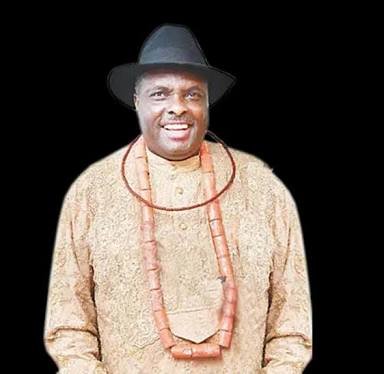
However, as the James Ibori Government established the DESOPADEC Law of Delta State in 2007, Ndokwa was officially recognised as an ethnic nationality in the DESOPADEC Law which rendered the previous ethnic nationality policies obsolete. In fact, the Delta State Government followed up by issuing a letter of apology to the Ndokwa Nation for previously omitting its name from the list of recognized ethnic nationalities. Unfortunately, the Okpe people did not seize the opportunity to protest the omission of Okpe.
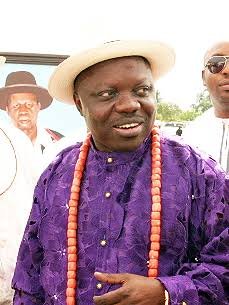
By the time Governor Emmanuel Uduaghan came on board, the struggle concentrated on having a Commissioner for the Okpe Nation in the DESOPADEC Commission scaled through when the House of Assembly moved a motion to dissolve the Commission. Governor Uduaghan then reconstituted the DESOPADEC Board to include an Okpe Commissioner in the person of Chief Joseph Egigba. In 2015, the Ika people also succeeded in having the DESOPADEC Law amended to reflect Ika ethnic nationality in the DESOPADEC Law. One implication of the recognition of an ethnic nationality in the DESOPADEC Law is that the group becomes entitled to an Executive Director and a Sub-Budget.
In terms of slots, projects and impact on the area, the difference cannot be overemphasised. Today, as Okpe which is bigger than several of the recognised ethnic nationalities in the DESOPADEC, and even has more quantum in petroluem and gas production is not recognised under the law.
EXPOSING THE WRONGFUL CLASSIFICATION
“Even though the Okpe succeeded in resuscitating the Okpe Monarchy, the struggle for the reinstatement and recognition of its distinct ethnic nationality is an ongoing task that the Okpe Union is spear-heading in collaboration with other Okpe organizations in the sensitization of the population and the Government of Delta State”. (https://okpeunionng.net/okpe-kingdom-history/)
For more details on the distinctiveness of Okpe ethnic nationality vis-a-vis the Urhobo, Mr. Gbemre and his cohorts are advised to consult the Keynote Address by HRM Orhue l, Orodje of Okpe Kingdom, entitled: “TRADITION AND GOVERNANCE IN OKPE KINGDOM: A KEYNOTE ADDRESS DELIVERED ON SEPTEMBER 1, 2007 BY HRM ORHUE 1, LL.M., CFR, mni., ORODJE OF OKPE KINGDOM AT THE 3RD ANNUAL CONVENTION OF THE OKPE UNION OF NORTH AMERICA HELD AT MARRIOTT HOTEL, COLLEGE PARK, MARYLAND, MD.USA,
AUGUST 31 – SEPTEMBER 03, 2007” (https://okpeunionng.net/tradition-and-governance/)
In the above referenced Keynote Address, HRM Orhue l, Orodje of Okpe Kingdom succinctly stated as follows:
“Okpe is a unique ethnic nationality. It has distinctive roots in ancient history, tradition, culture, customs and language.” He added: “Our people are rooted in migration from the Bini Kingdom. This historical experience is similar to most other ethnic nationalities of the Western Niger Delta.
Of all these nationalities however, Okpe History, language, tradition, and culture are closer to those of Bini which form part of the Edoid group of languages.”
Dr. (Prince) Isaac Sunday Mebitaghan, JP.,
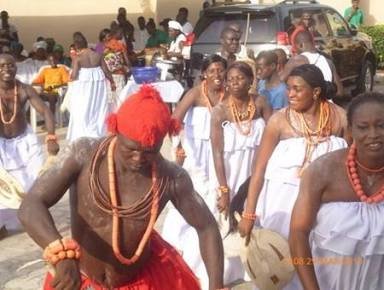
(A Brief History of Okpe Kingdom, New Era Publications, Benin City, Nigeria, 2001.) and Rev. Dr. Charles E, Osume (The Okpe People, Mosogar Antioch Baptist Church, Mosogar, 2nd Edition, 2022) provided detailed analyses on the origins of the Okpe people that clearly affirmed the distinctiveness of the Okpe people as belonging to the same ancestry and language unlike the Urhobo ethnic nationality.
In its study on the History of the Okpe People of Delta Central, Udogun Okpe stated emphatically that “Okpe is indubitably known to be a distinct and autonomous Kingdom, an ethnic entity from its beginning. The people and their language are distinct and are named after their progenitor, Okpe, whose four sons (princes Orhue, Orhorho, Evbreke, and Esezi – OIN) founded the present day Okpe Kingdom”. (Udogun-Okpe, THE OKPE PEOPLE OF DELTA CENTRAL SENATORIAL DISTRICT, DELTA STATE, NIGERIA, 2020, p. 2.)
As the mouth piece of the Okpe Nation, Okpe Union has been consistently steadfast in its advocacy for the restoration of Okpe independence as a distinct ethnic nationality and not a sub-group or clan of the Urhobo or of any other ethnic nationality in the world.
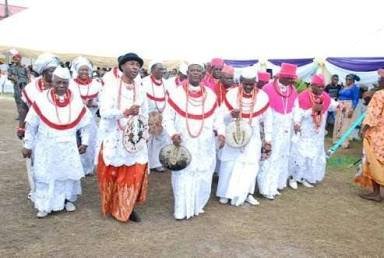
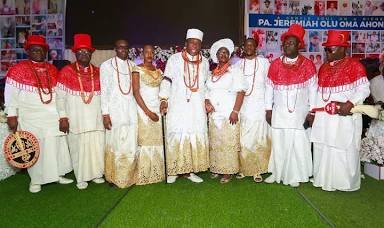
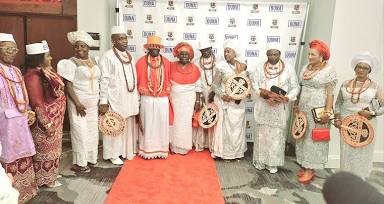
This position on the retrieval of Okpe independence was strongly restated by Okpe nationals during the 95th Anniversary Celebrations of the founding of the Okpe Union on May 16, 2025 in Lagos. For example, in his comments on the subject at the 95th Anniversary Celebrations, AVM Frank Ajobena (RTD), former Military Administrator of Abia State, pointedly reiterated the distinctiveness of Okpe ethnic nationality. While he rightfully recognized the Urhobos as our neighbours, he however reminded them that “the identity of a people is fundamental to their emancipation.” He continued: “I don’t know why our brothers are apprehensive of Okpe establishing itself as a nationality.
We do not share a common ancestry with the Urhobo people. We do not share the same language with the Urhobo”.
The Okpe language is very different from the Urhobo, just as the Urhobo is different from the Ukuani, and the Itsekiri is different from the Isoko; even though they may all trace their respective origins to Benin Kingdom. However, due to their proximity and century-old relationships, it is normal to find commonalities between all these diverse ethnic nationalities.
However, it must be stressed that, the cosmological bond that binds an Okpe to a fellow Okpe is not the same that binds the Urhobo people. For example, when an Okpe addresses another Okpe as “omizu mẹ,” the salutation carries a more profound sociological and historical significance than the Urhobo’s “omoni.” By addressing an Okpe as “omizu mẹ,” the speaker is evoking a deep spiritual bond with his/her fellow Okpe citizen that underlines their common ancestry as the children of Prince Okpe. This is absent in the Urhobo, for example. Therefore, we challenge Mr. Gbemre and his cohorts to provide historical evidences to their claim that “Okpe is Urhobo” and that we share the same ancestry and language.
DISCUSSING THE ISSUE
Mr. Gbemre’s contribution to the debate on the restoration of Okpe as a distinct ethnic nationality is so banal that it is shameful to even consider it as a “contribution”. But, since that is the best he can offer we will include it in our response. He writes:
“I have observed the inciting utterances of one Prof Igho Natufe and gullible cheering fans at an anniversary of the Okpe Union in Lagos, where he chose to resurrect the reckless insult he has been leading some lunatic fringes within Okpe to smear the larger Urhobo nation in the name of fighting for Okpe as an ethnic nationality independent of Urhobo nation.” For him and his cohorts, the demand for the recognition of Okpe as a distinct ethnic nationality is a “reckless insult” by “some lunatic fringes within Okpe to smear the larger Urhobo nation”.
This is reminiscent of the dark days of colonialism and apartheid in the colonies and South Africa, as European colonialists and the white racist regime of South Africa reacted to the demand for independence by Africans. Perhaps the next action Mr. Gbemre and his cohorts will contemplate is to employ guns and dogs to truncate Okpe’s agitation for independence.
His defense that “Okpe is Urhobo” is just to say that “Okpe is not a tribe. Okpe is one of the kingdoms or clans of the Urhobo tribe or ethnic nationality. The Okpes were under the Western Urhobo Division in the past”. This is a gross falsification of History. Firstly, we challenge Mr. Gbemre and his cohorts to provide historical evidences to their claim that “Okpe is Urhobo” and that we share the same ancestry and language. Secondly, they should educate us on the establishment of the “Western Urhobo Division”.
Was it a division established through a bilateral agreement between the Okpe and the Urhobo? Or was it a division imposed by the British Colonial Government?
It is important to point out one remarkable move by the Okpe people before the Independence of Nigeria. Between 1953 and 1954, the Okpe Union (supported by HRM Esezi II, the Orodje of Okpe Kingdom) wrote to the Western Regional Government in Ibadan that the Okpe Area of Western Urhobo Division should be joined with Sapele Municipality to form an Okpe Division.
Though the application did not scale through because of the consideration of the power balance of the Delta Province in the estimation of the then Premier of the Western Region, Chief Obafemi Awolowo, the move was a strong indication of the resolve of the Okpe people that they have always been a distinct ethnic nationality.
DISTRACTING FROM THE ISSUE
In his diatribe, Mr. Gbemre wondered into territories unrelated to the Okpe Union’s advocacy for the recognition of Okpe as a distinct ethnic nationality. In his attempt to prove to his readers that he knew me, he demonstrated a complete lack of knowledge of me. Let us review his piteous references to me, as his subject of enquiry. He wrote:
“For an insight into this deep seated hate campaign, this mischievous Professor Natufe was elected with the identity, Igho Natufe by Urhobo Historical Society (UHS) as Vice President until 2004 when he was forced to resign after his attack on Urhobo prominent personalities, including Chief Benjamin Okumagba and others in a London Event during his presentation”. If Mr. Gbemre had conducted a thorough research on the UHS, he would have discovered that it has no positions of “President” and “Vice President”, but Chair and Deputy Chair.
He further displayed a gross lack of knowledge of his supposed subject by stating that:
“After his sack as UHS Vice President, he deleted “Igho” from his name and resorted to bearing Omajuwa as first name then. Just recently, same “Igho” he discarded has become his second name. He is now known as O. Igho Natufe, deliberately veiling Omajuwa, his Itsekiri identity”. I challenge Mr. Gbemre to provide his evidence of when I allegedly “deleted Igho” from my names and “just recently” restored Igho. It is very shameful of him to knowingly engage in such a misinformation. If he had taken the pain to consult the UHS website (http://www.waado.org/EditManageCom.html), he would have known that my name has always been O. Igho Natufe as listed in the Editorial & Management Committee and Officers’ columns. I am very proud of my role during my tenure in the UHS. It is interesting that Mr. Gbemre is obsessed with me bearing an Itsekiri name. In case he and his cohorts are unaware, my maternal grandfather was an Itsekiri (from Obotagharenda) while my maternal grandmother was an Urhobo (from Okpara Inland).
My paternal grandparents were both Okpe (from Sapele and Amuokpe, respectively). My paternal grandfather had four wives: three Okpes and one Urhobo (from Orogun). For his information, three of the four children (my uncles and an aunt) from the Urhobo wife were given Itsekiri names, including Uncle Dr. Victor Amoma Natufe, the current Most Senior Okakuro of the Okpe Kingdom. There are hundreds of thousands of Okpe and Urhobo that bear Itsekiri names, irrespective of whether they have blood relationships or not with the Itsekiri. We have Okpe families that bear Itsekiri names, including Okakuro Onoriode Temiagin, whose surname was in fact changed from Ofotokun. I wonder why Mr. Gbemre has a headache with Okpe nationals bearing Itsekiri names. He should be concerned with the number of Urhobo nationals that bear Itsekiri names.
Unable to discuss the historical, political and cultural roots of the rationale for the recognition of Okpe as a distinct ethnic nationality, Mr. Gbemre resorted to attacking certain political leaders he described as “political power brokers and political jobbers” that are “beautified with chieftaincy titles” in Okpe Kingdom. Now he, a non-Okpe wants to dictate to the Okpe Monarchy on the prospective candidates suitable for chieftaincy titles in Okpe Kingdom.
He claims without any proof that: “Igho and Natufe are pure Urhobo names.
The name ‘OREROKPE’ which is the ancestral headquarters of Okpe Kingdom/Clan is Urhobo language/name meaning the Town of Okpe”. He obviously does not know that Igho, for example, belongs to the Edoid group of languages, including the Bini, Esan, Isoko, Okpe, and Urhobo ethnic nationalities, respectively.
Similarly, Orerokpe is an Okpe name or expression just as there is “OREDO” in Benin. Given his knowledge on the origins of names, we expect him to also declare “Okoro” as a name exclusive to the Urhobo. He should also confirm that “Zik” is an Urhobo name.
RESOLVING THE ISSUE
In addition to the fact that the Okpe people have their distinct ancestry, history and language (which Urhobo people do not understand at all), the world view of the Okpe people has always been that they are a distinct people. This is reflected in how they name products indigenous to them. Their own food, pomade, soap, medicine, etc are named with the word or description “Okpe” at the end.
Despite his condemnation of the agitation for Okpe independence from the Urhobo appellation, it is significant to note that Mr. Gbemre also recognized the right of Okpe Nation to extricate itself from the false Urhobo nationality. He agreed that “Okpe has right to even ask to be a state of its own in the Nigerian federation. Nothing wrong with that”….
IN LIEU OF A CONCLUSION
The study of ethnic relations in Nigeria or ethnic relations in any Nigerian state, including Delta State is fundamentally a study in international relations anchored on the principles of peaceful coexistence and good neighbourliness.
Adherence to these principles is imperative for the system or sub-system to function harmoniously. While competition between the ethnic nationalities helps to spur societal development, it is vital that inter-ethnic competition does not lead to a breakdown of the system. Thus, each component of the system in Delta State, listed in alphabetical order, Aniocha, Ika, Ijaw, Isoko, Itsekiri, Ndosumili, Oshumili, Okpe, Ukwuani, and Urhobo are required to adhere to the principles of peaceful coexistence and good neighbourliness while promoting their respective nationality interests.
The ethnic mosaic of Delta State presents us an opportunity to construct and maintain a vibrant and successful multi-ethnic polity. The tendency of any ethnic nationality attempting to impose itself as a great power in Delta State or in any of the Senatorial Districts must not be allowed, as it is a recipe for a collapse of the system.
In the Delta Central Senatorial District which we, Okpe, share with the Urhobo, the policy of the Okpe Nation is strictly based on mutual respect, good neighbourliness, and peaceful coexistence.
This also informs Okpe Nation’s relationships with the other ethnic nationalities. Okpe Nation shall define its policy based on the principles of peaceful coexistence, and will never permit any other ethnic nationality to intrude in our policy formulation and implementation.
We firmly believe that it is only on the basis of this construct, and a strict adherence to it by all ethnic nationalities, that peace and development can be attained in Delta State.
We urge all ethnic nationalities in Delta State to collaborate with the Okpe Nation in building a stronger and peaceful Delta State.
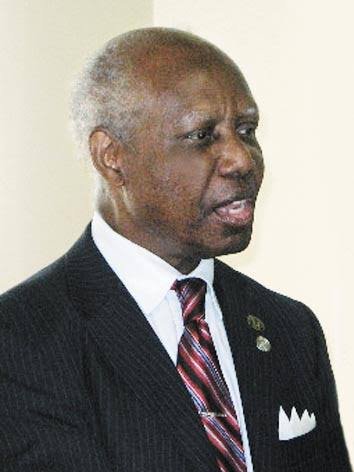
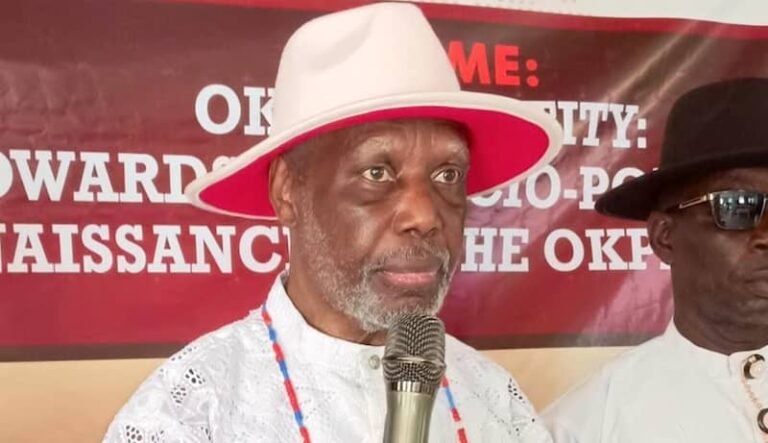
Prof. O. Igho Natufe
President General, Okpe Union Worldwide
June 22, 2025