Featured
THE PENSION REVOLUTION: RESTORING DIGNITY TO OUR RETIREES


By Ebiye Johnson
In the long and often forgotten corners of Nigeria’s governance history lie the stories of pensioners—men and women who gave decades of service to the nation, only to spend their twilight years queuing under the sun, living in deprivation, and chasing meagre payments that should have come with dignity and ease. Nowhere was this tragedy more pronounced than in Rivers State—until recently.



Several weeks ago, a silent revolution unfolded. Under the emergency administration of Sole Administrator Ibok-Ette Ibas, the Rivers State Government paid out a landmark ₦2.8 billion to 583 verified pensioners across the state. For the first time in recent history, pensioners received their entitlements without having to queue, travel, or plead. Payments were credited directly to their accounts, bringing decades of pain to a dignified end.

Unlike the harrowing spectacles of old, these payments were made without pensioners standing in the sun at state offices or sleeping overnight at ministry gates. This wasn’t just a change in payment process—it was a philosophical reordering of governance priorities. It reaffirmed that government exists to serve, not to punish, those who have served it faithfully.

The uniqueness of this initiative lies in its intentionality and transparency. The verification process was designed to be thorough yet compassionate. Multiple layers of cross-checking were introduced—not to frustrate, but to eliminate fraud while preserving the dignity of legitimate pensioners. Where once bureaucracy was a trap, today it has become a channel for empowerment.

Verification teams visited pensioners in their homes, conducted digital audits, and ensured that every eligible retiree was not just confirmed but also treated with respect. The initiative has also laid the groundwork for long-term reform. A digitised pension database is being built under Ibas’ directive—a vital foundation for efficient, automated, and corruption-proof pension management.
This transformation is no accident. It is the product of bold leadership, political will, and a clear vision of what good governance should look like. While others have engaged in political warfare, Ibas has stayed the course—focusing squarely on governance that delivers.

More importantly, this revolution is defined by empathy. The Sole Administrator made a conscious decision to steer clear of politicising the welfare of retirees. Despite swirling controversies and distractions, his administration focused on delivery. This pension payment is not a political gesture—it is a moral one. And it may well be remembered as one of the most humane and impactful policies in the state’s recent history.
The impact has been immediate and profound. From retired teachers in Port Harcourt to sanitation supervisors in Omoku, pensioners have shared their joy and relief. For them, this payment is not just financial—it is psychological closure, and perhaps a rekindling of their faith in public service.
Families have also felt the ripple effects. Children and grandchildren of pensioners are witnessing, perhaps for the first time, that government can act with compassion and competence. This effort has not only restored dignity—it has bridged generations and restored trust in institutions.
It bears emphasising that in a country where pensioners are often humiliated or ignored, what has happened in Rivers State is revolutionary. It is a model that can—and should—be replicated across Nigeria. In this bold departure from the past, we see a governance style rooted in delivery, not drama; in inclusion, not exclusion; in compassion, not political expediency.
Emergency governance is typically about firefighting. But under Ibas, it is being redefined as people-centered leadership focused on structural reform. This isn’t about showmanship. It’s about impact.

The pension revolution may have started with 583 beneficiaries, but its message is for the entire country. It proves that with the right leadership, service delivery can be reengineered, even under extraordinary circumstances. And in doing so, it reshapes the legacy of governance in Rivers State.
If sustained, this revolution will become one of the enduring hallmarks of the Ibok-Ette Ibas administration. In the testimonies of those 583 pensioners—and the thousands who will follow—we find a clear and compelling answer to the question: What kind of leadership does Nigeria need today?
Indeed, restoring dignity to pensioners is more than a financial obligation—it is a moral duty that defines the soul of any government. This act in Rivers State demonstrates that leadership can have both the head to plan and the heart to care. In choosing to focus on delivering this critical policy while others engaged in political debates, Ibok-Ette Ibas sent a clear message: that the people must come first, always.
This forward-thinking model of pension management has not gone unnoticed by civil society organisations, media commentators, and public policy analysts across Nigeria. Already, calls are mounting for other states to adopt similar reforms. The Rivers model shows what is possible when leadership rises above distractions and bureaucracy and listens to the pain of the people.
The sustainability of this reform will depend on institutionalising the gains. A solid pension law, backed by digital infrastructure and a responsive feedback mechanism, must follow this first success. There is also the need to provide psychosocial support services for aged pensioners—many of whom carry the trauma of decades of systemic neglect. Ibok-Ette Ibas’ administration has opened a pathway for such conversations to begin in earnest.
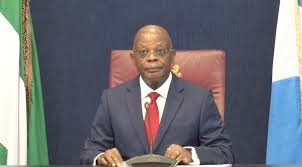
Ultimately, the deeper message of this revolution is this: when politics takes a backseat to governance, people win. When public service becomes the focus of leadership, legitimacy grows organically. And when dignity is restored to pensioners, hope is restored to all.
As Nigeria faces economic uncertainties, the example set by Rivers State is both refreshing and instructive. It is a roadmap to compassionate governance, and a reminder that leadership is not about occupying office, but about occupying the hearts of the people through meaningful action.
Ibok-Ette Ibas has not only paid pensions—he has paid back trust. And in so doing, he has set a new benchmark for governance under pressure, where the measure of success is not the number of political battles won, but the number of lives uplifted.