Opinion
Oil Is Not Enough: Lessons from Norway, UAE, and Saudi Arabia
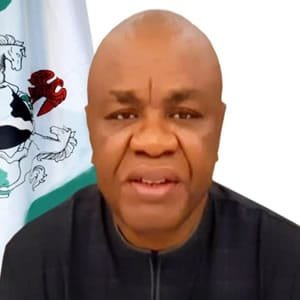
By AVM (RTD) Akugbe Iyamu, MNSA, fsi
Countries blessed with hydrocarbons are often presented with a defining choice: allow oil wealth to create dependency or deploy it as a catalyst for sustainable development. The difference between these two paths is not geology; it is governance.
Norway, Saudi Arabia, and the United Arab Emirates demonstrate that hydrocarbons, when strategically managed, can become instruments of national transformation rather than traps of economic complacency.
When Norway discovered oil in 1969, it quickly established a governance structure rooted in transparency, heavy taxation of petroleum companies up to 78 per cent — and disciplined savings. Rather than overspend during boom cycles, Norway created the Government Pension Fund Global.
Today, that fund stands at roughly $2 trillion, the largest sovereign wealth fund in the world. It represents approximately $356,000 per Norwegian citizen and is invested globally to protect long-term economic stability. Norway understood early that oil was a means to an economic end, not the end itself.
The United Arab Emirates adopted a dual-track strategy: expand production capacity while aggressively diversifying the economy. With plans to increase oil production to five million barrels per day by 2027, the UAE ensures sustained medium-term revenue.
Through its national oil company, ADNOC, the UAE has modernised exploration, adopted artificial intelligence-driven trading platforms, and strengthened midstream infrastructure. Simultaneously, hydrocarbon revenues have funded massive investments in tourism, aviation, logistics, renewable energy, and technology. Oil revenue in the UAE finances transformation rather than dependency.
Saudi Arabia has leveraged its hydrocarbon resources to build one of the world’s most influential energy economies. Through Saudi Aramco, oil has funded industrialisation, domestic power generation, and geopolitical leverage.
Under Vision 2030, the Kingdom is deliberately transitioning from a crude-dependent exporter to a diversified energy and petrochemical powerhouse. Strategic investments in infrastructure, manufacturing, entertainment, and technology are designed to secure long-term resilience beyond oil.
Nigeria, Africa’s largest oil producer with approximately 37 billion barrels in reserves, remains heavily dependent on hydrocarbons, which account for roughly 70 per cent of government revenue. While the country exports crude through 31 terminals and is taking steps toward expanding domestic refining capacity, its hydrocarbon wealth has not yet translated into transformative sovereign wealth accumulation or large-scale economic diversification
Hydrocarbons alone do not create prosperity. Governance does. Vision does. Institutional discipline does. The experiences of Norway, the UAE, and Saudi Arabia demonstrate that resource wealth must be managed with vigour, creativity, innovation, and accountability.
Norway discovered early that oil was an economic building block, not a permanent embrace. Its sovereign wealth framework reflects meritocracy and long-term planning, prioritising competence over primordial considerations.
For resource-rich nations, the lesson is clear: natural endowment is not destiny. The quality of leadership, institutional strength, and strategic foresight ultimately determine whether hydrocarbons become a blessing or a missed opportunity.
AVM (RTD) Akugbe Iyamu, MNSA, fsi
Consultant on Climate Change and Analyst on Environmental Policies
President, Association of Environmental Protection, and Climate Change Practitioners
Celebration
BELLO MATAWALLE AT 57: THE CIVILIAN GENERAL AND THE ARCHITECTURE OF VALOR
By Comrade James Okoronkwo
When the history of Nigeria’s battle against insurgency is written, a special chapter will be reserved for those who did not just issue orders from the comfort of Abuja, but who dared to walk the path of the soldier. As the Honourable Minister of State for Defence, Dr. Bello Muhammad Matawalle, marks his 57th birthday this Thursday, February 12, 2026, we celebrate a leader who has redefined the meaning of patriotic duty.

HEEDING THE COMMANDER-IN-CHIEF
True leadership is tested in the crucible of obedience and action. When President Bola Ahmed Tinubu issued the strategic directive for the defense leadership to relocate to the front lines of the North-West, Dr. Matawalle did not hesitate. He understood that to secure the people, one must be amongst the people.
By heeding this call, Matawalle moved the “Ship House” to the trenches of Sokoto, Katsina, and Zamfara. His presence on the front lines was not a mere photo opportunity; it was a “Kinetic Statement” that the era of armchair defense was over. This move boosted the morale of our troops and sent a clear, terrifying message to the enemies of the state: the “Civilian General” is at the gate.

THE POWER OF SYNERGY
One of Matawalle’s greatest achievements at 57 is the seamless synergy he has fostered within the military hierarchy. His working relationship with the Chief of Defence Staff, *General Christopher Musa*, is a masterclass in civil-military cooperation. Together, they have formed a “Unified Command” that has dismantled the infrastructure of terror, proving that when political will meets military professional excellence, the result is an unbreakable shield for the nation.
A FATHER TO THE NATION AND A FATHER AT HOME
Perhaps the most touching testament to the Minister’s character occurred just last Friday. In an era where family values are often sidelined by the weight of office, Dr. Matawalle celebrated the historic wedding of ten of his children at the National Mosque.
Standing as a father to ten newlyweds—with the President himself as the Wali—Matawalle showed the nation that he is a man of balance. He who secures the nation’s borders also honors the sanctity of the home. This milestone is a divine blessing, signaling a man who has “Internal Peace” even as he manages “External Power.”
THE VISION FOR 2027 AND BEYOND
At 57, Bello Matawalle is no longer just a politician from Maradun; he is a national asset. He is the bridge between the grassroots of the North and the strategic vision of the *Renewed Hope Agenda. As he celebrates this milestone, the **Coalition of Civil Society Groups (CCSG)* and millions of Nigerians salute his courage, his loyalty to the President, and his unrelenting pursuit of a peaceful Nigeria.
Happy 57th Birthday to the Architect of the Shield—the Civilian General!
Opinion
ENDING THE CYCLE – WHY ELECTRONIC TRANSMISSION SHOULD BE ENSHRINED IN THE ELECTORAL ACT BEFORE 2027
Dr Olisa Agbakoba SAN, pens reasons why ‘Electronic Transmission’ must be enshrined in the electoral laws.
Nigeria’s electoral framework has been plagued by persistent legal uncertainty, forcing courts to determine election outcomes. This uncertainty stems from a fundamental failure: the absence of strong regulatory processes backed by express statutory authority. With every election cycle, we rush to amend the Electoral Act. Yet we continue to grapple with the same challenges, leading to continued rounds of amendments. This vicious cycle must end.
The 2023 election exposed a critical gap in our electoral legal framework. Despite INEC’s deployment of the IReV portal for electronic transmission of results, the Supreme Court ruled that this innovation lacks legal force. The Court held that because electronic transmission is not expressly provided by the Electoral Act 2022 (appearing only in INEC’s Regulations and Guidelines), it is not legally binding. And that the IReV portal serves merely for public viewing and is not admissible evidence of results in election petitions. The message was unmistakable: without explicit statutory provision, electronic transmission remains optional and legally inconsequential, no matter how transparent or efficient it may be.
This legal gap creates an insurmountable evidentiary burden in election petitions. The late Justice Pat Acholonu, in Buhari v. Obasanjo (2005), doubted that a petitioner could successfully challenge a presidential election. He noted that a petitioner needed to call approximately 250,000 to 300,000 witnesses across electoral constituencies in the country, and even if successful, the president-elect would have completed the four-year tenure, rendering any victory “an empty victory bereft of any substance.” This prophecy has proven tragically accurate. No presidential election petition has ever succeeded since 1999. This is precisely because the evidentiary proof of results verification from over 176,000 polling units nationwide is a practical impossibility within the short timelines allowed by law.
History offers a proven solution. The June 12, 1993 election remains Nigeria’s gold standard for electoral credibility, not because of sophisticated technology, but because of uncompromising transparency. The Option A4 system ensured immediate, open verification at polling units, where voters, party agents, and observers could witness and confirm results before any collation occurred. Despite entirely manual processes, this transparency generated unprecedented public confidence. Both local and international observers acclaimed it as Nigeria’s freest and fairest election. If manual transparency could achieve such credibility in 1993, imagine the transformative impact of real time electronic transmission in our digital age in 2026! It would combine immediate verification with tamper proof digital records, delivering the same transparency with far greater efficiency, security, and verifiability.
The current legislative process represents a monumental opportunity for the National Assembly to resolve this fundamental issue before the 2027 general elections. Nigerians need a perfect framework for transparency and to restore confidence in the electoral process. Without this amendment, we risk perpetuating the same cycle of disputed elections, protracted litigation, and damaged democratic credibility that has plagued Nigeria’s Fourth Republic.
The National Assembly must act decisively to embed mandatory real time electronic transmission of results in the Electoral Act, removing all ambiguity and closing the legal loopholes that have been exploited to undermine the people’s will. Democracy demands nothing less.
Dr. Olisa Agbakoba, SAN
February 9, 2026
Opinion
How Can Nigerian History Be Written Without the Igbo?
By Chuka Nnabuife
EVEN the most accomplished propagandists might once have doubted that Nigeria would reach a point where its history could be taught to children with one of its foundational peoples deliberately marginalised or erased. Yet that is the unsettling reality now confronting the country’s basic education system.
Until recently, the idea of excluding the Igbo from the study of Nigerian history would have seemed absurd. Today, it is being openly debated.
Reports of the non-inclusion or severe marginalisation of Igbo narratives in a junior secondary school History textbook have provoked public outrage. Beyond the immediate controversy lies a deeper concern: if such distortion can occur in History, what prevents similar erasures across other subjects?
At the centre of the storm is a textbook titled ‘Living History,’ reportedly authored by J. M. Itsekure, O. O. Olajide, and T. E. Taiwo. The book has circulated widely as a proposed junior secondary school History text and has been condemned on social media for allegedly excluding Igbo history while providing coverage for other Nigerian ethnic groups.
The Federal Ministry of Education has denied approving the book, stating that it was never submitted to the National Educational Research and Development Council (NERDC), the statutory body responsible for evaluating and approving school textbooks.
According to the Ministry, ‘Living History’ is not on the official list of approved History texts. Nevertheless, the controversy has already exposed a troubling truth: Igbo history is increasingly being pushed to the margins of official narratives taught to Nigerian children.
The publisher, Accessible Publishers Ltd, has rejected claims of outright exclusion, insisting that the book contains Igbo-related content. These claims, however, remain unverified.
Even so, the debate itself underscores a more enduring problem: the gradual relegation of Igbo history to footnotes, token mentions, or complete silence within accounts of Nigeria’s past.
This trend is especially jarring to those familiar with Nigeria’s historical record. The Igbo are not a peripheral group in the making of Nigeria. They are a principal people whose influence on the country’s political, economic, educational, and social development is fundamental.
Whether or not ‘Living History’ ultimately proves culpable, one fact remains clear: there is an emerging pattern of historical distortion in what Nigerian children are taught. As Francis Bacon observed, “Some battles cannot be won by politics or banter; they yield only to rigorous thought.”
How did Nigeria arrive at a point where omitting the Igbo from a History textbook became conceivable? Who benefits from such omissions, and for what purpose? How did one of the country’s three major ethnic groups descend, in official narratives, from centrality to near-invisibility? What version of Nigeria is being presented to its children, and to what end?
One wishes to dwell on enlightenment on this matter because Joseph Joubert, in Pensées (1842), reminds us that “Noise can dominate a moment, but reason shapes generations.” It is therefore necessary to restate, calmly and factually, the contributions of Ndi Igbo to the transformation of modern Nigeria —contributions that some historians, commentators, and institutions have sought to diminish.
As Joubert further noted, “Debate seeks victory; intellectual engagement seeks truth.”
One of Nigeria’s most distinguished historians, Prof. Tekena Nitonye Tamuno — an Ijaw scholar and former Vice-Chancellor of the University of Ibadan — warned against precisely this trend. He observed that public discourse in Nigeria had increasingly normalised the denigration of the Igbo.
Even when credited for their due achievements, Ndi Igbo were often portrayed as domineering or disruptive, a characterisation unsupported by historical evidence.
A dispassionate review of Nigeria’s development tells a different story. Many pillars of modern Nigeria—economic dynamism, mass education, indigenous higher institutions, commercial integration, and civic consciousness—were significantly shaped by Igbo initiative and enterprise. Far from deserving reproach, Professor Tamuno argued, the Igbo deserve recognition for their transformative role in Nigeria’s modernity.
He was unequivocal in his assessment: “The Igbo are the makers of modern Nigeria.”
One of his most compelling illustrations was the economic performance of Eastern Nigeria between 1954 and 1964. During this decade, scholarly accounts show that the Eastern Region recorded extraordinary growth.
The Harvard Review described it as the fastest-growing regional economy in the world at the time, outperforming China, Singapore, and the emerging Asian Tiger economies (Tamuno, 1970; Forrest, 1981). This achievement was all the more remarkable given that Eastern Nigeria had the weakest revenue base among the regions.
Growth was not resource-driven but productivity-led anchored in trade, education, and community mobilisation what development economists now describe as human-capital-led growth (Todaro & Smith, 2015).
Education lay at the centre of this transformation. The Eastern Regional Government invested approximately 45 per cent of its total revenue in education, an allocation exceptional by global standards.
Through Town Development Unions, Igbo communities pooled resources to build schools, supported by matching grants from the Eastern Nigeria Development Corporation.
Institutions such as National High School, Okigwe; Ngwa High School; and Mbaise Secondary School remain operational today, providing tangible evidence of the durability of this model. As Afigbo (1981) observed, education in the East was not an elitist privilege but a collective social project rooted in communal responsibility.
Healthcare and infrastructure followed the same logic. Every administrative division in Eastern Nigeria had a Joint Hospital under the Eastern Medical Services, ensuring broad access to medical care.
The region also developed what contemporaries described as the most extensive modern road network in West Africa, facilitating trade and integration (Forrest, 1981). Unlike regions that prioritised prestige projects, the Eastern model emphasised social reach, durability, and mass welfare.
Igbo contributions to Nigeria’s intellectual architecture were equally profound. The University of Nigeria, Nsukka (UNN), founded under Dr Nnamdi Azikiwe, was Nigeria’s first truly indigenous university.
Unlike colonial-era institutions designed to serve imperial administration, UNN was conceived as a development-oriented university, pioneering faculties in law, engineering, business, journalism, music, and the performing arts.
The early prominence of UNN graduates in Nigeria’s public service was not evidence of ethnic conspiracy, as critics alleged, but the predictable outcome of deliberate educational investment. As Crowder (1966) noted, accusations of “Igbo domination” reflected political anxiety rather than academic imbalance.
Azikiwe’s influence extended beyond Eastern Nigeria. His advocacy was instrumental to the establishment of University College Ibadan following the Eliot Commission, while the University of Lagos emerged from the ideological input of his political party, the NCNC-led federal coalition government, with an Igbo, Aja Wachukwu, serving as Minister of Education. Yet such contributions including the pioneering role of Professor Eni Njoku as UNILAG’s first Vice-Chancellor are often minimised or omitted from institutional histories.
Commerce offers another telling example. In fact, this development brings to the wisdom in Gov. Chukwuma Soludo’s keenness for rescuing the Onitsha Main Market from the hands of the ignorant.
The Onitsha Modern Market, built by the Eastern Government in the 1950s, was the first modern trade emporium in West Africa. Long before “globalisation” entered development discourse, Onitsha functioned as a continental commercial hub, attracting traders from across Africa.
Its economic multiplier effects far exceeded those of prestige structures such as stadia or skyscrapers built in other regions which narratives of Nigerian history tend to trumpet. As Rodrik (2007) argues, integrated markets are far more consequential for long-term growth than symbolic monuments.
Through the market emporium initiative, the entire Eastern region and neighbourhood has remained a buzz of commerce for over seven decades.
Equally transformative was the Igbo commitment to information, enlightenment, and the creative arts. Beyond the famous Onitsha Market Literature which influenced the landmark African Writers Series and Nigeria’s Nollywood phenomenon Eastern Nigeria established the first modern public library system in West Africa.
Prof. Tamuno recalled that children across the region possessed library cards and regularly borrowed books well into the post–civil war decades, an extraordinary democratisation of knowledge.
‘The Eastern Outlook,’ Nigeria’s first government-owned newspaper, further boosted literacy and public awareness. These initiatives reflected what Chinua Achebe described as the Igbo cultural emphasis on inquiry, debate, and self-improvement.
Despite this record, post–civil war narratives have systematically diminished Igbo contributions while amplifying those of other regions. Professor Tamuno attributed this selective memory to control over media institutions and academic storytelling, warning that such distortions ultimately misinform both the marginalised and the beneficiaries of falsehood. Achebe’s metaphor remains apt: until the lion tells its own story, the hunter will always dominate the narrative.
To recognise Igbo contributions is not to deny those of other Nigerian peoples. It is to insist on historical balance and intellectual honesty. Facts show that Igbo should be hailed not bashed or skipped. Recognition is not a zero-sum exercise; it strengthens national cohesion by replacing resentment with understanding. Nigeria’s future cannot be built on myths sustained by silence or fear. It must rest on a truthful reckoning with the past.
As Chimamanda Ngozi Adichie warns, the danger of a single story is profound. On the evidence, the Igbo story is not one of domination or sabotage, but of industry, innovation, and nation-building — a legacy deserving acknowledgement, not erasure. If anyone still pretends to be ignorant of how the Igbo nation transformed modern Nigeria let him cast a glance at the development templates of Gov. Soludo in Anambra State and recall how the great Zik of Africa and his era rejuvenated the then nascent nation with radical ideas.
You can’t quench a wildfire with spittle. No matter how many spits. John Stuart Mill captured the essence of this struggle in On Liberty (1859): “The loudest voice may prevail today, but the clearest mind prevails tomorrow.” Those promoting the distortion of Nigeria’s history may command noise for now, but truth, ultimately, is more enduring.
• Nnabuife , Managing Director of Anambra State Civic and Social Reformation Office, ANCISRO, writes from Awka
#soludotv
#anambrastatecivicandsocialreformationoffice
#AnambraIsRising
#chukannabuife
#ancisro
#chukannabuifeissues
#healthylivingwithnonyesoludo
#SolutionContinues
####