World News
New US Bill Targets Alleged Religious Persecution in Nigeria, Sparks Diplomatic Debate

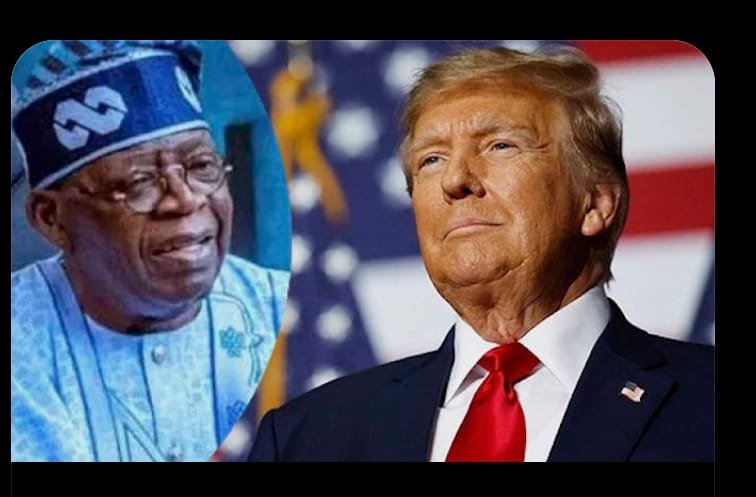
A group of Republican lawmakers in the United States House of Representatives has introduced a new legislative proposal seeking to deepen the U.S. oversight of religious freedom conditions and security challenges in Nigeria.
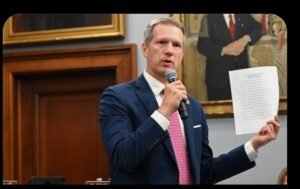
The proposed Nigeria Religious Freedom and Accountability Act of 2026 (H.R. 7457) was formally introduced on February 10 and referred to the House Foreign Affairs and Judiciary Committees for consideration.
The bill is sponsored by Riley Moore and co-sponsored by lawmakers, including Chris Smith, Brian Mast, Mario Díaz-Balart, and Bill Huizenga.
If enacted, the legislation would require the U.S. Department of State to submit an annual, detailed report to Congress outlining diplomatic actions and policy steps taken to address what sponsors describe as religious persecution and mass atrocities against Christian communities in Nigeria.
The bill calls for potential visa restrictions and asset freezes under the Global Magnitsky Human Rights Accountability Act against individuals or entities accused of severe violations of religious freedom.
It directs the Secretary of State to determine whether certain armed groups, including those described as Fulani-ethnic militias , meet the legal threshold for designation as a Foreign Terrorist Organization (FTO) under U.S. law.
The proposal recommends the delivery of humanitarian support to affected communities, potentially co-funded with the Nigerian government, and implemented through trusted civil society and faith-based organisations.
A review of existing U.S. assistance to Nigeria would assess whether American aid unintentionally enables or fails to prevent acts of persecution.
Supporters argue that the measure strengthens American commitment to global religious freedom and aligns U.S. foreign policy with moral and strategic interests. Tom Cole, Chairman of the House Appropriations Committee, has described the proposal as consistent with core American values and national interests.
The proposed bill builds on the foundation of the International Religious Freedom Act, which authorizes the United States to monitor violations of religious liberty globally and designate Countries of Particular Concern (CPCs).
In late 2025, Nigeria was redesignated as a Country of Particular Concern by the U.S. executive branch over severe violations of religious freedom; a classification that enables diplomatic engagement and possible sanctions.
Proponents of the new legislation say it aims to enhance accountability and transparency in U.S.–Nigeria relations, particularly in regions affected by communal violence and insurgency.
Nigeria continues to grapple with complex security threats involving multiple actors and drivers.
In the northeast, extremist groups such as Boko Haram and the Islamic State West Africa Province remain active despite sustained military operations.
In central states, recurring clashes between farmers and herders often involving groups identifying as Fulani have contributed to prolonged instability.
Nigerian authorities maintain that the country’s security challenges are multifaceted and affect citizens across religious and ethnic lines. Officials have repeatedly rejected allegations of state-sponsored religious persecution, describing the violence as driven by insurgency, criminality, competition over land, and communal tensions.
Earlier in 2026, Nigerian and U.S. officials reaffirmed bilateral security cooperation, including the deployment of a contingent of U.S. personnel to provide training and technical assistance to Nigerian forces in a non-combat capacity aimed at strengthening counter-terrorism operations.
The proposed legislation has drawn varied responses.
Supporters argue it increases international scrutiny and offers protection to vulnerable communities.
Critics, however, warn that framing Nigeria’s violence primarily as religious persecution risks oversimplifying a deeply layered security crisis. Some analysts caution that such legislation could complicate diplomatic relations between Abuja and Washington.
The New Nigeria Peoples Party (NNPP) has publicly rejected reports suggesting that the bill targets its national leader, describing such interpretations as unfounded.
As of press time, Nigeria’s federal government has not issued an official position on the bill. Diplomatic engagements between both countries continue on broader security and development cooperation.
The Nigeria Religious Freedom and Accountability Act must pass committee reviews before it can be debated on the House floor. If approved by the House, it would require passage in the Senate and presidential assent to become law.
Observers say the bill’s trajectory will be closely watched in both Abuja and Washington, as it underscores broader global debates about religious freedom, counter-terrorism policy, foreign aid accountability, and the delicate balance between diplomatic pressure and strategic partnership.