
Connect with us

General News

ONITSHA MARKET DEMOLITION SPARKS OUTRAGE AS CIVIL SOCIETY ACCUSES ANAMBRA GOVT OF DEFYING COURT ORDER

Published

on

Share

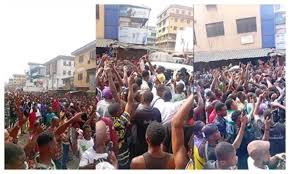
For thousands of traders in Anambra, the market is not just a place of business, it is the heartbeat of survival. That heartbeat was shaken this week following reports of a controversial demolition at Onitsha Main Market. The Anambra Civil Society Network has accused the Anambra State Government of demolishing parts of the historic market despite what it describes as a subsisting court order restraining such action.
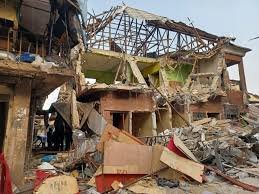

In a strongly worded press statement signed by its Chairman, Prince Chris Azor, ACSONet said the demolition, allegedly carried out in the early hours with armed security presence, has left traders anxious and distraught, with some reportedly scrambling to salvage goods as structures were pulled down. Describing Onitsha Main Market as a major economic nerve centre in the South East, the group warned that any intervention affecting thousands of livelihoods must be lawful, transparent and inclusive.

ACSONet anchored its concerns on constitutional provisions, citing Sections 6 and 287 of the 1999 Constitution which make court decisions binding on all authorities. It also referenced Section 44, which protects citizens from compulsory acquisition of property without due process and compensation. Compliance with court orders is not discretionary. It is a constitutional duty, the statement stressed.
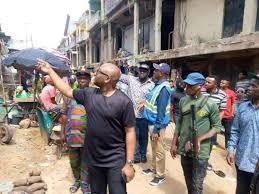
While acknowledging the government’s right to pursue urban renewal and infrastructure upgrades, the group insisted that development must not override the rule of law. It called for an immediate halt to further demolition pending the final determination of the matter before the court. ACSONet also urged the state government to convene urgent dialogue with recognized market leaders, affected traders and civil society groups to clarify long-term plans, timelines, compensation arrangements and relocation options.

See also  TIWA SAVAGE REVEALS DATING STRUGGLES, CONSIDERS BECOMING A SECOND WIFE THAN BABY MAMA

At the same time, traders were advised to remain peaceful and seek redress through lawful means. The unfolding situation has heightened tensions in Onitsha, with many observers warning that how the matter is handled could shape public trust in governance and institutional integrity in the state. For now, civil society’s message is clear: obey the court, engage the people, and protect livelihoods.

Continue Reading
Click to comment

Leave a Reply

Your email address will not be published. Required fields are marked *

General News

FG Moves to Regulate Informal Sector Taxation, Outlaws Cash Collection Practices

Published

on

Share


The Federal Government of Nigeria has unveiled a new presumptive tax framework introducing a one per cent turnover levy for eligible informal sector businesses while prohibiting cash-based tax collection and roadblock enforcement across the country.

The policy, announced in Abuja, is part of broader tax reform implementation guidelines designed to streamline informal sector taxation in Nigeria.

Executive Secretary of the Joint Revenue Board, Olusegun Adesokan, said the framework aims to eliminate coercive and fragmented tax collection methods, particularly at the subnational level.

He explained that all forms of cash tax collection by authorities are now prohibited, while the use of roadblocks for tax enforcement has also been outlawed.

Under the new arrangement, nano and small businesses with annual turnovers of N12 million and below are exempted from presumptive taxation.

However, other informal businesses are required to pay a flat one per cent tax on turnover, with payments channelled through digital platforms to promote accountability and efficiency.

Minister of Finance and Coordinating Minister of the Economy, Wale Edun, said the signing of the regulations signals the transition from policy formulation to full implementation of tax reforms approved between 2025 and 2026.

He stressed that the reform is not aimed at increasing tax rates but at widening the tax net by integrating more informal sector operators into the formal economy.

Edun added that the regulations were jointly developed with the JRB to ensure harmonised tax administration across federal, state, and local government structures, while an ombudsman mechanism will monitor fairness in enforcement.

Chairman of the National Tax Policy Implementation Committee, Joseph Tegbe, described the initiative as a shift from regulatory approval to practical execution of tax reform.

See also  TIWA SAVAGE REVEALS DATING STRUGGLES, CONSIDERS BECOMING A SECOND WIFE THAN BABY MAMA

He noted that although the informal sector accounts for more than 80 per cent of Nigeria’s workforce, its structured revenue contribution remains limited due to systemic challenges.

The committee will collaborate with tax authorities to ensure a transparent and orderly nationwide rollout of the new tax framework.

Continue Reading

Africa

ECOWAS Media Chiefs Move to Tackle Disinformation, Deepen Regional Integration Coverage

Published

on

Share


Directors-General of national television stations across West Africa have gathered in Cotonou to strengthen collective action against misinformation about the Economic Community of West African States (ECOWAS) and enhance public media collaboration in promoting regional integration.

The two-day meeting, organised by the ECOWAS Commission’s Directorate of Communication with support from the German Government, brought together heads of national broadcasters and ECOWAS National Bureaus from 12 member states.

Participants underscored the importance of strengthening public television networks in countering misinformation and improving visibility of ECOWAS programmes, policies, and achievements across the sub-region.

The President of the ECOWAS Commission, Omar Alieu Touray, represented by his Senior Special Adviser, Mr. Abdoulie Gassama, highlighted the critical role national broadcasters play in shaping public understanding of regional initiatives.

He described public television stations as trusted institutions with the reach and credibility necessary to bridge communication gaps between ECOWAS institutions and citizens. He stressed that effective communication remains essential for sustaining confidence in the bloc’s peacebuilding, economic integration, and democratic governance efforts.

The meeting comes amid growing concerns over the rapid spread of false narratives on digital platforms, making coordinated media engagement more urgent. Stakeholders are expected to explore content-sharing frameworks, joint programming opportunities, and structured partnerships to ensure consistent and accurate reporting on ECOWAS activities.

Opening the session, the Chairman of the ECOWAS Administrative and Financial Committee, Komba Momoh, called for practical outcomes from the dialogue.

Represented by Ms. Laygbay Lilian Amadu, Deputy Director of the ECOWAS Country Office in Sierra Leone, she urged participants to move beyond discussions and focus on actionable strategies that would support sustained programming and broader coverage of regional initiatives.

See also  SDP SACKS FORMER CHAIRMAN, TOP OFFICIALS OVER MISCONDUCT AND FINANCIAL IMPROPRIETY

She emphasized that stronger cooperation between ECOWAS and national broadcasters would promote transparency, counter misinformation, and encourage greater public ownership of regional policies.

The Cotonou deliberations are expected to produce concrete commitments aimed at institutionalising collaboration between the ECOWAS Commission and public television networks.

Officials said the initiative represents a strategic step toward strengthening the regional body’s communication ecosystem and ensuring that West Africa’s integration narrative is accurately projected across member states.


Continue Reading

General News

FEDERAL GOVERNMENT SUSPENDS PILGRIMAGES TO ISRAEL AMID MIDDLE EAST SECURITY CONCERNS

Published

on

Share

The Federal Government, through the Nigerian Christian Pilgrim Commission (NCPC), on Tuesday announced the immediate suspension of all pilgrimages to Israel due to the security situation in the Middle East. Bishop Stephen Adegbite, the Executive Secretary of the NCPC, made this known in a statement signed by Mr Celestine Toruka, the Deputy Director and Head, Media and Public Relations in the commission, on Tuesday in Abuja.

“The recent developments in the Middle East, including the imposition of a state of emergency in Israel, have led to the putting on hold of all pilgrimage exercises. This also includes the ones being conducted by the private pilgrimage operators until the situation normalises. The NCPC is monitoring the situation closely and appreciates the cooperation of stakeholders and the media,” he said.

Adegbite urged everyone to pray for peace in Jerusalem and the Middle East. He revealed that the Commission has successfully concluded the 2025 Main Pilgrimage exercise to Israel and Jordan. He said that the last batch of Christian pilgrims arrived safely at the Murtala Muhammed International Airport, Lagos, on March 3.

See also  SDP SACKS FORMER CHAIRMAN, TOP OFFICIALS OVER MISCONDUCT AND FINANCIAL IMPROPRIETY
Continue Reading