
Judiciary
Supreme Court Restores Nestoil, Neconde’s Legal Counsel in $2bn Debt Dispute

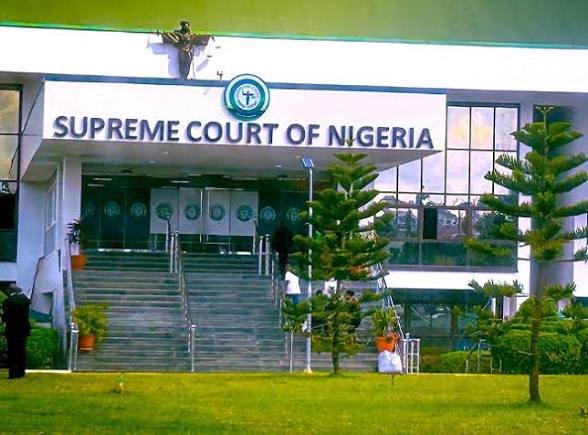
The Supreme Court of Nigeria has restored the right of Nestoil Limited and Neconde Energy Limited to retain their preferred legal representatives in an ongoing multi-billion-dollar debt dispute involving a consortium of lenders.
In a ruling delivered by a five-member panel led by Justice Mohammed Baba Idris, the apex court overturned an earlier decision of the Court of Appeal which had disqualified senior advocates Wole Olanipekun (SAN) and Muiz Banire (SAN) from representing the companies.
The Supreme Court held that despite the appointment of a receiver/manager over the companies by lenders, Nestoil and Neconde retain the legal right to appoint counsel of their choice, particularly in a case where the validity of the receivership itself is being challenged.
Describing the earlier ruling as a “legal anomaly,” the court ruled that allowing lawyers appointed by the receiver/manager to also represent the companies would create a clear conflict of interest and undermine the principles of fairness and independence in legal representation.
The dispute stems from a debt recovery suit filed by lenders, including FBNQuest Merchant Bank Limited and First Trustees Limited, who allege that Nestoil, Neconde, and their promoters Ernest Azudialu-Obiejesi and Nnenna Azudialu-Obiejesi owe over $2 billion, alongside additional liabilities estimated at N430 billion under various financing agreements.
Neconde Energy, which holds interests in Oil Mining Lease 42, and its affiliate Nestoil, an oil services firm, have been under receivership, triggering a legal battle over who controls the companies and who has the authority to represent them in court.
In January 2026, the Supreme Court had remitted related appeals back to the Court of Appeal to first determine the issue of legal representation before addressing the substantive matters. Subsequently, on January 23, 2026, the appellate court ruled that the companies’ boards lacked the authority to appoint counsel once a receiver/manager had been installed, and instead permitted lawyers appointed by the receiver to act on their behalf.
Dissatisfied with the decision, Nestoil and Neconde, alongside their promoters, appealed to the Supreme Court. In its latest ruling, the apex court set aside the appellate court’s decision, affirming that the companies’ boards retain the authority to act in defence of their interests.
The court further ruled that the involvement of the lenders in appointing the receiver/manager raised fundamental concerns, particularly if such an arrangement would allow their appointed counsel to represent the companies in litigation against them.
With the ruling, the appointments of Olanipekun and Banire as legal counsel for Neconde and Nestoil have been reinstated, clearing the way for the companies to proceed with their defence using their chosen lawyers.
The Supreme Court clarified, however, that the judgment is limited to the issue of legal representation and does not determine the merits of the underlying debt claims or the legality of the receivership. Those substantive issues are expected to continue before the lower courts.