
Opinion
Why Apapa and Tin Can Ports Upgrades Matter for Nigeria

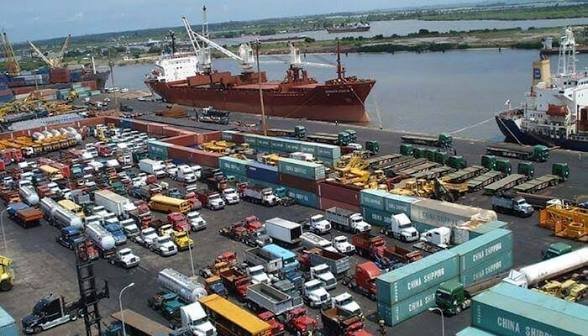
By Barrister Habibu Aliyu


Having served as Minister of Transport, I approach the current debate over Nigeria’s port upgrade not as a distant commentator, but as someone who was directly involved in the early assessments, planning frameworks, and policy conversations that shaped this very intervention. I have seen the books, walked the terminals, engaged operators, and confronted the hard limits of our maritime infrastructure.
That vantage point matters. It allows one to move beyond the noise of public commentary and take a holistic view , one that connects infrastructure, trade flows, national revenue, and long-term economic positioning. From that perspective, I can state without hesitation: the Federal Government is on the right course. The decision to pursue large-scale port modernization, supported by external financing, is not only justified, it is necessary.
Much of the current criticism rests on sentiment rather than substance. It ignores hard data, operational realities, and the central role ports play in the life of a trading nation.
Let us begin with the facts. Nigeria’s maritime trade is overwhelmingly concentrated in Lagos. The Apapa and Tin Can Island ports alone account for well over 70 percent of the country’s total seaborne cargo throughput. When Lekki Deep Sea Port is added, Lagos as a corridor handles close to 80–85 percent of Nigeria’s import and export traffic. This level of concentration is neither efficient nor sustainable.
Within that volume, the cargo mix is equally telling. Nigeria’s ports handle
Over 90 percent of containerized cargo, the backbone of modern trade
The bulk of petroleum product imports
Significant volumes of bulk commodities such as wheat, sugar, and fertiliser
A growing but still underperforming share of non-oil exports, including agricultural produce and solid minerals
Yet, despite this strategic importance, the infrastructure supporting these volumes is outdated.
Apapa Port, commissioned over a century ago, was not designed for today’s cargo intensity. Tin Can Island, developed in the 1970s, now operates far beyond its original capacity. Many of the quay walls are aging. Channel depths are insufficient for newer, larger vessels. Cargo handling remains partly manual. Evacuation of goods is crippled by poor road and rail integration.
The result is predictable; chronic congestion, high vessel waiting time, cargo dwell time that can exceed 20 days, and logistics costs that are among the highest in Africa.
This is where the proposed upgrade becomes not only justified but urgent.
Post-upgrade, Nigeria’s ports particularly in Lagos are expected to undergo a structural transformation in both capacity and cargo profile.
First, in terms of volume, the modernization will
Increase cargo handling capacity by 30–50 percent across key terminals
Enable faster vessel turnaround, reducing congestion and demurrage
Expand container throughput significantly, positioning Nigeria as a regional hub rather than a final destination
Second, in terms of cargo type and sophistication, the upgraded ports will Handle larger container vessels (Post-Panamax and beyond) that currently bypass Nigeria
Expand capacity for export-bound cargo, especially agro-products, minerals, and manufactured goods
Improve facilities for liquid bulk and gas-related cargo, aligning with Nigeria’s energy ambitions
Support roll-on/roll-off (RoRo) operations for vehicles and heavy equipment more efficiently
Critically, the upgrades will also improve intermodal connectivity linking ports to rail corridors and inland dry ports. This is what transforms a port from a congested entry point into a logistics ecosystem.
Beyond Lagos, the development of the Bakassi Deep Sea Port introduces an entirely new dimension. Designed as a modern, deep-draft facility, it will accommodate ultra-large vessels that current Nigerian ports cannot handle
Serve as a transshipment hub for the Gulf of Guinea
Reduce pressure on Lagos by redistributing cargo flows eastward
Open up export corridors for the South-South and North-Central regions
Taken together, these investments are not incremental improvements they are systemic corrections. Those who argue against the financing often frame it as an unnecessary debt burden. But this view fails to account for the economic leakages caused by inefficiency. Nigeria currently loses billions annually through:
Cargo diversion to neighbouring ports
Excessive shipping and insurance costs
Delays that undermine export competitiveness
In effect, the country is already “paying” for poor infrastructure just in a less visible and more damaging way.
The real question, therefore, is not whether Nigeria should borrow to upgrade its ports. It is whether Nigeria should continue to tolerate a system where a country of over 200 million people relies on aging infrastructure for over 80 percent of its trade
Export potential is stifled by logistics bottlenecks
Regional competitors gain advantage from Nigeria’s inaction
Ports are economic multipliers. Every efficiency gained at the port translates into lower prices, higher trade volumes, increased government revenue, and job creation across the value chain.
The proposed upgrade is not about prestige. It is about positioning Nigeria for relevance in a rapidly evolving global trading system.
Delay has a cost. In this case, it is a cost Nigeria has already paid for far too long.
The time to act is now.
Barrister Habibu served as minister of Transport in the Obasanjo Administration and is also A Maritime Attorney