Oil and Gas
NNPC Signs Technical Equity Deal with Chinese Firms to Restart Warri and Port Harcourt Refineries

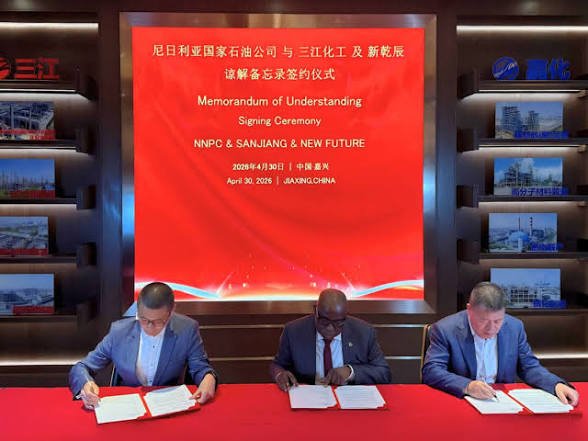
The Nigerian National Petroleum Company Limited has signed a new Memorandum of Understanding with two Chinese companies in a strategic move to finally complete the long-delayed rehabilitation and commercial restart of the Port Harcourt and Warri refineries. The agreement, structured as a potential Technical Equity Partnership, was signed in Jiaxing City, China, on April 30, 2026, and marks a significant departure from past contractor-led repair models.
The deal involves Sanjiang Chemical Company Limited and Xingcheng (Fuzhou) Industrial Park Operation and Management Co. Ltd. The agreement was executed by the Group Chief Executive Officer of NNPC Ltd, Engr. Bashir Bayo Ojulari, alongside the Chairman of Sanjiang Chemical Company, Guan Jianzhong, and the Chairman of Xingcheng Industrial Park, Bill Bi.
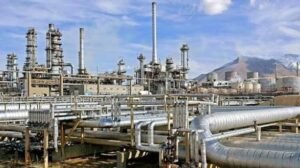
This new partnership comes after years of costly interventions that failed to yield sustainable results. The federal government had previously spent approximately $2.39 billion under the previous administration to repair these two refineries. While the Port Harcourt Refinery briefly resumed operations in November 2024, it was shut down again on May 24, 2025, just six months later, amidst controversy over its output. Similarly, the Warri refinery only operated briefly after its own relaunch in late 2024 before shutting down again.
Speaking after the signing ceremony, Engr. Ojulari emphasized that this new approach focuses on bringing in partners with operational expertise rather than just financing projects. “All parties recognise mutually beneficial opportunities for the development and long-term sustainable profitability of NNPC’s refining assets in Nigeria, and the collective weight required for success,” Ojulari stated . He further explained that the MoU represents a transition to a performance-driven model, adding, “This is an important step on the journey towards identifying potential technical equity partner or partners to restart and expand NNPC’s refineries, and to explore opportunities in co-located petrochemicals and gas-based industries”.
The framework outlined in the agreement covers the completion of outstanding work at both refineries, which have a combined capacity of 335,000 barrels per day. It also establishes a roadmap for operating and maintaining the facilities to achieve sustainable, best-in-class performance. The collaboration includes plans for expansion and upgrades to transition the plants to cleaner and more profitable product standards, as well as expanding petrochemical capacities and developing co-located gas-based industrial hubs.
The shift to a technical equity model signals a strategic departure for NNPC. At the Nigeria International Energy Summit 2026, Ojulari had openly canvassed for global technical partners to take equity positions in Nigeria’s refining assets. “What we are doing differently is moving away from just funding projects to bringing in partners who have skin in the game, partners who will operate, optimise, and guarantee performance,” he had said at the summit. “The days of spending billions on rehabilitation without sustainable output are behind us. We are now focused on partnerships that deliver value, technology transfer, and operational excellence”.
However, the new deal has raised concerns among energy experts regarding transparency and cost. While the NNPC statement released by spokesman Andy Odeh details the scope of the collaboration, it did not state how much Nigeria would pay for this fresh rehabilitation effort, nor did it clarify whether the cost would be in cash or crude oil. One industry source suggested that instead of an outright sale which some stakeholders had called for, NNPC opted to look for technical partners, meaning the company would still retain an interest in the operations. The NNPC noted that while the MoU reflects a shared intention to advance discussions, any binding agreements would be subject to regulatory approvals and the conclusion of detailed commercial negotiations.