Oil and Gas
Obasanjo Tells Federal Government to Stop Wasting Public Funds on Refineries, Says They Can Never Work Again

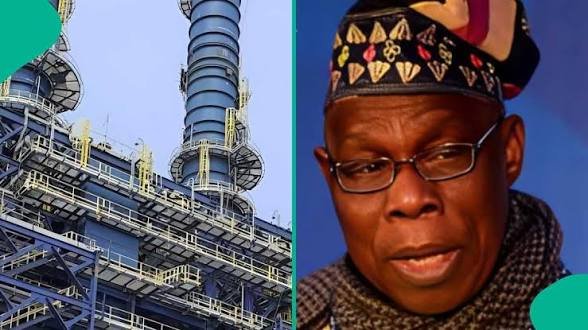
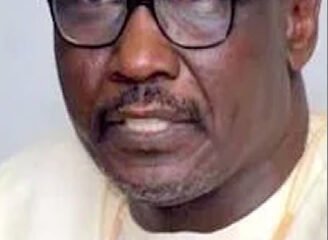
Former President Olusegun Obasanjo has again declared that Nigeria’s four state-owned refineries will never work, urging the federal government to stop wasting public funds on the facilities. The former leader made the remarks during a television interview on Sony Irabor Live aired on Saturday night, as the Nigerian National Petroleum Company Limited continues its search for technical partners to operate the Port Harcourt, Warri, and Kaduna refineries.
Obasanjo held up the Nigeria Liquefied Natural Gas project as proof that public-private partnerships work while government ownership leads to failure. “One of the lessons that I learnt is that PPP works. Look, one project that has not been destroyed by the government in Nigeria is the NLNG, where the private sector has 51 per cent, and the Nigerian government has 49 per cent,” he said.
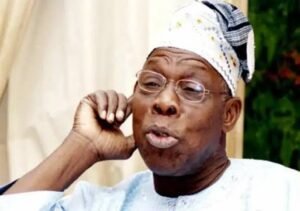
He recalled facing criticism for his position from someone who questioned his qualifications. “The NNPC has refineries, and I said to people that it will never work. And a man had the audacity to say, ‘Am I a chemical engineer?'” Obasanjo stated.
The former president detailed his failed efforts during his tenure to involve global energy firm Shell in running the refineries. “Look, when I was there, I called Shell. I said, ‘Look, please, I beg you, come and take 10 per cent equity and run the refinery for us.’ They said no. I said, ‘Okay, if you don’t want to take equity, don’t take equity. Come and run the refineries.’ They said no,” he recounted.
Obasanjo revealed that he later pressed a top Shell official for an honest explanation. The official cited four reasons for the company’s refusal: Shell makes most of its profits from upstream operations, not downstream; Nigeria’s refineries are too small compared to global standards of 250,000 to 300,000 barrels; the facilities are poorly maintained by quacks and amateurs; and there is excessive corruption surrounding the refineries which Shell did not want to be part of.
The former president also recalled a deal where Aliko Dangote, chairman of the Dangote Group, offered 750 million dollars to acquire a 51 per cent stake in two of the refineries. “Until one day, Aliko came and offered 750 million dollars to take two of the refineries; that will be 51 per cent. I said, ‘Wow, God, you are really a God of miracles.’ I told Aliko to bring the money quickly. They brought the money, and they paid,” Obasanjo said.
However, he explained that his successor, the late President Umaru Yar’Adua, reversed the deal after leaving office, claiming he was under pressure from the NNPC. Obasanjo said he confronted Yar’Adua about the decision. “I said, ‘Look, Umar, maybe you don’t know; this is why we did what we did.’ He said, ‘Well, NNPC came to me.’ I said, ‘But you know that NNPC cannot run this thing.’ He said he knew. I asked, ‘Then why did you give in?’ He said because of pressure,” Obasanjo recounted. He warned then that the refineries would eventually be sold as scrap for less than 200 million dollars.
The former president noted that successive administrations have since spent approximately 16 billion dollars on the refineries, just 4 billion dollars short of what Dangote used to build Africa’s largest private refinery from scratch.
Obasanjo singled out the current NNPC Group Chief Executive Officer, Bayo Ojulari, for honesty about the state of the facilities. Ojulari has acknowledged that despite rehabilitation and brief reopening of the Port Harcourt and Warri refineries in 2024, the facilities are operating well below international standards and remain commercially uncompetitive, especially compared to the Dangote Refinery.
In November 2025, the NNPC announced a fresh target of June 2026 to finalise the selection of technical partners for the refineries. Dangote himself has also expressed doubt that the NNPC refineries will ever work again, citing the same structural issues Obasanjo flagged decades ago.
The NNPC communications office has yet to respond to messages seeking reactions to the former president’s latest claims.