General News
Senate Rejects Oshiomhole’s Call for Economic Warfare as Nigeria Debates Retaliation for Xenophobic Attacks

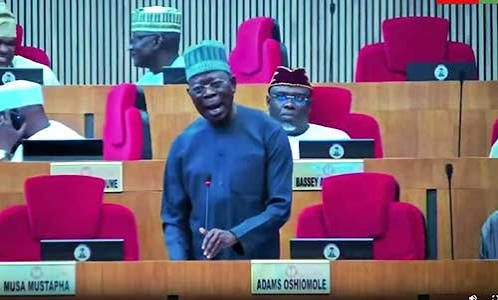
The Nigerian Senate witnessed a heated and deeply divided session on Tuesday as lawmakers debated a response to the renewed wave of xenophobic attacks against Nigerians in South Africa. While former Edo State Governor and现任 Senator Adams Oshiomhole led a fierce charge for immediate economic retaliation—including the revocation of licenses for South African giants MTN and MultiChoice (DSTV)—Senate President Godswill Akpabio intervened to steer the chamber toward diplomatic resolution, rejecting calls for economic warfare.
Oshiomhole, representing Edo North, dismissed the notion of merely “shedding tears” for victims and instead urged the Federal Government to adopt a强硬 policy of reciprocity. Citing what he described as the daily economic exploitation by South African firms, he argued that Nigeria has the leverage to strike back forcefully.


“I don’t want this Senate to be shedding tears, to sympathise with those who have died. We didn’t come here to share tears,” Oshiomhole declared during the plenary session. “If you hit me, I’ll hit you. I think it is appropriate in diplomacy. It’s an economic struggle”.
The lawmaker specifically targeted the telecommunications giant MTN and pay-TV operator DSTV, accusing them of “carting away millions of dollars” from Nigeria while Nigerian citizens face hostility and death in their home country. He proposed the nationalisation of MTN and the revocation of DSTV’s licence, arguing that local investors could fill the void and that such a move would force the South African government to take Nigeria seriously.
“This Senate should adopt a position that MTN, a South African company that is cutting away millions of dollars from Nigeria every day. That Nigeria nationalise it and withdraw its licence,” Oshiomhole said. “When we hit back, the president of South Africa will not only talk, but will go on his knees to recognise that Nigerians cannot be intimidated”.
The call for action was not isolated to the Senate. The House of Representatives also condemned the attacks and urged the Federal Government to review all bilateral agreements with South Africa, while temporarily suspending the issuance of business permits to new South African companies. Lawmakers in the lower chamber mandated the establishment of a 24-hour emergency response desk and a legal aid fund to support Nigerians in distress in South Africa.
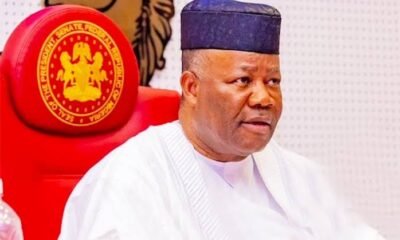
However, the motion for outright economic retaliation faced an abrupt roadblock in the Senate. As tensions peaked, Senate President Godswill Akpabio moved to calm the chamber, warning against decisions driven by emotion that could escalate into broader economic warfare.
“We must not allow emotion to override diplomacy,” Akpabio said, steering the chamber away from Oshiomhole’s proposal. “Nigeria will act firmly, but responsibly. We cannot solve this crisis by escalating it into economic warfare”.
Instead of sanctions, Akpabio announced that the Senate would form a joint ad hoc committee to engage with South African lawmakers and that a high-powered delegation would officially register Nigeria’s grievances with authorities in Pretoria. The Senate also observed a minute of silence for victims of the attacks.
Despite the Senate President’s intervention, other lawmakers voiced support for a tough stance. Senator Victor Umeh described the situation in South Africa as dire, stating that Nigerians are “hiding for their lives” and unable to move freely. He called on the African Union to impose sanctions, asking, “We cannot allow this to continue” . Senator Abdul Ningi further warned that Nigeria has “alternatives and options,” threatening that retaliatory actions could be taken against South African interests across Africa if the attacks persist.
The renewed diplomatic row follows the recent deaths of several Nigerians in South Africa, including Ekpenyong Andrew, who was found dead in Pretoria, and Amaramiro Emmanuel, who died from injuries allegedly sustained during an attack by security personnel.