Aviation
How a Power Bank Forced an Emergency Flight Diversion

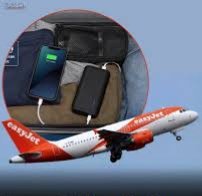
An EasyJet flight travelling from Egypt to the United Kingdom was forced to divert to Rome after a passenger revealed that a power bank had been left charging inside checked luggage, triggering safety concerns over the risk posed by lithium-ion batteries.
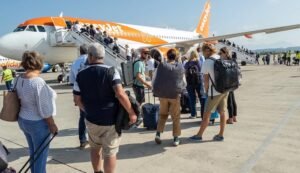
The flight, EZY2618, was travelling from Hurghada, Egypt, to London Luton Airport when the incident occurred mid-air on Tuesday night.
According to reports, the aircraft was cruising at about 36,000 feet over the Adriatic Sea when the pilot made a sudden turn toward Rome following notification from a passenger that a portable charger was inside luggage stored in the aircraft hold.
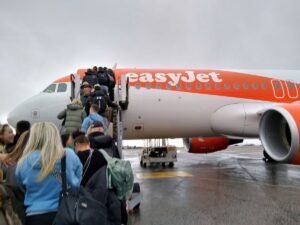
The plane landed safely at Rome Fiumicino Airport as a precautionary measure, with passengers later forced to spend the night before the flight was rescheduled for the following day.
EasyJet said the diversion was carried out in line with international aviation safety regulations governing the transportation and use of lithium-ion battery devices onboard aircraft.
In a statement, the airline said passenger safety remained its highest priority.
“The aircraft landed safely and passengers disembarked routinely. Hotel accommodation and meals were provided where available, while refreshments were also made available to customers who remained at the airport,” the airline stated.
EasyJet apologised to passengers for the inconvenience caused by the diversion and the resulting delay.
Although there was reportedly no malfunction or fire involving the power bank, aviation regulations prohibit portable chargers from being stored or charged in an aircraft’s cargo hold because lithium-ion batteries can overheat or ignite.
Many airlines across the world have tightened restrictions on power banks following growing concerns about onboard battery-related fires.
EasyJet’s policy allows passengers to carry power banks only in cabin baggage, while their use during flights is prohibited. The airline also limits passengers to two power banks each, with strict watt-hour restrictions.
Other major airlines, including Ryanair and British Airways, operate similar safety measures, banning power banks from checked luggage and restricting their use onboard.
According to data from the UK Civil Aviation Authority, airlines globally recorded an average of two lithium battery-related “thermal runaway” incidents every week in 2024.
The incidents range from overheating batteries to onboard fires linked to portable electronic devices and power banks.
The growing threat has prompted the International Civil Aviation Organization to introduce stricter global restrictions on portable battery devices.
In recent years, several aviation incidents have been linked to lithium-ion batteries, including a fire that destroyed a passenger plane in South Korea in January 2025 and another incident at Melbourne International Airport in which a man suffered burns after a power bank ignited in his pocket.