Connect with us

Health

BETTY AKEREDOLU: SEEKING MEDICAL CARE, NOT SPIRITUAL HEALERS, WAS MY SAVIOR

Published

on

Share

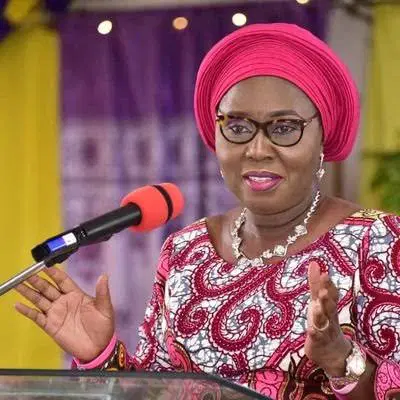
Former First Lady of Ondo State, Betty Anyanwu-Akeredolu, has emphasized the importance of seeking medical care over spiritual healing, citing her own experience with breast cancer and her late husband’s battle with prostate cancer. Diagnosed with breast cancer 27 years ago, Mrs. Akeredolu credits her decision to seek medical care, rather than relying on spiritual healers, for her recovery.

“If Aketi had listened to me, I wouldn’t be a widow,” she said, referring to her late husband, Governor Rotimi Akeredolu, who passed away on December 23, 2023. Mrs. Akeredolu described her husband as religious, while she was “wired differently” and had no apologies for it.

When asked about her views on prayers and spiritual assistance during her husband’s illness, Mrs. Akeredolu expressed skepticism. “What came out of their mountain climbing, ‘blessed’ handkerchiefs, water, olive oil, etc., from the GOs and all the noisy prayers like people possessed by demons?” she questioned.

Mrs. Akeredolu, who has been open about her own battle with breast cancer, stressed that nobody can pray away cancer. “You cannot pray away breast cancer or any cancer at all,” she said. “Cancer progresses over time and in four stages. Climbing mountains or performing rituals is simply a waste of time while cancer cells are multiplying. The earlier you detect, present, and treat it, the better your chances of survival.”

The former First Lady advised the public to prioritize medical care over spiritual healing. “Don’t waste your time running to any pastor. A pastor is not a doctor; he understands nothing about cancer. He can only pray, and prayers don’t cure cancer. Consult a doctor—not just any doctor, but a doctor who specializes in cancer cases.”

See also  ACIU DELEGATION SECURES GOVERNOR OTTI’S COMMITMENTS ON POWER, EROSION, AND AKAHABA GENERAL HOSPITAL

Mrs. Akeredolu also shared her thoughts on the role of spiritual beliefs in healthcare. “Recognizing that spiritual or religious beliefs are like an opiate for many Nigerians, it would be foolhardy to advise otherwise. My take is that while people may believe in whatever they want, they should consult a doctor when faced with health challenges.”

In addition to her advocacy for medical care, Mrs. Akeredolu expressed her intention to pursue her senatorial ambition. She also criticized the administration of her husband’s successor, Governor Lucky Aiyedatiwa, describing it as “rudderless”.

Continue Reading
Click to comment

Leave a Reply

Your email address will not be published. Required fields are marked *

Health

Nigerian Dietitian Dismissed in UK Over False Qualifications, Competency Concerns

Published

on

Share


A Nigerian-born senior dietitian, Ifeyinwa Chizube Ndulue-Nonso, has been dismissed from her role in the United Kingdom after a tribunal found she misrepresented her qualifications and demonstrated serious gaps in basic medical knowledge.

Ndulue-Nonso was employed by Manchester University NHS Foundation Trust in February 2024 after scoring 62 percent during her interview. However, concerns about her competence reportedly surfaced within days of resuming duty.

According to tribunal findings, she admitted to exaggerating her experience during the hiring process, stating she had “lied over her qualifications a bit,” which she attributed to cultural differences.

Her supervisor, Lorna Haywood, raised alarm over what she described as “extremely concerning” knowledge gaps, noting that the issues involved fundamental aspects of human anatomy and clinical practice.

Among the reported errors, Ndulue-Nonso allegedly stated that urine is stored in the gallbladder and that radiotherapy is used to treat heart failure. She was also said to have struggled with calculating body mass index (BMI) and incorrectly identified parts of the digestive system.

Further concerns emerged when she reportedly admitted to lacking practical experience in key procedures she had claimed familiarity with, including intravenous feeding and the use of nutritional supplements. She was also said to have failed to recognise a feeding tube in a patient and was observed searching online for basic medical terms during work hours.

She was suspended in March 2024 pending an investigation into her credentials. Disciplinary proceedings later found that 20 out of the 28 areas of expertise she claimed were not supported by her actual knowledge or experience.

See also  ISRAEL TO ATTEMPT WORLD'S FIRST SPINAL CORD TRANSPLANT IN GROUNDBREAKING MEDICAL PROCEDURE

Following the outcome, she has been barred from practising as a registered dietitian in the UK.

The case has raised broader concerns about recruitment processes and verification of professional qualifications in the healthcare sector.

Continue Reading

General News

Jehovah’s Witnesses Ease Rules On Blood Transfusions Allow Use Of Own Blood

Published

on

Share


Jehovah’s Witnesses has updated its long standing policy on blood transfusions, now allowing members to have their own blood removed, stored, and later returned during medical procedures.

The adjustment means adherents can undergo planned surgeries involving the use of their own blood, but the group still prohibits receiving blood donated by others.

Gerrit Losch, a member of the movement’s leadership, announced the change, stating that each individual Christian must decide how their blood is used in medical and surgical care.

Despite the revision, the organisation emphasized that its core belief on the sanctity of blood remains unchanged. The doctrine is rooted in interpretations of biblical teachings, which followers say instruct believers to abstain from blood.

The development has drawn mixed reactions. Some former members argue the update does not go far enough, particularly in emergency situations where donated blood may be required to save lives.

In a recent legal case in Edinburgh, a court ruled that doctors could administer a blood transfusion to a 14 year old Jehovah’s Witness if necessary to preserve her life, despite her refusal on religious grounds. The judge held that such intervention would be in the child’s best interest.

Jehovah’s Witnesses, known globally for their door to door evangelism, number about nine million members worldwide, including roughly 144,000 in the United Kingdom.

See also  FEDERAL MEDICAL CENTRE ASABA SET TO DELIVER COMPREHENSIVE WOMEN'S HEALTH INTERVENTION AT PROJECT 774 EXPLODE IN EDO STATE
Continue Reading

Health

Alberta Moves to Restrict Medically Assisted Dying to End-of-Life Cases

Published

on

Share


Alberta has proposed new legislation to limit the use of medically assisted dying (MAID) strictly to patients at the end of life, marking the first time a Canadian province has independently sought to impose such restrictions.

Currently, Canada allows medically assisted dying for individuals with serious, incurable illnesses or disabilities, even if their death is not reasonably foreseeable. Federal law is also set to expand MAID eligibility next year to include those whose sole medical condition is mental illness, though implementation has already been delayed twice.

Speaking at a news conference on Wednesday, Alberta Premier Danielle Smith emphasized that assisted dying should be reserved for those with no hope of recovery. “This legislation strengthens safeguards and restores clear limits on eligibility to protect vulnerable Albertans facing mental illness or living with disabilities,” she said. “Those struggling with severe mental health challenges need treatment, compassion and support, not a path to end their life at what may be their lowest moment.”

The proposed bill would prohibit doctors from initiating MAID discussions with patients and ban public advertising of the service in healthcare facilities. It would also formalize conscience protections for healthcare professionals and institutions.

Supporters of the legislation include Moira Wilson, president of Inclusion Canada, who said it “demonstrates that governments can strengthen laws and better protect people whose lives are not nearing an end,” and Mara Grunau, CEO of the Canadian Mental Health Association’s Alberta division, who highlighted the importance of recovery from mental illness.

However, opponents, including Helen Long, CEO of Dying with Dignity Canada, argue the proposal undermines patient autonomy. Long described the legislation as “a direct attempt to circumvent the constitutional criminal law authority” and warned it could create additional barriers for suffering individuals wishing to exercise choice.

See also  APC CHIEFTAIN JESUTEGA ONOKPASA DIES AT 49

Medically assisted deaths currently account for roughly 5% of deaths in Canada, with the majority involving patients whose death was reasonably foreseeable. Alberta’s proposed law aims to ensure that vulnerable groups, particularly those with mental illnesses or disabilities, are offered support and care rather than premature death.

Canada is among a handful of countries that have introduced assisted dying laws in the past decade, including Australia, New Zealand, Spain, and Austria.

Continue Reading