Foreign
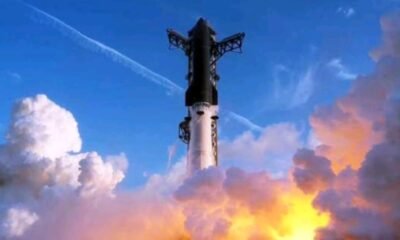
SpaceX Starship Completes 15th Test Flight as Chopstick Arms Catch Upper Stage for First Time

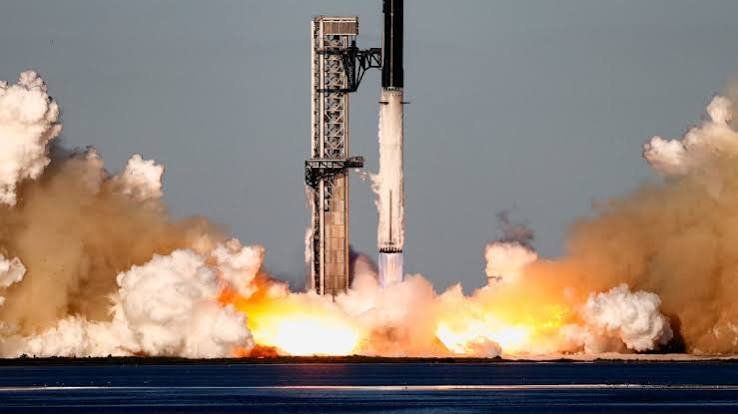
SpaceX has successfully caught the upper stage of its Starship rocket for the first time, marking a historic milestone in the company’s quest to build a fully reusable launch system.
The spacecraft, known as Ship 42, was secured by the mechanical “chopstick” arms on the launch tower at Starbase in South Texas on Saturday, November 14, 2026, after a flight lasting approximately 22 hours.
The catch came after the rocket completed 14 orbits around Earth and deployed 26 next-generation Starlink V3 satellites.
SpaceX staff erupted in loud cheers as the vehicle returned to the launchpad and was captured intact. The company described the maneuver as “picture perfect”.
The booster, however, failed to return as planned. The Super Heavy first stage aborted its catch attempt minutes after launch on Friday due to an automated safety check.
SpaceX spokesperson Dan Huot initially cited a guidance issue but later clarified that the booster’s systems performed correctly and detected it was not in the right position for a catch. The booster diverted to the Gulf of Mexico, where it exploded just above the water.
Elon Musk later posted on X that the booster was “slightly low on fuel” and cited “slight underperformance of engines” as the reason for the diversion. The launch had taken place at 4:47 p.m. local time on Friday from the Starbase facility.
The successful catch of the upper stage represents a major step toward full reusability.
Professor Malcolm Macdonald, president of the Royal Aeronautical Society, said: “Not recovering the first stage is a setback. But they have recovered Super Heavy before and so successfully returning and recovering the Ship, is a substantial step forward. They have demonstrated the two halves of the recovery challenge, just not yet on the same flight. The next milestone would be stitching those achievements together and then proving they can do it reliably, repeatedly and economically”.
SpaceX had hoped to execute a “double catch” during the mission, which would have been the first full recovery of an orbital launch system.
The company has previously caught the Super Heavy booster on three separate occasions but had never attempted to catch the upper stage until this flight.
The 124-metre-tall Starship is the largest and most powerful rocket ever built, consisting of the Super Heavy booster with 33 engines and the Starship upper stage.
The mission also marked the second time Starship’s upper stage reached orbit, following a successful orbital flight in September 2026.
The 26 Starlink satellites deployed during the flight are part of SpaceX’s expanding internet communications network.