
Featured
ABDUCTION AND DETENTION BY THE EFCC AND INCARCERATION IN KUJE PRISON WILL NEVER SILENCE ME

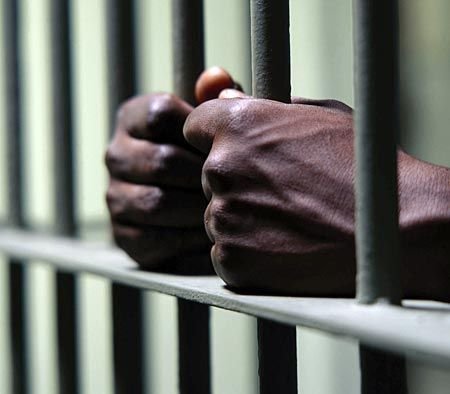
Prof. Yusuf Writes from detention
Prof. Usman Yusuf 12 February 2025
Big Brother Is Watching
I have felt the haunting presence of the state stalking me since I started publicly criticising the policies of President Bola Ahmed Tinubu’s government that have been inflicting unbearable hardships on Nigerians. I know it to be true that security agents have been physically and electronically tracking my family and I on the orders of this government.
The Trigger: Northern Youths Summit in Bauchi
On Saturday, 25 January 2025, I was invited to Bauchi to chair the maiden summit of Tafiyar Matasan Arewa, a Northern Youth Movement with branches in all 19 Northern states. The summit theme was the role of youths in nation-building.
Most speakers spoke in Hausa, but I communicated in both Hausa and English to reach a wider audience. I called on the youths to wake up and take their destinies in their hands because nations are built by the youths, not the aged. I spoke on the following 10 points:
- Northern Nigeria has only itself to blame for the hardships this government is inflicting on its people, despite contributing 62% of the votes to it’s election victory.
- The Muslim-Muslim ticket of the ruling Party APC in the 2023 Presidential elections was an electoral scam that has done nothing but deceived people and widened the fissure between Muslims and Christians in the region.
- There has been a premeditated plan to divide peoples of the north with insecurity (Boko Haram, Banditry, Lakurawa, etc.), inter-ethnic strife between Hausas and Fulanis in the Northwest and Fulanis and other ethnic groups in the rest of the region. Religious divide and suspicions have been exacerbated by the ruling party’s Muslim-Muslim ticket.
- Pervasive insecurity has devastated the region and destroyed its social fabric making it poorer, hungrier and very dangerous.
- Systemic Balkanisation and bastardisation of the region’s respected traditional institutions, as in Kano and Adamawa states.
- Corruption and manipulation of some Clerics in the region by the government for them to pacify the suffering masses.
- This government is now sponsoring its Hausa political singers to sing songs that fan embers of hatred and enmity between the peoples of northern Nigeria and their brethren in Niger Republic.
- Deterioration of the relationship between Nigeria and Niger Republic and the exit of Mali, Burkina Faso and Niger from the ECOWAS are bad news for the security and socio-economic wellbeing of Nigeria and northern Nigeria in particular.
- President Tinubu’s romance with France is a big concern for the security of Nigeria and the West African subregion and a harbinger of bad things to come.
- This Government needs to review and reverse its economic policies that are causing unbearable hardships for citizens.
Finally, I called upon Northern youths to remain united, shun all acts of violence and criminality, engage positively in the political process, and resist any person or group trying to use religion or ethnicity to divide the people of the region. The event received very wide press coverage.
In the evening after the event when I returned to my hotel accommodation, I noticed some strange people in the lobby, hallway, and restaurant that I immediately knew were security agents stalking me.
Abduction and detention for 6 days at the EFCC: From Wed. 29 Jan. to Mon. 3 Feb. 2025
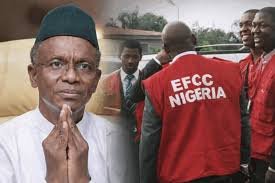
On Wednesday, 29 January 2025, at around 6:30pm, as I was preparing to break my fast, my wife came upstairs to inform me that two gentlemen in black suits knocked at the door and came inside the house, saying I knew they were coming. I came downstairs in my Jallabiyya (robe), no cap, with bathroom slippers to meet these gentlemen who introduced themselves as operatives of the Economic and Financial Crimes Commission (EFCC) directed to take me to their headquarters.
I asked them for their badges, which they showed me with an apology for the oversight. I asked for an arrest warrant, and they told me that they did not need one. I also asked why I was not sent any formal invitation letter before this intrusive visit. I then asked to be allowed to go upstairs to change but was physically blocked by these operatives. I also asked for my wife to be allowed to go upstairs and bring me a change of clothing, but they refused to allow that.
On stepping outside the house, there were 5 armed mobile policemen, some deployed to the back of my house, presumably to prevent me from escaping through the back door or window. The engine of the bus they came in was left running with the driver sitting inside.
In the heat of argument, my wife got into a shouting match with the lead operative, which made her say a few unpleasant words that provoked him and the rest of his team.
My 14-year-old daughter was understandably very shaken by this act of state terror. I shouted out some words of consolation to her because I was blocked from going close to hug and talk to her. I asked my wife to call my brothers and Lawyers to let them know.
The lead operative angrily seized my phone from my hand and literally bundled me onto the bus, seating me between him and an armed mobile policeman.
The driver then zoomed off, driving crazily, sometimes against the flow of traffic to the EFCC headquarters. All the dark-suited operatives and the five armed mobile policemen in the bus were gleefully high-fiving themselves as if they had captured Kachalla Bello Turji, the notorious Zamfara bandit kingpin.
Let us be clear, the main purpose of these cowardly Gestapo tactics by the EFCC was to use the instrument of state to intimidate and terrorise my family. As for me, I was not the least impressed or intimidated by this shameful act of state terror.
On arriving at the EFCC, the five armed mobile policemen were dismissed with a part on the back for a job well done while I was escorted by the dark-suited operatives upstairs to the office of head of Procurement Fraud Section (PFS) to whom I introduced myself and asked why he sent his operatives to abduct me from my house to his office. He just handed me a bunch of papers, and he said were my charges asking me to sign, which I did after some back and forth.
I asked him for a bottle of water to break my fast, which he obliged, and to be allowed to call my wife. Unfortunately, my phone battery had run down. I was refused a phone call to tell my wife and daughter where and how I was.
After signing and collecting a copy of the charges against me, the boss PFS who seemed in a rush to close for the day, asked his assistant to take his bag downstairs to his car as if I was the last item on his to-do list for the day.
No one told me why I was abducted, whether or not I was going to be detained, when I would be allowed access to my family and Lawyers, or when I would be arraigned in court to answer the charges labelled against me.
I was then taken on foot around the main building to the detention cells. After being processed, I asked to be allowed to say my evening prayers (Maghrib and Isha), after which I was taken to my cell, which I shared with three other detainees.
Many of the detainees, especially the youths, recognised me and came over to greet and offer their prayers and best wishes. My three cellmates accorded me all the courtesy and respect befitting my grey hairs. They gave me a sachet of pure water and a cup of hot tea, which helped ease my headache, resulting from caffeine withdrawal and hunger from 20 hours of fasting.
Detainees sleep on thin mattresses that touch each other on a bare floor. My cellmates offered me the privileged position of being next to the wall.
It was now 11 p.m., the lights were turned off, and the cell doors were locked with keys from outside. I laid down in the dark, pained that I had not spoken with my wife and daughter to tell them where and how I was doing.
Soon after the lights went out, one of my cellmates started snoring loudly, ordinarily, this would have kept me awake, but I fell asleep until awoken by the metallic clanging sound of the cell guards opening the cells for morning prayers at 5am. We came out to say our prayers in a small recess on the corridor.
My name was called out at 7am on Thursday, 30 January 2025, and told to get ready to be taken to court at 8am. On coming out of the building housing the detention cells with my interrogation officer (IO), a photographer of the media unit of the EFCC was strategically stationed to be taking my pictures unshaven, in bathroom slippers, no cap and in the same clothing that I was abducted from my house the evening before.
It was then very obvious to me that one of the directives to the EFCC was to publicly humiliate, demunanise, and weaken my spirit in addition to smearing my reputation and integrity with frivolous made-up charges.
When I got into the bus, I jokingly told the operatives that they had forgotten to put on hands and legs, cuffs, and chains on me. They busted out laughing, saying, “Haba Oga, e no reach dat level”.
The judge adjourned the date of my arraignment to Monday, 3 February 2025, because lawyers of the EFCC were not prepared, which meant four more days of detention in EFCC’s cell for me.
On arriving back at the EFCC, my wife was waiting with a fresh change of clothing and a home-cooked meal; the last time I had anything to eat was about 40 hours ago.
I gently reminded her that our fight is not with the EFCC or its operatives but with President Bola Ahmed Tinubu’s corrupt and tyrannical government. I convinced her to come upstairs with me for her to apologize to the operative she got into a shouting match with when they came to our house to abduct me the night before. Her apology worked magic because it got me an upgrade from the cell I shared with three other detainees to a single cell all to myself.
The boredom of detention was eased by visits from family and friends, taking walks on the long corridor of the cells, reading the Qur’an, getting enough rest and mentally tuning out of the hustle and bustle of the outside world, I felt the comforting warmth of an inner peace and calmness that I had never experienced in my life.
On the day of my arraignment on Monday, 3 February 2025, the Court was packed full with lawyers, youth organisations, and activists. After my arraignment, the judge ordered that I should be remanded in Kuje Prison until 12 February 2025, when she could hear my Lawyers’ bail application.
This ended my six days of detention in the EFCC and the beginning of nine days of Incarceration in Kuje Prison. I was promptly taken to the Prison by EFCC operatives in their bus and handed over to the Nigerian Correctional Service,
First 9 days of incarceration in Kuje Prison: From Mon. 3 to Wed 12 Feb. 2025
The name Kuje Prison from the outside feels like going to the dark beyond. My experience from the first day I got in to the day I exited was anything but. I found the staff of the Nigerian Correctional Service in Kuje to be compassionate, courteous, supportive, and very professional in the conduct of their duties. They treated the inmates, majority of whom are youths, as humans with the utmost of respect, support, and understanding.
I was processed and taken to my new home, called the segregation unit, which houses VIP inmates. Although the setting is relaxed with some few privileges, one is constantly reminded of the loss of his freedom by round the clock presence of guards, CCTVs in the hallway and the courtyard that are monitored both within the Prison and remotely at the headquarters and the fact that the guards locked the door to each cell from the outside each day at 8pm and opened next day at 7am which is 11 hours locked up in a hot cell measuring about 10 by 6 feet with onky one window.
The 13 hours of freedom within the Prison yard are invaluable. One could freely walk to the mosque on the other side of the Prison for Zuhr and Asr, the only 2 prayers that are done in a congregation in the mosque because prisoner cells are locked from 6pm to 9am.
Kuje Prison brought back memories of my boarding school days with the prisoners policing themselves. Each prisoner knows his assigned job the moment they are let out of their cells in the morning. The yard is kept very clean, and the relationship between wardens and the prisoners is that of mutual respect.
The prisoners seemed aware of happenings on the outside. Many of them would come to me to offer words of support. As soon as they found out who I was, I kept getting requests to meet with various individuals and groups who wanted me to advocate for them when I get out, they seemed to have forgotten that I also had my own wahala.
I sat down with and heard from young men accused or convicted of being Boko Haram, Bandits, IPOB, Shiites protesters, armed robbers, drug traffickers, murderers, rapists, lifers, 419ers, the list of alleged crimes goes on and on. I also went to the Prison clinic to meet with the staff and patients. I visited the kitchen where prisons did the cooking. I went to and talked to prisoners in the skills acquisition workshops, the small sparsely stocked library and the Nigerian Open University building. I didn’t enter the cells of the inmates but watched them play football matches.
It was very sad to see our youths in the prime of their lives wasting away. What was very painful to hear was the stories of many prisoners awaiting trial some for over 10 years. Kuje Prison with an original capacity of 560 inmates, now holds 960 with 198 (21%) convicted while 765 (79%) awaiting trial.
I considered my spending time in Kuje Prison as a blessing and an education I would never have gotten from any classroom. It was a privilege to hear and see the sufferings, trials and tribulations of these young men. I promised to do my part when I get out to reach officials and agencies that can help make things better.
15 more days of Incarceration in Kuje Prison: Wed. 12 Feb. to Thurs. 27 Feb. 2025
We returned to court today, Wednesday 12 February 2025, for the judge to hear my Lawyers’ bail application. The judge promptly adjourned to Thursday 27 February 2025 to give her ruling whether to grant me bail or not. I was taken back to the prison to spend 15 more days.
Conclusion
I have full confidence in my legal team to vigorously defend me against the baseless recycled falsehoods the EFCC charged me with, to which I pleaded not guilty to all.
My family and I are deeply touched and remain eternally grateful for the overwhelming support from people all across the country and abroad.
I would like to assure all Nigerians that I will never be silenced by President Bola Ahmed Tinubu’s dictatorial and autocratic leadership, which is forcefully suppressing any legitimate opposition to his misrule of our fatherland.
I call on all well-meaning Nigerians to resist these dangerous traits that are reminiscent of the dark days of military rule in Nigeria.
Thank You, And God Bless The Federal Republic of Nigeria.

Usman Yusuf is a Professor of Haematology and Bone Marrow Transplantation





Featured
THE UNCOMMON FEAT: WHY TINUBU’S STATE POLICE REFORM IS THE ANTIDOTE TO DECADES OF INSECURITY
By Oto’ Drama, PhD.
FOR decades, the discourse on Nigeria’s security architecture has been trapped in a centralized bottleneck—a stranger-policing model where officers are often deployed to terrains they do not understand and cultures they do not share.
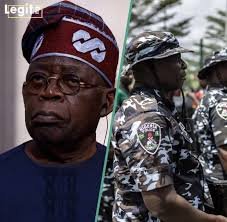
Today, that cycle is breaking. By activating the transition to State Police, President Bola Ahmed Tinubu is not merely fulfilling a campaign promise; he is steering the nation toward a techno-sovereign reality where security is as local as the threats it seeks to eliminate.
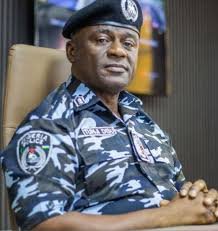
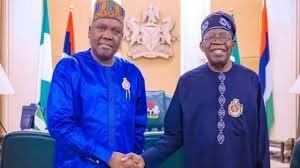
This uncommon feat by the President and the Inspector General of Police (IGP), Tunji Disu, deserves more than just applause—it requires a rigorous intellectual and technological blueprint to ensure it becomes the cornerstone of a new Nigerian regionalism.
The Logic of the Local: Why State Police is the Only Way Forward
The fundamental maxim of modern governance is that all politics is local, but security is even more so. In every hamlet, village, and urban ward, the residents know the visitors, the anomalies, and the shadows. A federal officer from a thousand miles away cannot navigate the intricate social fabric of a community as effectively as a son or daughter of that soil.
While critics fear the political manipulation of state police by governors, this concern—though valid—is outweighed by the catastrophic cost of the status quo. Centralization has not prevented abuse; it has only facilitated inefficiency. By shifting to a subnational model, we introduce proximity as a deterrent. When the police are part of the community, the social contract is renewed, and the wall of silence that often protects bandits and kidnappers begins to crumble.
To transition from a “force” to a “service,” Nigeria must adopt the tactics of the world’s most efficiently policed nations. These countries balance local autonomy with high-technology integration. For President Tinubu and IGP Disu to truly “reclaim the killing fields,” the new state police must not just be “men in uniforms” but nodes in a digital security grid.
Here are three world-class tactics to curtail insecurity.
Nigeria’s forests have become “blind spots.” State police should be equipped with long-range thermal drones integrated with geotagging software. This allows local units to map “heat signatures” in dense foliage, identifying kidnappers’ camps with surgical precision before a single boot hits the ground.
Secondly, is Bio-Digital Border & Community DNA.
Instead of static checkpoints, state police should utilize biometric mobile units. By enrolling local populations into a decentralized database, “strangers” or “infiltrators” in a locality are immediately flagged during routine community patrols. This is the ultimate Bio-Digital Bastion.
Thirdly, is Professional Neutrality via Federal Oversight. To prevent the feared “governor’s militia” syndrome, Nigeria should adopt the German Model:
State Operational Autonomy: States control recruitment, localized patrolling, and community intelligence. A “National Police Service Commission” (NPSC) must set the bar for training, weapon handling, and forensic standards, with the power to decertify any state unit that violates human rights or democratic norms.
The inauguration of the 8-member steering committee by IGP Disu is the first step in a marathon. We must encourage this administration to remain indomitable. The transition to state police is not just a return to regionalism; it is a return to common sense.
By empowering the states to secure their own lands, President Tinubu is providing the antidote to insecurity. It is time to move past the fear of abuse and embrace the power of localized, intelligent, and technologically-driven protection. Nigeria’s sovereignty starts at the grassroots.
Dr. Drama, PhD Counterterrorism contributed this piece via: Nigeriandrama@gmail.com
By Farooq A. Kperogi
I barely know Daniel Bwala. He came to the forefront of national media attention in 2022 because of his impassioned opposition to the choice of Kashim Shettima as Bola Ahmed Tinubu’s running mate. But beyond his public break from the APC, he came across to me as a voluble, ignorant and opportunistic careerist, not because of his stance on Tinubu’s choice of a Muslim running mate, but because of what struck me as his facileness and self-seeking obsessions.
His dramatic volte-face from being a virulent Tinubu critic to a fawning, vicious Tinubu battering ram has proven that my hunch about him was accurate.
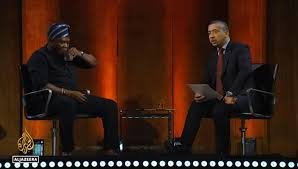
Yet I felt sorry watching him eaten alive by Mehdi Hassan on Al Jazeera on Friday, March 6. He willingly participated in the detonation of what remained of his credibility before the world. In the process, he did incalculable reputational damage to the Tinubu government he is paid to protect.
What viewers saw on Mehdi Hasan’s Head to Head was the spectacle of a presidential spokesman arriving unarmed to a firefight he should have anticipated, then trying to fight back with nervous laughter, evasions, amnesia and the old Nigerian official fallback of whataboutery.
His evasiveness and prevarications were so unnervingly apparent that Hasan was compelled to say, “At the weekend, you put out a video to music of you and your team researching and prepping for this show and…now every time I ask you say you are not aware of that….what were you researching in that video…?”
The most striking thing about Bwala’s performance was not that he was challenged hard. Anyone who agrees to sit opposite Mehdi Hasan knows the interview will not be a tea party. The disgrace was that Bwala looked startled by facts he should have mastered before stepping into the studio.
On insecurity, on corruption, on Tinubu’s own words and even on his own prior statements, he oscillated between denial, deflection and the sort of desperate verbal stalling that makes a government look smaller than its critics claim it is.
The problem was not that Daniel Bwala appeared lazy or obviously unprepared. In fact, he looked prepared, even thoroughly rehearsed and robotic. He had the posture, the confidence and the choreographed mannerisms of a man who believed he had done his homework. But his carefully planned performances collapsed pitifully when they collided with Hasan’s hard, cold, indisputable facts.
Political wordplay can sometimes survive on friendly platforms or on Nigeria’s tame media spaces where assertion is mistaken for argument. It cannot survive a fact-driven, scorched-earthed, bare-knuckle, no-holds-barred interrogation.
Facts are facts. And Mehdi Hasan is a man of facts. He has the rare gift of making heavy, devastating facts sound almost light in conversation. That quality made Bwala’s evasions even more painful to watch.
The exchange over “context” illustrated this perfectly. When confronted with evidence that insecurity had worsened under the current administration, Bwala retreated to the mantra that “context matters.” Yet the context he invoked was little more than semantic fog and intentional, self-impressed verbal obfuscation.
Hasan, by contrast, used numbers and reports that any government spokesman worth the title should already know. The moment became absurd when Bwala insisted that the context of worsening statistics was that things were not getting worse. The dialogue is worth reproducing:
Hasan: You are failing. Amnesty International says you are failing at security. The numbers don’t lie.
Bwala: It’s unfortunate and as a government working day and night that situation. I don’t agree to [sic] the fact that it’s getting worse.
Hasan: How can it not get worse if more people die in one year than the previous year?
Bwala: Context matters.
Hasan: What’s the context?
Bwala: The context is not getting worse.
Hasan: What!
Bwala: Yes.
Hasan: The context is not getting worse?
Bwala: The context is that it is not getting worse, because you, you see this is a water [sic], right?….
Forget, for now, Bwala’s inexcusably horrible grammar, especially for a lawyer, his tortured logic and his buffoonish articulation. That was some cringeworthy self-own.
The numbers he tried to wave away are not inventions of hostile foreigners with an anti-Nigerian agenda. Nigeria’s own National Human Rights Commission reported that at least 2,266 people were killed by bandits or insurgents in the first half of 2025 alone.
Conflict monitoring groups have recorded even higher totals for the full year. Amnesty International has repeatedly warned that violence has intensified since Tinubu assumed office. In other words, Hasan’s central point was merely a summary of documented reality.
This is what made Bwala’s performance so damaging. He was not merely disputing interpretations. He was disputing arithmetic. When a spokesman tells the world that things are not getting worse while credible datasets show that they are, he is insulting the intelligence of everyone listening, especially Nigerians who bury the dead, pay ransoms, withdraw their children from schools and avoid highways after dark.
But the interview’s most morally satisfying feature was Hasan’s methodical dismantling of Bwala’s denials about his own past words. Bwala tried the trite and tired Nigerian political trick of pretending that statements made in opposition exist in a separate moral universe from statements made in office. Hasan did not let him get away with it.
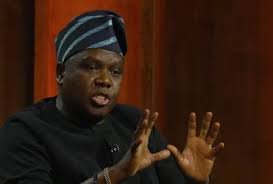
Bwala denied on air having said Tinubu and his camp created a militia and threatened him. Yet those remarks were widely reported during the 2023 campaign. He also denied saying that bullion vans seen at Tinubu’s Bourdillon residence were ostensibly for vote buying, despite the fact that the comments were carried by multiple Nigerian outlets at the time. So, when Bwala asked who said such things, the answer was brutally simple. Daniel Bwala said them.
The same pattern appeared on corruption. Tinubu did in fact proclaim at a public event that Nigeria had “no more corruption,” a line that was widely reported and widely mocked and that provoked Omoyele Sowore to call Tinubu a “criminal” for which he is being tried now.
Bwala’s attempt to rescue the statement by retroactively inventing a narrower meaning was not the contextual clarification he wanted it to be. It was out-and-out mendacity.
On the appointment of Abubakar Bagudu as minister of budget and economic planning, Bwala again reached for evasion. Yet the record is clear that Bagudu returned about $163 million linked to the Abacha loot investigations in a settlement with authorities. Whether or not one calls that a conviction, the public controversy around his appointment cannot honestly be dismissed as drunken rumor.
Then there is the overarching irony that electrified the interview. Bwala was confronted with the fossil record of his own mouth. Before joining Tinubu’s camp, he publicly attacked the same man over allegations of corruption, the drug forfeiture case in the United States and the bullion van episode. What Hasan exposed was the speed with which partisan appetite can digest prior conviction and call the indigestion growth.
Bwala’s performance mattered for a reason larger than one man’s embarrassment. It showed in concentrated form the disease afflicting Nigerian political communication.
Too many spokesmen believe their job is not to illuminate but to survive the segment. So, they deny what is documented, nervously laugh when cornered, compare Nigeria with unrelated countries, abuse the word “context” and hope that shamelessness can do the work preparation cannot.
Daniel Bwala went to London to defend the government. Instead, he displayed its worst habits: contempt for evidence, indifference to contradiction and the assumption that public memory is so short that a man can disown his own recorded words without consequence.
Mehdi Hasan did not disgrace him. Bwala did that himself. Hasan merely kept the receipts.
Kperogi holds a Ph.D. in Public Communication from Georgia State University (2011), an M.Sc. in Communication from the University of Louisiana at Lafayette, and a B.A. in Mass Communication from Bayero University, Kano . He began his career as a journalist and news editor for Nigerian newspapers including the Daily Trust and the now-defunct New Nigerian . He also worked as a researcher and speechwriter in President Olusegun Obasanjo’s administration from 2002 to 2004 . Kperogi writes a popular weekly political column, “Notes from Atlanta,” which currently appears in the Nigerian Tribune, and a language column, “Politics of Grammar” . He has authored several academic books, including “Glocal English: The Changing Face and Forms of Nigerian English in a Global World” (2015) and “Nigeria’s Digital Diaspora: Citizen Media, Democracy, and Participation” (2020), which won the 2021 CHOICE Outstanding Academic Title Award
Featured
DSS, THE WALIDA ABDULLAHI EPISODE, AND THE QUIET LEADERSHIP OF DG ADEOLA OLUWATOSIN AJAYI- OLUMIDE BAJULAIYE

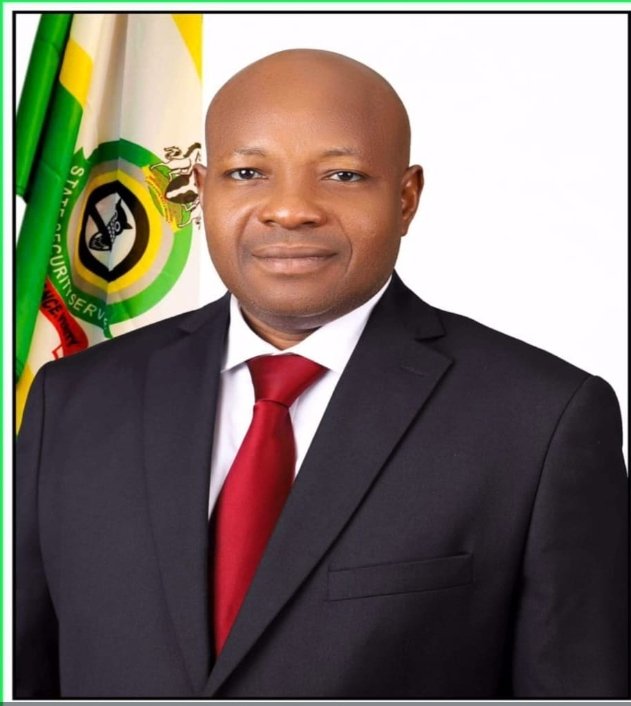
The Department of State Services (DSS), also known as the State Security Service (SSS), remains one of the most misunderstood institutions within Nigeria’s security architecture.
For many Nigerians, the agency only comes into public focus during dramatic arrests or when politics dominates the conversation. Yet intelligence work is far deeper and far more complex than the moments that make the headlines.
At its core, the DSS is Nigeria’s primary domestic intelligence service. Its duty is not simply to arrest suspects but to prevent threats before they escalate into national crises. Terror networks, espionage activities, sabotage against government institutions, and plots capable of destabilising the country all fall within its operational radar.
Like many institutions in Nigeria, the DSS has faced its share of criticism. There have been allegations of political interference, controversial arrests and occasional heavy-handed operations. Such scrutiny is normal in a democracy where powerful institutions are expected to remain accountable.

However, the other side of the story—often overlooked—is the critical role intelligence plays in keeping the country stable.
Intelligence successes rarely trend on social media because when intelligence works, crises are prevented before they occur. And “nothing happened today” rarely qualifies as breaking news.
Over the years, the DSS has helped disrupt terror financing networks, track extremist recruiters and intercept plots that could have resulted in major national security incidents. The agency has also provided intelligence support in the fight against insurgent groups such as Boko Haram, assisting security forces in anticipating threats.
Under the leadership of the current Director-General, Adeola Oluwatosin Ajayi, observers say the agency has focused increasingly on preventive intelligence, institutional reforms and improved collaboration with other security agencies.
Ajayi’s tenure has been associated with strengthening intelligence coordination among security institutions and placing greater emphasis on professionalism and lawful operations. Security analysts say the DSS has intensified efforts against kidnapping networks, arms trafficking rings and organised criminal syndicates threatening national security.
Another area where the current leadership has drawn attention is the effort to rebuild public confidence in the agency. In recent years, the DSS has demonstrated a willingness to review controversial cases, comply with court processes and engage more openly with stakeholders, including the media.
The recent episode involving Walida Abdullahi also illustrates the delicate balance intelligence agencies must maintain between national security responsibilities and public perception.
While details surrounding the matter sparked debate in public spaces, it also underscored how intelligence operations—often conducted quietly and based on sensitive information—can quickly become subjects of political or social interpretation once they enter the public domain.
For the DSS leadership, such situations represent the difficult terrain intelligence institutions must navigate: acting decisively when national security concerns arise while ensuring that operations remain within legal and professional boundaries.
Observers argue that the measured handling of such sensitive matters reflects the broader leadership approach of Ajayi—one that prioritises caution, institutional discipline and strategic restraint rather than dramatic publicity.
Beyond operational issues, the DSS under Ajayi has also sought to improve engagement with the media and civil society, a move many believe is necessary in building transparency without compromising intelligence confidentiality.
Ultimately, intelligence work remains one of the most paradoxical professions in public service.
When intelligence agencies succeed, the public rarely notices because crises are prevented before they happen. But when something goes wrong—or even appears controversial—everyone suddenly becomes an expert.
The DSS, like every intelligence service in the world, will continue to face criticism and scrutiny. That is part of democratic accountability.
Yet beyond the noise of politics and public perception, the agency remains a critical pillar in Nigeria’s internal security structure—often working quietly while the public sees only fragments of its work.
And if the current trajectory continues, the story of the DSS under DG Oluwatosin Ajayi may ultimately be defined not by the controversies that occasionally make headlines, but by the threats that never materialise.
Olumide Bajulaiye is the Publisher, Daily Dispatch Newspaper, writes from Abuja.