
Legislature
Akpoti-Uduaghan Protests Exclusion from NCDC Budget Session, Cites Timing Dispute


Senator Natasha Akpoti-Uduaghan on Monday expressed anger after a budget defence session involving the North-Central Development Commission ended before she arrived, saying she was effectively excluded because of the meeting’s timing.
The session, held at the National Assembly of Nigeria, had been scheduled for 10:00 a.m. but concluded shortly after 11:00 a.m. The Kogi Central lawmaker reportedly arrived around noon and confronted the office of the committee chairman, insisting she had been left out of the exercise.
Sources said her protest was not about the ₦140 billion 2026 budget itself but about what she viewed as her exclusion from the session where the commission defended its estimates before lawmakers.
Earlier, Chairman of the Senate Committee on NCDC, Titus Zam, told journalists the panel reviewed all proposed expenditures and found them relevant to the development needs of the North-Central region. He added that the commission had been advised to prioritise agriculture and security when implementing the budget.
Comes Days After Committee Walkout
Monday’s incident follows a similar confrontation last week when Akpoti-Uduaghan walked out of a Senate committee session during deliberations with the Senate Committee on Steel Development.
At that meeting, she clashed with committee chairman Patrick Ndubueze after he moved to end questioning of the Minister of Steel Development, Shuaibu Audu, despite her request to continue speaking. She argued that she still had important issues to raise and accused the committee leadership of shutting her out before leaving the session.
The back-to-back incidents have drawn attention to procedural tensions within Senate committees, particularly over scheduling, speaking opportunities and member participation in oversight proceedings.
General News
Senate Raises Concern Over Funding Releases as Minister Seeks Increase in N134.2bn 2026 Budget
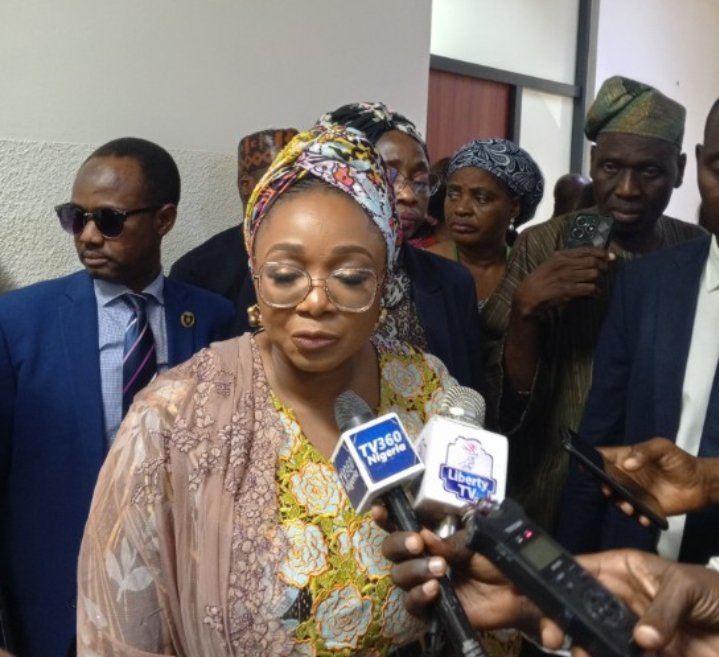
The Minister of Women Affairs and Social Development, Imaan Sulaiman‑Ibrahim, has called for an upward review of the N134.2 billion proposed for the ministry in the 2026 fiscal year, stressing that increased funding is necessary to tackle the complex challenges facing women nationwide.
She made the appeal on Monday while defending the ministry’s budget proposal before the Senate Committee on Women Affairs.
According to the minister, enhanced domestic allocations in 2026 would enable the ministry to implement programmes designed to address multifaceted social and economic issues affecting women across the country.
“In line with the plan and need for more domestic allocations in the 2026 fiscal year, upward review of budget estimates for the Ministry of Women Affairs and Social Development should be done,” she said.
However, responding to the request, the committee chairperson, Ireti Kingibe, said lawmakers were not opposed to increasing the ministry’s allocation but insisted that the persistent problem of poor fund releases must first be resolved by the executive.
She described the pattern of releases reflected in the ministry’s 2025 budget performance as “abysmal,” warning that approving higher allocations would be meaningless if actual disbursements remain inadequate.
Earlier in her presentation, Sulaiman-Ibrahim disclosed that of the N89.8 billion appropriated for capital expenditure in 2025, only N394 million was released in December, funds she said were not utilized. She added that overhead funding also suffered similar constraints, noting that just N471 million was released out of the N2.8 billion approved for that component.
For 2026, the ministry’s proposed N134.2 billion budget breakdown includes N2.1 billion for personnel costs, N131.2 billion for capital projects, and N810.9 million for overhead expenses.
The Senate has defended its decision to make electronic transmission of election results discretionary rather than mandatory in the proposed Electoral Bill 2026, saying the move was guided by empirical evidence about Nigeria’s infrastructure limitations.
Leader of the Senate, Opeyemi Bamidele, disclosed this in a statement issued Sunday through his Directorate of Media and Public Affairs, stressing that lawmakers must base decisions on “facts and realities” rather than sentiment. According to him, legislative responsibilities require careful consideration of the country’s technological and power capacity to avoid laws that could destabilize governance.
The controversy centers on Clause 60(3) of the bill, which originally required presiding officers to electronically transmit polling unit results in real time to the election portal managed by Independent National Electoral Commission. The Senate reviewed the clause, removing the phrase “real time” and adding a caveat that where internet connectivity fails, Form EC8A would serve as the primary collation document.
Bamidele noted that while real-time transmission could strengthen public confidence in democratic institutions, including the National Assembly, lawmakers concluded that Nigeria’s infrastructure could not yet guarantee seamless implementation nationwide.
Quoting figures from the Nigerian Communications Commission, he said broadband coverage stood at about 70 percent in 2025, while internet penetration reached only 44.53 percent of the population. He also cited international network performance rankings showing Nigeria placed 85th of 105 countries in mobile network reliability and 129th of 150 in fixed broadband reliability.
He contrasted Nigeria’s average mobile speed of 44.14 Mbps with far higher figures recorded in countries such as United Arab Emirates, Qatar, Kuwait, Bahrain and Bulgaria. For fixed broadband, he said Nigeria ranked far behind global leaders like Singapore, France, Chile and Hong Kong.
The Senate leader also pointed to power supply constraints, stating that about 85 million Nigerians—roughly 43 percent of the population—lack access to grid electricity. Although generation capacity ranges between 12,000 and 13,500 megawatts, he said transmission and distribution systems can deliver only about 4,500 megawatts nationwide.
Given these conditions, Bamidele argued that mandating real-time electronic transmission could trigger disputes or crises if infrastructure fails during elections. Making the provision optional, he said, ensures flexibility while preserving electronic transmission as part of the electoral framework.
He maintained that lawmakers must enact legislation grounded in verifiable realities. “If our law does not capture the realities of the federation, then it is a script for anarchy or a ploy for instability,” he said, adding that the revised clause seeks to balance technological aspirations with existing limitations.

National Assembly to Hold Extraordinary Sitting on Electoral Act Amendment Bil
The National Assembly has scheduled an extraordinary sitting for Tuesday, February 17, 2026, to deliberate on the Electoral Act (Repeal and Re-Enactment) Bill following the release of the 2027 General Election timetable by the Independent National Electoral Commission.
In a notice issued to lawmakers, Chief of Staff to the Speaker, Jake Dan-Azumi, explained that the special session became necessary after it was observed that the proposed dates for the presidential and National Assembly elections fall within the Ramadan period, a situation considered likely to affect voter participation.
According to the notice, the House will undertake a recision and recommittal of the Electoral Act Bill earlier passed, with the aim of reviewing key provisions. One of the major issues for reconsideration is the statutory notice period for elections, which is proposed to be reduced from 360 days to 300 days to allow greater flexibility in election scheduling and alignment with prevailing national considerations.
The statement added that all legislative processes on the Bill are expected to be concluded the same day to allow Members attend to other political engagements, including the forthcoming ward congresses of the All Progressives Congress.
Members of the National Assembly were strongly urged to prioritise attendance, given the constitutional and national importance of the proposed amendment.