General News
Allegations Trail INEC Chairman as Calls for Transparency Grow

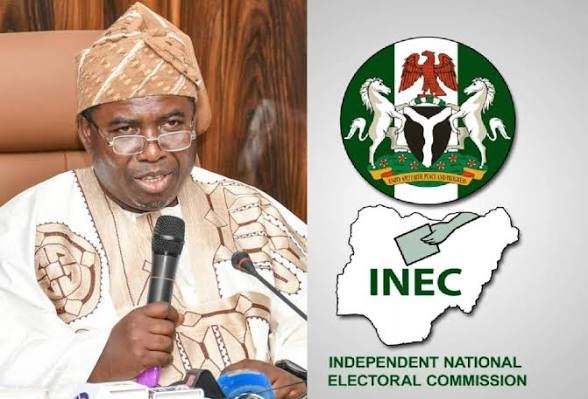
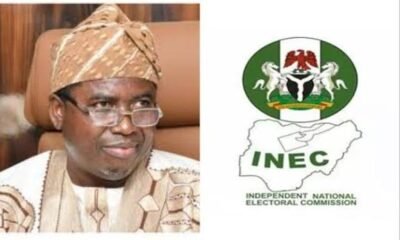
Concerns over transparency and accountability have intensified following allegations circulating in the public domain involving the Chairman of the Independent National Electoral Commission (INEC), Joash Amupitan.
The claims, which centre on alleged links to certain digital accounts and financial identifiers, have not been independently verified. However, they have continued to generate debate, with stakeholders urging clarity given the sensitivity of the office.
Analysts note that in the digital age, issues relating to online identities and financial systems can be subjected to forensic verification through lawful processes, including compliance records from financial institutions and access logs maintained by technology platforms.
While no formal investigation or court ruling has confirmed the allegations, observers say the situation underscores the need for public officials to respond in ways that reinforce confidence in their offices.
There have also been concerns about the tone of responses to the allegations, particularly where legal threats are perceived as attempts to curb public scrutiny. Legal experts caution that while individuals have the right to protect their reputation, such actions must be balanced against citizens’ rights to ask questions and demand accountability.
The development has further highlighted the importance of transparency in public institutions, especially those central to Nigeria’s democratic process.
As discussions continue, stakeholders have called for calm and urged that any claims be addressed through proper legal and institutional channels, emphasising that allegations alone do not amount to proof without due process.
The letter:
URGENT & PRIVATE
To: Professor Joash Amupitan (SAN),
Office of the Chairman,
Independent National Electoral Commission (INEC),
Abuja, Nigeria.
Subject: NOTICE OF LEGAL IMPLICATIONS REGARDING DENIAL OF DIGITAL ASSETS AND THE RISKS OF PERVERTING THE COURSE OF JUSTICE.
Sir,
This correspondence serves as a formal observation and a strategic warning regarding your office’s recent public denials concerning the ownership of specific social media accounts and linked financial identifiers.
While the use of defensive offenses such as threatening the arrest of citizens who point out digital footprints may offer a temporary shield in the media, it is creating a catastrophic legal liability for you as a Senior Advocate of Nigeria (SAN) and a public servant.
1. The Forensic Trap.
Why Denial is Not a Defense.
In the digital age, a denial of ownership is an invitation for forensic discovery. The public space has already identified links between the account in question and your personal email, phone number, and an OPay account.
A. KYC Integrity
Banking institutions like OPay operate under strict Know Your Customer (KYC) mandates. If a subpoena is issued, the disclosure of the BVN and NIN used to verify that account will provide irrefutable proof of ownership.
B. Subpoena to Tech Giants.
Should this matter reach a court of competent jurisdiction, a request for your IMEI log-in history from X (formerly Twitter) will reveal whether the account was accessed from your personal or official mobile devices.
2. Legal Consequences.
Perjury and Misleading the State.
By claiming the account is a cyber attack and prompting your office to threaten arrests, you are moving from a PR crisis into a criminal territory.
A. Giving False Information.
Under Nigerian law, using the machinery of the State (the Police) to investigate a crime you know to be a fabrication is a punishable offense.
B. Perjury.
If these denials are eventually sworn to in an affidavit or presented as testimony in any election tribunal or civil suit, the resulting conviction for perjury would mean the automatic loss of your license as a SAN and your permanent disqualification from public office.
3. International Litigation & The ECOWAS Court.
While you may feel shielded by local judicial dynamics, international courts operate beyond the reach of executive interference.
A. The ECOWAS Court.
This body has consistently ruled against the use of state power to harass citizens over digital expressions. A suit filed here would not just target you, but would expose the Nigerian State to international embarrassment and hefty fines, for which you would be held personally and professionally responsible.
B. International Reputational Blacklisting.
As a law professor, you are aware that global legal bodies and monitoring groups track such controversies. This saga threatens to turn a storied academic career into a textbook example of digital-era integrity failure.
4. Recommendation for Damage Control.
By continuing this path of aggressive denial, you are destroying the very integrity you seek to protect. The threat to arrest citizens is perceived globally as an admission of guilt through intimidation.
We strongly advise a pivot toward transparency. The digital footprints are already in the public domain; no amount of local police interference can erase the data held on servers in San Francisco or the cloud-based ledgers of OPay.
The path you are on leads to removal from office, criminal conviction, and a permanent stain on your legal legacy. Be so guided.
Your best option is to resign now.
Comrade, IG Wala.
12/04/26
Cc:
The Nigerian Bar Association (Legal Practitioners’ Disciplinary Committee).
The Code of Conduct Bureau (CCB).
International Bar Association (Human Rights Institute).