World News
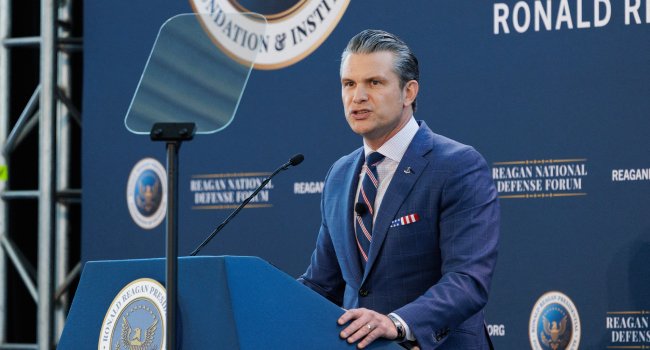
BREAKING: PENTAGON TO CUT ACADEMIC TIES WITH HARVARD — HEGSETH
The United States Department of Defense has announced plans to cut all academic ties with Harvard University, ending military education programmes, fellowships and certificate courses offered in partnership with the Ivy League institution.
The Pentagon disclosed this in a statement on Friday, describing the move as part of a broader review of military training and education arrangements under the Trump administration.
US Defense Secretary Pete Hegseth said the decision was driven by concerns that Harvard promotes what he described as “woke” ideology, which he argued does not align with the values of the US military.
“For too long, this department has sent our best and brightest officers to Harvard, hoping the university would better understand and appreciate our warrior class,” Hegseth said.
“Instead, too many of our officers came back looking too much like Harvard — heads full of globalist and radical ideologies that do not improve our fighting ranks.”
According to the Pentagon, the severance of ties will take effect from the 2026–2027 academic session, although military personnel currently enrolled in programmes at Harvard will be allowed to complete their studies.
In a separate post on X, using his preferred term for the Department of Defense, Hegseth said: “Harvard is woke; the War Department is not.”
He added that the Pentagon would also review its academic relationships with all Ivy League institutions, assessing whether they provide cost-effective and strategically relevant education for future senior military leaders.
“The goal is to determine whether or not they actually deliver cost-effective strategic education for future senior leaders when compared to public universities and our military graduate programmes,” Hegseth said.
Hegseth himself is an Ivy League graduate, having studied at Princeton University and Harvard, although reports say he once returned his Harvard degree. As a former Fox News host, he has repeatedly criticised the institution for what he views as left-leaning policies.
The move comes amid escalating tensions between the Trump administration and Harvard University. President Donald Trump recently said his administration would seek $1 billion in damages from Harvard following reports that the school had secured some concessions in ongoing settlement talks with the government.
Administration officials have accused Harvard and other US universities of failing to adequately protect Jewish students during pro-Palestinian protests, filing legal complaints and demanding significant financial penalties.
The pressure campaign has raised concerns among academics, including a former Harvard president, who warn that the actions could undermine academic freedom in the United States.
Trump has previously sought to cut more than $2.6 billion in federal funding to Harvard and has moved to restrict the admission of international students, who make up about one-quarter of the university’s student population.
World News
PHILIPPINE LAWMAKERS SHUT DOWN IMPEACHMENT BID AGAINST MARCOS
Philippine President Ferdinand “Bongbong” Marcos Jr. has escaped impeachment after the House of Representatives voted overwhelmingly on Tuesday to dismiss complaints filed against him.
The decision followed an earlier move by the House justice committee, which last week threw out two impeachment petitions, ruling that they lacked sufficient legal basis. The complaints accused Marcos of betrayal of public trust, graft and corruption, and violations of the constitution.
Announcing the outcome on the House floor, Deputy Speaker Janette Garin declared that all impeachment complaints against the president had been formally dismissed.
For an impeachment to proceed, at least one-third of the more than 300 members of the lower house would have had to support it. Instead, 284 lawmakers voted to dismiss the complaints, while only eight backed impeachment and four abstained. Under constitutional rules, no new impeachment complaint can be filed against Marcos until next year.
Attention is now shifting to Vice President Sara Duterte, who is facing fresh impeachment efforts after surviving a similar attempt last year.
Marcos, 68, was accused by petitioners of abusing his authority in the use of public funds, particularly in relation to a flood-control project scandal. He was also criticised for allowing his predecessor, former President Rodrigo Duterte, to be arrested and transferred to The Hague to face trial at the International Criminal Court over thousands of deaths linked to his controversial “war on drugs.”
One of the complaints further alleged that Marcos was unfit to govern due to supposed drug use an allegation he has repeatedly denied.
Since the restoration of democracy in 1986, only one Philippine president, Joseph Estrada, has been impeached. His 2001 trial, however, collapsed after prosecutors walked out when senator judges voted against opening an envelope believed to contain key evidence against him.
In the country’s history, five top government officials have been impeached, but only one; a former chief justice was ultimately convicted and removed from office.
General News
NIGERIA’S FOREIGN MINISTER LEADS DELEGATION TO AU EXECUTIVE COUNCIL SESSION IN ADDIS ABABA
Nigeria’s Minister of Foreign Affairs, Ambassador Yusuf Maitama Tuggar, has arrived in Addis Ababa, Ethiopia, to lead the country’s delegation at the 48th Ordinary Session of the African Union (AU) Executive Council, scheduled for February 11–12, 2026.

The Ministry of Foreign Affairs, through spokesperson Kimiebi Imomotimi Ebienfa, said Ambassador Tuggar will participate in ministerial consultations, strategic dialogues, side events, and bilateral meetings aimed at advancing Africa’s unity, peace, security, democratic governance, and sustainable development.
Ambassador Tuggar arrived on Monday, February 9, and was received by Ethiopia’s State Minister of Foreign Affairs, Berhanu Tsegaye, alongside Nigeria’s Chargé d’Affaires in Ethiopia, Ambassador Nasir Aminu, and officials of the Nigerian Mission.
The Executive Council meeting is a precursor to the 39th Ordinary Session of the Assembly of Heads of State and Government of the AU, set for February 14–15, 2026. Nigeria’s engagement at the summit will focus on peace and security, democratic governance, institutional resilience, economic integration, development financing, health security, climate resilience, and the implementation of Agenda 2063.
On the sidelines of the session, Ambassador Tuggar is expected to hold bilateral discussions with counterparts from African and non-African countries to strengthen diplomatic relations and advance shared strategic interests. Nigeria will also lead and participate in high-level side events, including a forum on regional partnerships for democracy, highlighting the country’s ongoing commitment to democratic norms and institutional strengthening in Africa.
The Ministry of Foreign Affairs promised to provide updates on outcomes and key engagements throughout the sessions.
World News
TRUMP ADMINISTRATION MOVES TO DISMANTLE CORE U.S. CLIMATE REGULATION FRAMEWORK
The Trump administration is set to overturn a landmark Obama-era scientific finding that has formed the backbone of the U.S. greenhouse gas regulation for more than a decade, the Environmental Protection Agency (EPA) has confirmed.
The finding, known as the 2009 Endangerment Finding, concluded that greenhouse gases such as carbon dioxide and methane pose a danger to human health and the environment. It provided the legal basis for federal limits on emissions from vehicles, power plants, and industrial facilities under the Clean Air Act.
By revoking the finding, the EPA would significantly weaken the federal government’s authority to regulate climate-warming emissions, clearing the way for a broad rollback of existing climate rules and making future regulations far more difficult to enforce.
The administration argues that the move will ease regulatory pressure on businesses and lower costs for consumers. However, environmental groups, scientists, and several U.S. states that it could lead to increased pollution, worsen public health outcomes, and spark years of legal battles.
Beyond the United States, the decision could have global implications. As one of the world’s largest historical emitters of greenhouse gases, U.S. climate policy plays a major role in international efforts to limit global warming. Analysts say the rollback could undermine global climate targets and weaken the U.S. credibility in climate diplomacy and slow momentum toward meeting temperature-reduction goals set under international agreements.
Some states, including California, are already preparing to strengthen their own climate policies, potentially creating a fragmented regulatory landscape as federal oversight retreats.
The EPA’s proposal is expected to face strong opposition and legal challenges, setting the stage for a high-stakes battle over the future of climate regulation in the United States and its ripple effects worldwide.