Finance
CBN APPROVES MERGER BETWEEN UNITY BANK AND PROVIDUS BANK
The Central Bank of Nigeria has approved the merger between Unity Bank Plc and Providus Bank Limited, clearing the way for the two banks to begin integration.
The move follows a Court-Ordered Meeting and a joint statement released by the banks on Wednesday, February 18, 2026. The merger has also received the backing of shareholders, and all remaining steps are mainly procedural.
Once the court gives its final approval, the combined bank will join other institutions that have met the CBN’s new N200 billion capital requirement for national banking operations. The merger ensures the enlarged bank will maintain the necessary capital levels under the apex bank’s recapitalisation framework.

This merger comes as part of the CBN’s wider recapitalisation programme, which sets higher capital thresholds for banks depending on their licence type. National banks are required to have a minimum of N200 billion, while international banks must maintain N500 billion.
The programme is designed to strengthen the banking sector, improve financial stability, and ensure institutions can withstand challenges such as inflation, exchange rate swings, and tighter liquidity conditions.
Analysts say the combined bank will have a stronger balance sheet and greater resilience in Nigeria’s unpredictable economy. Providus Bank contributes digital banking and corporate services expertise, while Unity Bank brings an established retail and SME banking network.
Together, the merger is expected to increase market reach, deepen customer engagement, and improve service across both retail and SME segments.
Finance
CBN OKAYS WEEKLY FX SALE OF $150,000 TO EACH BDC
Akpo Ojo
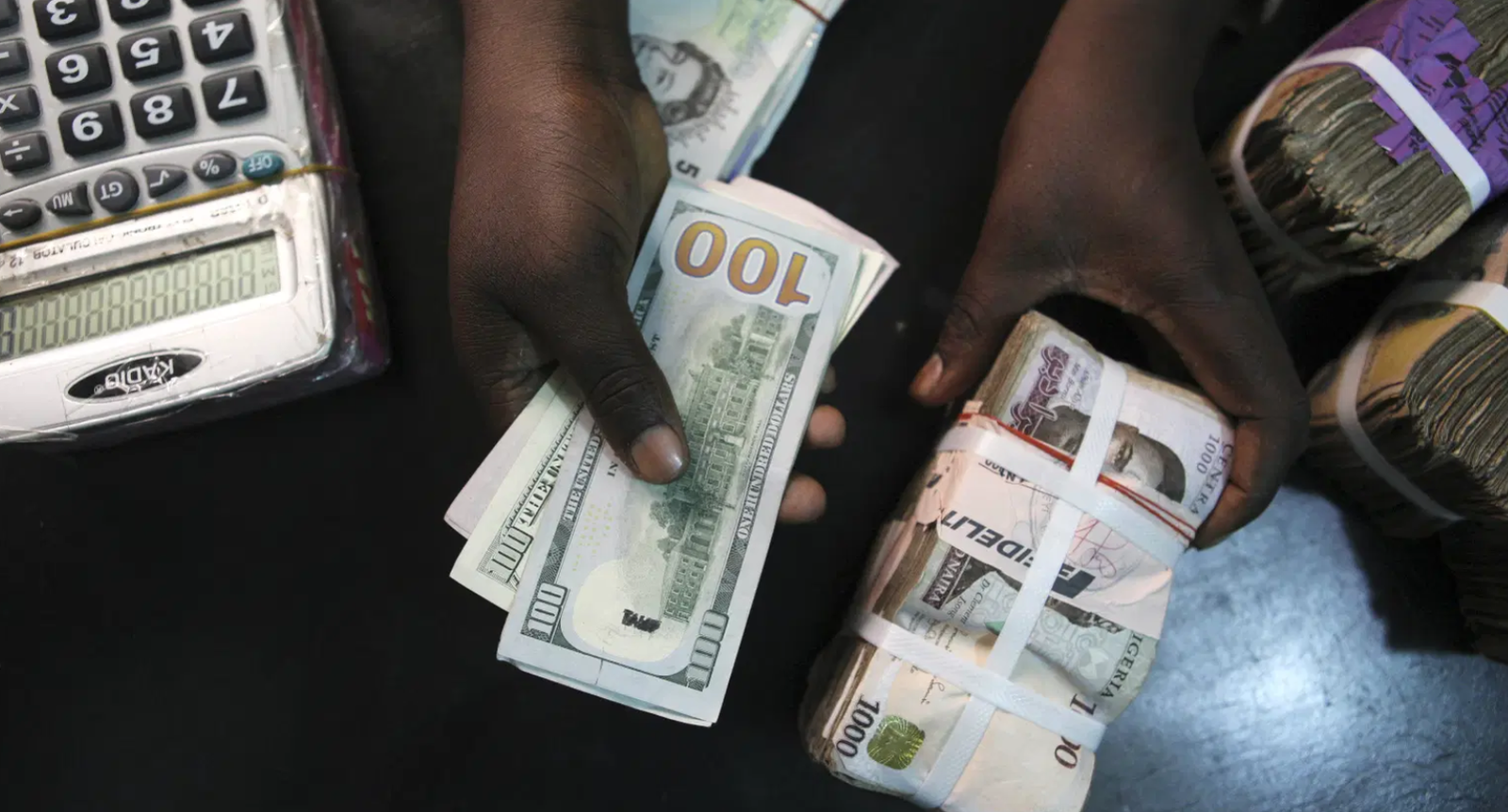
The Central Bank of Nigeria (CBN) has approved the participation of licensed Bureau De Change (BDC) operators in the Nigerian Foreign Exchange Market (NFEM) as part of efforts to improve foreign exchange liquidity in the retail segment of the market and meet the legitimate needs of end users.
The CBN has also approved that weekly forex purchases by each BDC be capped at $150,000, and that utilisation comply with existing BDC operational guidelines.
The new directive by the apex bank is contained in a circular signed by the Director, Trade and Exchange Department, Musa Nakorji.

The circular stated that all BDCs duly licensed by the CBN are permitted to access foreign exchange through any authorised dealer bank of their choice, at the prevailing market rates.
The move, according to the circular, aims to deepen market efficiency and ensure broader access to foreign exchange across the economy.
However, the CBN has imposed strict compliance and risk-management conditions on the transactions.
It said authorised forex dealers are required to conduct full Know-Your-Customer (KYC) and due diligence checks on BDC clients before any forex sale.
To strengthen transparency and accountability, the CBN further directed that all licensed BDCs must submit timely and accurate electronic returns in line with extant regulations.
“Any unutilised foreign exchange must be sold back to the market within 24 hours, as BDCs are prohibited from holding forex positions purchased from the NFEM,” the CBN said.
Also, the circular restricted settlement practices, mandating that all foreign exchange transactions be conducted through settlement accounts with licensed financial institutions.
The apex bank therefore, prohibited third-party transactions, while cash settlement is limited to a maximum of 25 percent of each transaction amount.
Overall, the directive reflects the CBN’s broader strategy to balance market access with strong regulatory oversight, ensuring liquidity in the foreign exchange market while safeguarding financial system integrity.
Finance
FIRST BANK HOLDINGS PROFITS PLUMMET 92% AFTER N748 BILLION BAD LOANS CLEANUP
The profit of First Bank Holdings has crashed by 92% due to a massive N748 billion provision for bad loans. The Group Chairman of First Bank Holdings, Mr Femi Otedola, revealed this development.

He defended the company’s decision to take a one-time charge of N748 billion to clear legacy bad loans, describing the move as a strategic step toward long-term stability despite its impact on reported profits. The billionaire businessman disclosed this via his X handle on Saturday, explaining that the massive provisioning caused the holding company’s profit to decline by 92 per cent.

Otedola stated that the decision was aligned with the Central Bank of Nigeria’s directive for banks to address non-performing loans transparently rather than defer the problems. “At First HoldCo we decided to clean house properly. We took a huge one-time hit of N748bn to admit old bad loans instead of pretending they do not exist. That is why profit looks like it crashed by 92 per cent. Painful headline, but it is a serious long-term move,” he wrote.
He explained that the action was necessary to close the chapter on problematic loans from previous years and to restore stakeholder confidence in the institution. “Why do this now? Because the CBN is pushing banks to stop kicking problems down the road. So First HoldCo basically closed the chapter on messy loans from past years which sends a clear message that borrowing has consequences and it helps rebuild trust,” Otedola added.
In a separate but related legal matter, a former employee of First Bank Plc successfully sued the bank for wrongful termination and defamation. The claimant stated he later discovered that his inability to secure another banking job was because First Bank Plc had published his name and photograph on its portal and sent his details to the CBN as one of those dismissed for fraud, leading to his blacklisting from the financial sector.
In its defence, First Bank Plc through its lawyer, A. N. Ozornafor, admitted publishing the claimant’s details and sending his name to the CBN but argued that it acted in compliance with BOFIA and a regulatory circular issued by the apex bank. The bank also challenged the jurisdiction of the National Industrial Court to hear the matter.
However, Justice Ogbuanya dismissed the objection, affirming that the court has jurisdiction over employment-related disputes, including workplace defamation. “From the record, I find that the subject matter of the dispute bordering on workplace defamation and the manner of termination of employment raises issues of unfair labour practice in this suit, which involves issues of employment relationship as it arose from the workplace,” the judge held. He added, “Workplace Defamation, a type of defamation that can only arise in a work environment and related to the routine course of work, borders on labour relations at the workplace, which is essentially different and distinct from general defamation.”
On the merits of the case, the court found that recalling the claimant from suspension pending investigation amounted to his exoneration by operation of law and that there was no justification for reporting him to the CBN. The judge faulted the bank for terminating the claimant’s employment on one ground while portraying him to regulators as having been disengaged for fraud.
Ogbuanya held, “The claimant’s grouse is not necessarily the mere act of termination of employment on the reason of ‘services no longer required’, but more of the defendant’s overreaching acts of publishing the claimant’s name and photograph in its accessible portal and sending his name to CBN for sanction, without him being indicted or the reason disclosed in his termination letter.”
In awarding damages, the judge held: “The sum of N50,000,000.00 is hereby awarded against the defendant in favour of the claimant, as compensation by way of general damages for the act of unfair labour practice.” The judge said the wrongful publications “tarnished his cherished career and rendered him jobless and traumatised,” and consequently ordered that the publications be set aside. “As a consequential order, the said wrongful publications are hereby set aside, and the defendant is restrained from further giving effect to its career-damaging publications against the claimant,” Ogbuanya ruled.
Economy
CARDOSO, REAFFIRMS APEX BANK’S COMMITMENT TO FINANCIAL SECTOR REFORMS
By Akpo Ojo
The Governor of the Central Bank of Nigeria (CBN), Olayemi Cardoso, has reaffirmed the apex bank’s commitment to financial sector reforms and long-term capital inflows as he hosted a high-level delegation from the British International Investment (BII) in Abuja.

Cardoso received the BII delegation, led by its Chair, Diana Layfield, alongside the British High Commissioner to Nigeria, Richard Montgomery, in what the CBN described as part of sustained efforts to strengthen macroeconomic stability and attract patient capital into Nigeria’s financial system.

At the meeting, the CBN governor said the bank remains focused on credible monetary policy, transparent regulation and data-driven supervision to deepen financial inter mediation and enhance the resilience of the banking sector.
He noted that development finance institutions with long-term investment horizons and strong governance standards are critical partners in Nigeria’s ongoing reform agenda, particularly in stabilising the financial system, expanding financial inclusion and supporting private-sector-led growth.
Discussions during the engagement centred on recent developments in Nigeria’s financial services sector, BII’s investment outlook, and opportunities to deploy long-term capital to support banking sector stability and sustainable economic growth.
Layfield reaffirmed BII’s continued interest in Nigeria, describing the country’s financial services sector as a key investment destination.
She stressed the importance of regulatory clarity and consistent engagement with policymakers to unlock investment and drive inclusive growth.
The meeting was attended by senior BII officials, including its Chief Executive Officer, Leslie Maarsdorp; Non-Executive Directors Andrew Alli and Simon Rowlands; Managing Director and Head of Africa, Chris Chijiutomi; and West Africa Regional Director and Head of the Nigeria Office, Benson Adenuga.
Senior officials of the British High Commission were also present.