
World News
Cuban Advisers and Doctors Exit Venezuela Amid U.S. Pressure

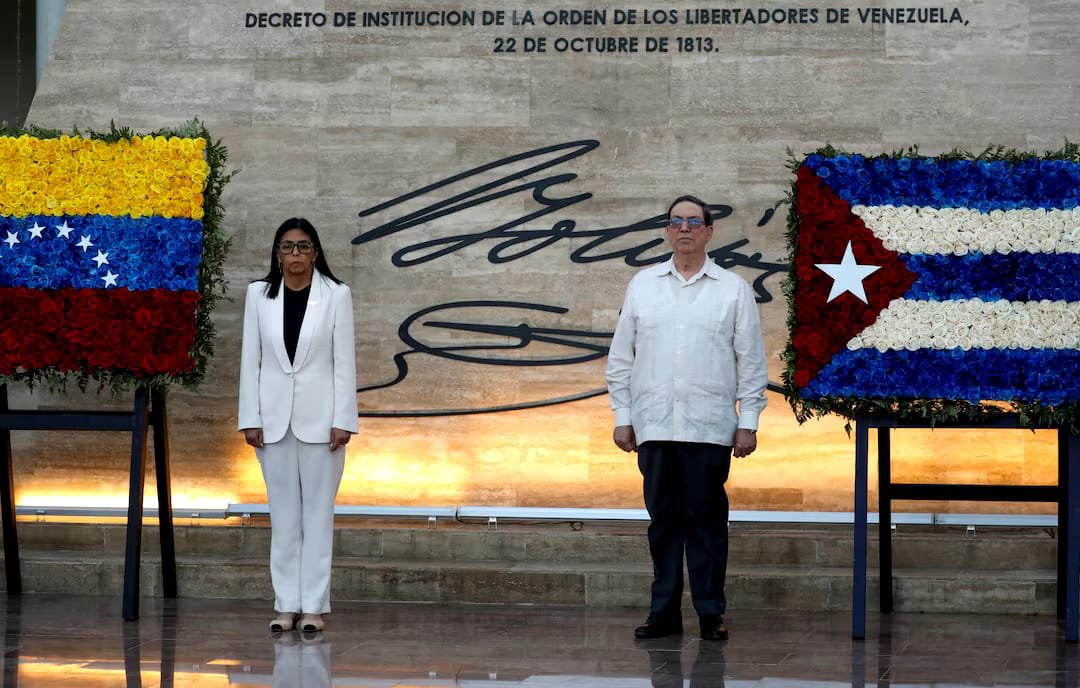
Cuba’s deep-rooted presence in Venezuela is receding as Interim President Delcy Rodríguez consolidates power and responds to mounting U.S. pressure to unwind the longstanding Havana-Caracas alliance.
In recent weeks, dozens of Cuban security advisers, doctors, nurses, and sports coaches have left the country, according to multiple sources familiar with the matter. These departures mark a dramatic shift in a relationship that had underpinned Venezuela’s Chavista governments for nearly two decades.
Unlike former leaders Hugo Chávez and Nicolás Maduro, who relied heavily on elite Cuban security forces for personal protection, Rodríguez has entrusted her safety to Venezuelan bodyguards. “The Cuban influence was absolutely essential to the survival of the Chavista government,” said Alejandro Velasco, associate professor of history at New York University.
Cuba’s involvement extended beyond personal security. Its intelligence agents were embedded across Venezuela’s military and the feared DGCIM counterintelligence unit, helping to identify and neutralize internal opposition. Thousands of Cuban doctors and other professionals also worked in social welfare programs, exchanging their services for Venezuelan oil, a crucial source of revenue for the island.
The shift comes after a U.S. military operation on January 3 captured Maduro and killed 32 Cuban personnel, according to Havana. In the aftermath, U.S. President Donald Trump vowed to end Cuba’s security role in Venezuela, describing the previous arrangement as a system in which Cuba “lived on large amounts of OIL and MONEY from Venezuela” in exchange for providing security services.
Inside Venezuela, some Cuban advisers have already been removed from key posts within the DGCIM, while others have returned to Havana on recent flights. Analysts say the departures signal more than just personnel changes. They reflect the beginning of a broader realignment in Venezuela’s domestic and international politics.
While ties between Caracas and Havana are not completely severed, Cuba’s influence is clearly waning, raising questions about the future of one of Latin America’s most consequential leftist alliances.