Environment
Environment Minister Charges Journalists to Spark Battery Waste Revolution as Nigeria Launches Small-Battery Collection Scheme


The Federal Government has called on Nigerian journalists to lead a nationwide revolution in battery waste management as it launched a new initiative to tackle the growing environmental and health threat posed by improperly discarded small household batteries.
Speaking at the launch of the Receptacles Initiative for the environmentally-sound management of small-sized waste batteries in Abuja on April 23, 2026, the Minister of Environment, Mr. Balarabe Lawal, tasked the media with spreading awareness and igniting what he described as a transformative movement in waste battery management across the country.
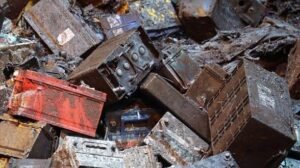
The minister warned that commonly used batteries found in everyday devices are silently contaminating soil, water, and the food chain with hazardous substances, yet they remain largely overlooked due to their small size and low economic value to informal recyclers.


“Because they are small and seemingly insignificant, they are carelessly thrown away, yet they pose some of the most dangerous risks to human health, especially to children and women,” Lawal said. “You may be aware that small-sized waste batteries contain heavy metals such as Lead, Mercury, Cadmium, Lithium, etc. When they end up in dumpsites or landfills, their casings corrode, emptying their contents into our groundwater and soil. They enter the food chain, leading to irreversible neurological damage, stunted growth in children, kidney failure, respiratory diseases, cancer, and brain damage that leads to behavioral changes and in most cases death, especially in children.”
The initiative introduces a structured system for the collection, storage, and recycling of used batteries, beginning with a pilot phase in the Federal Capital Territory where specialised collection receptacles will be placed in markets, schools, offices, motor parks, and other public locations.
Lawal acknowledged a critical gap in the current battery collection system, noting that recyclers have traditionally ignored small-sized batteries because they offer no economic value. “The Ministry therefore wants to create a centralized collection system where these batteries are safely collected, stored and put into the recycling system in order to create economic value for them,” he explained.
The minister stressed that the objective is to ensure that every small battery properly disposed of represents a child saved from lead poisoning and a stream saved from chemical contamination. “I call on fellow Nigerians to be aware that every small-sized battery we drop in a dedicated receptacle or waste-bin is a child saved from lead poisoning and a stream saved from chemical contamination,” he said.
He also signalled a tougher regulatory stance, revealing that enforcement agencies would intensify compliance monitoring while the government considers stronger legislation to address gaps in environmental laws. “We cannot continue to rely on policies without enforcement. There must be laws with real consequences to change behaviour,” he added.
The initiative is anchored on Nigeria’s National Policy on Battery Waste Management 2022 and the National Environmental (Battery Control) Regulations 2024, which mandate the responsible lifecycle management of batteries in line with global environmental standards.
At the same event, the Deputy Chairman of the House Committee on Environment, Hon. Terseer Ugbor, unveiled a proposed Extended Producer Responsibility Bill aimed at compelling manufacturers and businesses to take full responsibility for the lifecycle of their products, including waste disposal.
“This framework will ensure that all actors in the production chain share responsibility for the waste they create,” Ugbor said, noting that the bill would institutionalise a more structured and enforceable system. He argued that the proposed legislation would shift Nigeria away from its current linear economic model toward a circular economy that prioritises reuse, recycling, and sustainability.
The Alliance for Responsible Battery Recycling, the recognised Producer Responsibility Organisation for the battery sector under Nigeria’s EPR framework, is partnering with the ministry on the project. The organisation explained that the initiative represents a significant step in addressing a largely overlooked but growing environmental challenge.
“This project will deploy branded receptacles at strategic locations across the Federal Capital Territory, providing consumers with accessible and safe disposal options,” the alliance stated. The organisation will partner with the Abuja Environmental Protection Board and the Waste Pickers Association of Nigeria to evacuate collected batteries from collection points to central aggregation hubs.
Miranda Amakwe, executive secretary of the alliance, described small household batteries as an emerging waste stream of concern and stressed that efficient collection remains critical to preventing unsafe disposal in dumpsites. She added that the initiative aligns with Nigeria’s push toward a circular economy by promoting recycling, reducing pollution, and integrating informal waste workers into formal systems.
Lawal thanked the alliance for collaborating with the ministry on the initiative and welcomed all stakeholders who have been part of the journey toward establishing a proper battery waste management system in Nigeria.
The launch comes amid heightened scrutiny of battery recycling practices in Nigeria following investigative reports that exposed lead poisoning crises in communities like Ogijo, Ogun State. In response to those reports, the Ogun State Government has commenced independent health audits of residents and sealed several non-compliant battery recycling facilities.
As the programme rolls out, officials are calling on Nigerians to adopt responsible disposal habits. “Every battery properly disposed of is a life protected and an ecosystem preserved,” the minister said, describing the launch as the beginning of a nationwide movement toward cleaner, safer environmental practices.