
Entertainment
Eric Dane’s Final Chapter: Fame, Illness, and a Lasting Legacy

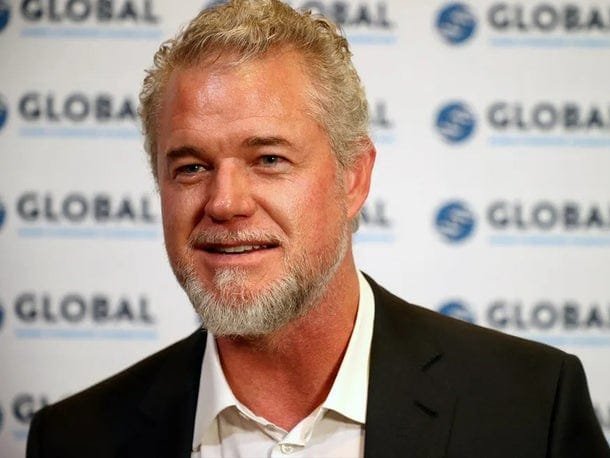
Before amyotrophic lateral sclerosis dimmed his final chapter, Eric Dane had already secured his place in television history.
For millions of viewers, he was not just an actor; he was Dr. Mark Sloan, the effortlessly confident plastic surgeon whose charm and complexity helped redefine primetime drama on Grey’s Anatomy. Nicknamed “McSteamy,” Dane became one of the most recognisable faces of 2000s television, embodying a character who was at once flawed, charismatic, and deeply human.
But beyond the polished hospital corridors of Seattle Grace, Dane’s career reflected range and reinvention. From early appearances on Charmed to his later, darker portrayal of Cal Jacobs in HBO’s Euphoria, he consistently embraced complex roles that pushed against typecasting. His performances evolved with time, mirroring an industry that demanded more nuance and vulnerability.
In April last year, Dane publicly disclosed that he had been diagnosed with amyotrophic lateral sclerosis (ALS), a progressive nervous system disease that affects nerve cells in the brain and spinal cord. ALS gradually robs patients of muscle control, impacting mobility, speech, and eventually breathing. There is no known cure.
The diagnosis marked a quiet but profound turning point.
Though private about the details of his health battle, Dane’s struggle underscored a stark reality: illness does not discriminate between ordinary lives and extraordinary ones. Fame offers visibility, not immunity.
Tributes from colleagues and fans have since poured in, reflecting the depth of his impact across generations of viewers. For many, Dane’s work on Grey’s Anatomy defined an era of television storytelling. For younger audiences, his presence in Euphoria introduced him anew as a layered and unsettling patriarch navigating modern moral chaos.
His career was not without personal challenges. Dane had previously spoken openly about struggles with mental health and time spent in rehabilitation, conversations that helped destigmatize vulnerability among male actors in Hollywood. In many ways, that honesty made his final public chapter his battle with ALS resonate even more deeply.
Eric Dane’s passing is not merely the loss of a performer. It is the closing of a chapter in contemporary television; one that spanned romance, reinvention, and raw emotional storytelling.
In the end, he leaves behind more than memorable scenes and trending tributes. He leaves behind characters that continue to live on screen, reminding audiences of a presence that once felt larger than life.
Perhaps that is the quiet power of legacy: while ALS may have silenced the man, it can not erase the work.
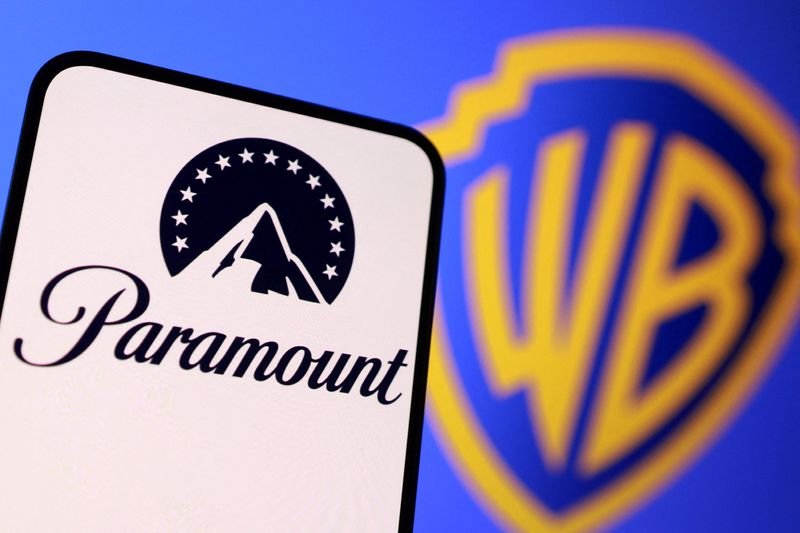
Warner Bros. Discovery has given Paramount Global seven days to submit what it calls a “best and final” offer to surpass its existing merger agreement with Netflix.
The move intensifies a high-stakes battle for control of Warner Bros’ film and television studios, including HBO Max and the lucrative Harry Potter franchise.
In a statement released Tuesday, February 17, 2026, Warner Bros confirmed that Paramount had informally indicated a potential per-share price of $31 a figure higher than Netflix’s agreed offer prompting the board to formally invite a revised bid.
Warner Bros shares rose 3.4% to $28.93 following the development, while Paramount climbed nearly 5%. Netflix shares were largely unchanged in afternoon trading.
Under the current merger agreement, Netflix has offered $27.75 per share valuing Warner Bros’ studio and streaming businesses at approximately $82.7 billion. However, Paramount’s proposal values the entire company at $108.4 billion.
Warner Bros said Paramount has until February 23 to submit a formal improved proposal. The agreement with Netflix allows the streaming giant to match any competing offer.
In a letter to Paramount’s board, Warner Bros Chairman Samuel DiPiazza Jr. and CEO David Zaslav stated that the company had not concluded that Paramount’s preliminary proposal was “reasonably likely” to lead to a superior transaction compared with the Netflix deal.
“We continue to recommend and remain fully committed to our transaction with Netflix,” the executives wrote.
The bidding contest underscores the shifting dynamics of the global entertainment industry, where traditional studios and streaming platforms are racing to consolidate content libraries and scale up to compete in a highly fragmented market.
Paramount later acknowledged the seven-day deadline but described Warner Bros’ handling of the situation as “unusual.”
Warner Bros indicated in its correspondence that it would expect an offer exceeding $31 per share, noting that a Paramount financial adviser had previously signaled the company might be willing to reach that level if negotiations were reopened, though the board emphasized that such a figure would not necessarily represent Paramount’s highest possible bid.
At stake is control of one of Hollywood’s most valuable content portfolios, spanning blockbuster film franchises, premium television brands, and streaming assets.

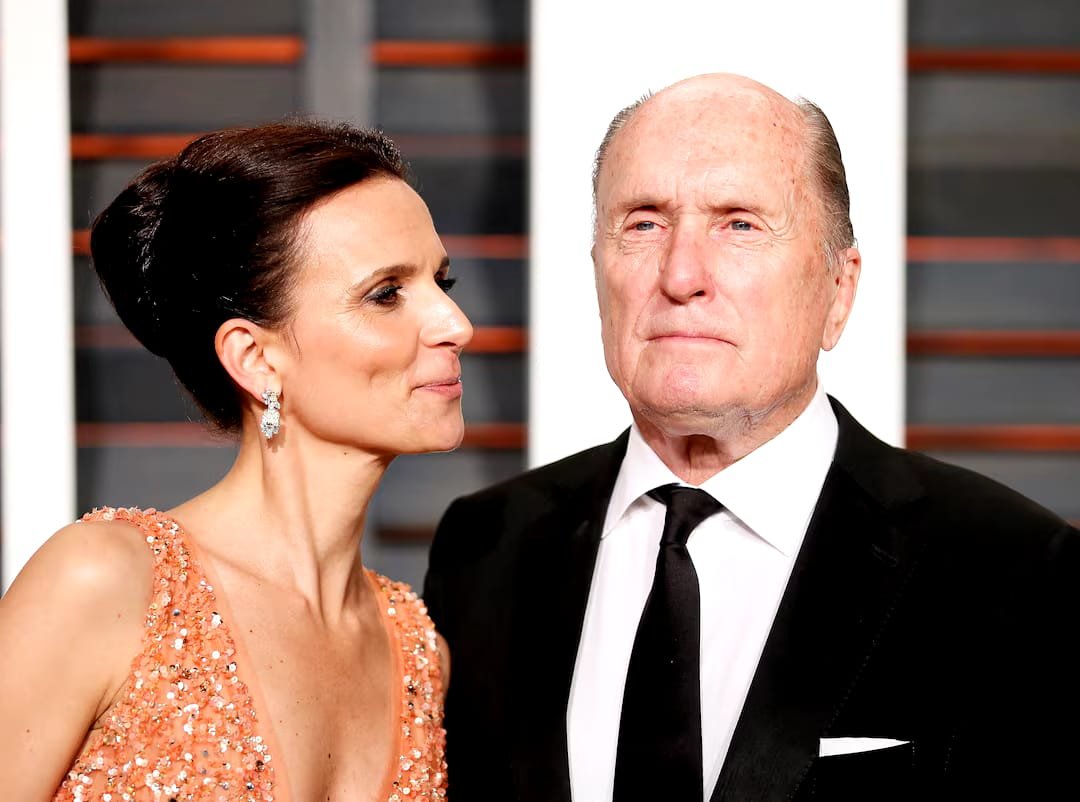
Academy Award-winning actor Robert Duvall has died at the age of 95, his wife, Luciana Duvall, announced in a Facebook post.
According to the statement, the veteran actor died peacefully on Sunday. No cause of death was disclosed.
“For each of his many roles, Bob gave everything to his characters and to the truth of the human spirit they represented,” Luciana Duvall wrote.
Duvall built a career defined by remarkable range, portraying both commanding leaders and deeply flawed men. He was widely remembered for his role as the napalm-loving Lieutenant Colonel Bill Kilgore in Apocalypse Now, famously declaring, “I love the smell of napalm in the morning.” The performance earned him one of his seven Academy Award nominations.
He also played Tom Hagen, the loyal family lawyer in The Godfather and its sequel. Though he appeared in the second instalment, Duvall declined to return for the third film, citing dissatisfaction with the salary offered.
Among his earliest film roles was the mysterious Boo Radley in To Kill a Mockingbird, where he made a lasting impression despite limited screen time.
Duvall won the Academy Award for Best Actor for Tender Mercies and earned additional Oscar nominations for The Great Santini, The Apostle, A Civil Action, and The Judge.
On television, he received acclaim for his portrayal of Gus McRae in the miniseries Lonesome Dove, a role he often described as his favourite. He also won an Emmy Award for Broken Trail and appeared alongside John Wayne in True Grit.
Born in Annapolis, Maryland, the son of a Navy admiral and an amateur actress, Duvall graduated from Principia College in Illinois and served in the U.S. Army before moving to New York to pursue acting. There, he shared an apartment with Dustin Hoffman and befriended Gene Hackman as they struggled to establish their careers.
In later years, Duvall wrote and directed some of his own films, including Assassination Tango, which reflected his love for Argentina and tango dancing. He split his time between Los Angeles, Argentina, and his 360-acre farm in Virginia, where he converted a barn into a tango hall.
Over a career spanning decades and nearly 100 films, Robert Duvall left an indelible mark on Hollywood, remembered for his authenticity, intensity, and devotion to the craft of acting.
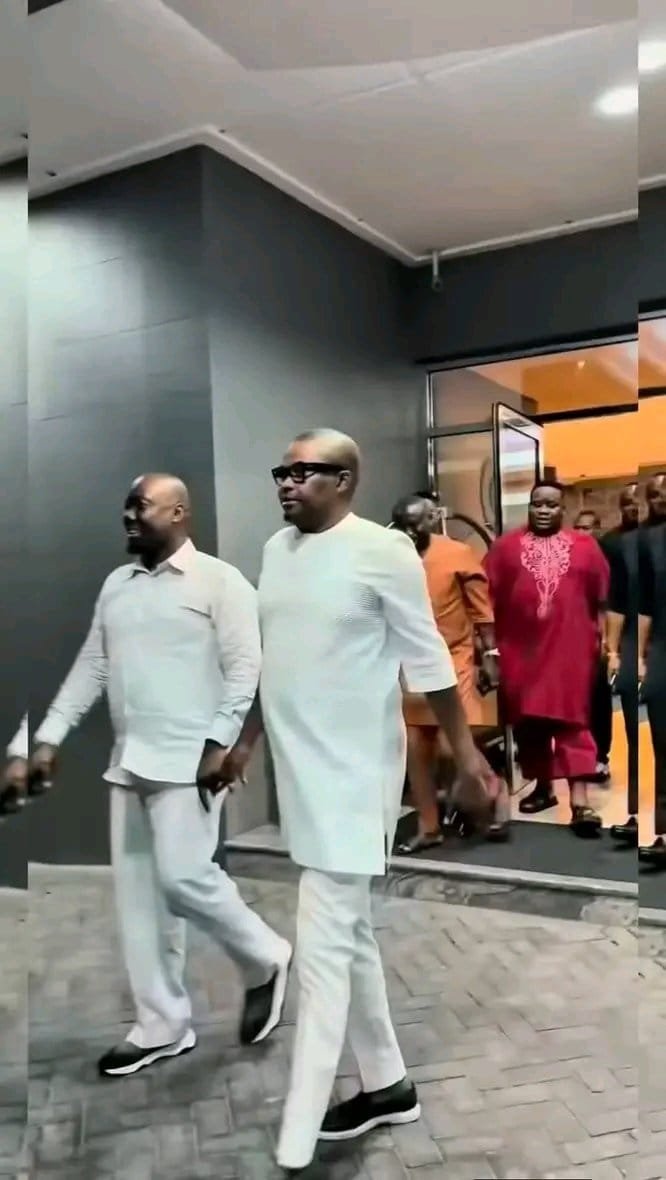
Reports have emerged that billionaire businessman Zenco, alongside other influential Eastern businessmen, has donated millions worth of buses to the City Boy Movement, a youth support group backing President Bola Ahmed Tinubu’s 2027 re-election bid. While framed as grassroots mobilisation, the move has sparked intense debate, particularly in Nigeria’s South-East, where scepticism toward the federal government remains high.

The South-East, dominated by the Igbo, has historically felt sidelined in Nigeria’s federal power structure. The region’s support for Peter Obi in 2023 highlighted a deep desire for political recognition and empowerment. Yet, reports of Eastern businessmen publicly backing Tinubu suggest a shift; a pragmatic alignment with the ruling government, raising questions about motivation.
Observers suggest that in Nigeria, business success is rarely divorced from politics. Contracts, import licenses, regulatory approvals, and federal projects often flow through political channels. Aligning with the ruling party can
offer businesses protection, access, and influence a temptation difficult for any major player to ignore.
The City Boy Movement has become a prominent youth network for pro-Tinubu advocacy. The donation of buses by Zenco and other elites is seen not only as logistical support but also as symbolic influence, signalling to grassroots networks that Eastern businessmen are actively participating in the political project of the current administration.
For many, this raises the question:Are these businessmen acting as community leaders representing Igbo interests, or are they securing political favour to protect and expand their enterprises?
Nigeria’s political economy often blurs the line between public service and private gain. In regions like the South-East, where federal projects are historically limited, political alignment can appear as a strategic move for survival and profit.
Critics argue that by backing Tinubu, these businessmen are prioritising personal and economic interests over the broader aspirations of their people. The optics of billionaires associating themselves with a government viewedscepticallyy by many Eastern citizensfuels concerns that elite endorsement is more about access and contracts than genuine regional empowerment.
While governors and political heavyweights may defend alignment with the federal government as pragmatic, ordinary citizens and youth groups remain wary. Many view these endorsements as detached from the real frustrations of the people, such as insecurity, economic hardship, and marginalisation.
The case of Zenco and the City Boy Movement underscores a wider truth about Nigerian politics: political alignment often functions as currency. For businessmen, proximity to power can dictate whether their enterprises flourish, survive regulatory scrutiny, or gain a competitive edge.
In the South-East, this dynamic creates tension between elite strategy and popular sentiment. While elites may argue that backing the government ensures regional inclusion, grassroots voices worry that such alignment may reinforce systemic inequities rather than challenge them.
The donation of buses to a pro-Tinubu youth movement is more than a headline; it is a lens into the entangled realities of power, business, and politics in Nigeria. For Eastern elites, alignment with the federal government may offer protection, opportunity, and influence. For ordinary citizens, it may appear as a prioritisation of profit over people.
The critical question remains:Are these moves about empowering the South-East or preserving elite advantage? In Nigeria’s political economy, the answer is often both, and the consequences for public trust are profound.