Opinion
Establishment of Coast Guard in Nigeria, need for critical thinking.


The Philippines Coast Guard is the third largest Arm of their military tasked primarily with enforcing laws in the maritime environment. It also undertakes the protection of her 406,328 hectares of navigable waterways consisting of lakes, marshes and rivers
Additionally, the CG was established to protect Philippines waters conducting maritime security operations and protecting lives and property.
This is similar to the mandate of NIWA; to ensure development of infrastructural facilities for inland water ways connectivity and economic centres using rivers, ports nodal points for inter nodal exchange. On the other hand NIMASA was established to pursue the development and regulation of shipping matters. From the foregoing, there are 2 agencies already positioned to accomplish the task of the proposed CG through overseeing regulations, commercial and operations in the Nigeria waters. The country have never faulted these agencies in the discharge of their responsibilities. This raises the question now as to the obsession with the Coast Guard? There proponents of the CG should give clarity on how it will enhance security in the 10,000 kilometres navigable route from Niger Republic to Cameroon up to the Atlantic ocean.
Additionally, how will the CG reverse merchant ship not docking and bunkering in Nigeria. Equally, how will it facilitate the revitalization of the the Nigerian National Shipping Line.
Establishment of uniformed Arm is a constitutional issue with strong implications for the sovereignty. I established a nexus between Nigeria and the Philippines to the extent that the two countries have near equal GDP and populations but different maritime security challenges. Philippines is occupied with the challenges of the South China sea or the Philippines sea thus creating the need for a CG. The breach of the south China sea or the Philippine sea is very consequential to the economies of both countries. Nigeria is not known for such scenarios now or the future.
Chapter 6, part 3 and section 217 expressly stated that there shall be an Armed Forces for the nation consisting Army, Navy and the Air Force and any other branch established by the National Assembly.
Any other branch envisaged here is a consideration of the National Assembly and the Constitution and most essentially, national affordability.
My take is that the 854 kilometres shoreline and the 10, 000 kilometers navigable route are not overwhelming for NIWA and NIMASA. Our consideration should be the constraint of the revenue of more than 51% of GDP borrowing and how the CG will add value to the national prosperity that NIWA and NIMASA will not accomplish.
From available research, Nigeria do not have any meaningful threats from the marine environment safe for oil theft that is being holistically addressed by the Nigerian Navy.
Consequently, the focus need to be how NIMASA can reduce concessions to foreign shipowners, encourage Nigerians through soft loans to own ships and increase their Cabotage internally and internationally.
We have been through this pathway before, remember the National Guard of the Army. That was in the period of a more prosperous economy.
For me, Nigeria have more excruciating problems than the establishment of CG.







By AVM (RTD) AKUGBE IYAMU MNSA fsi
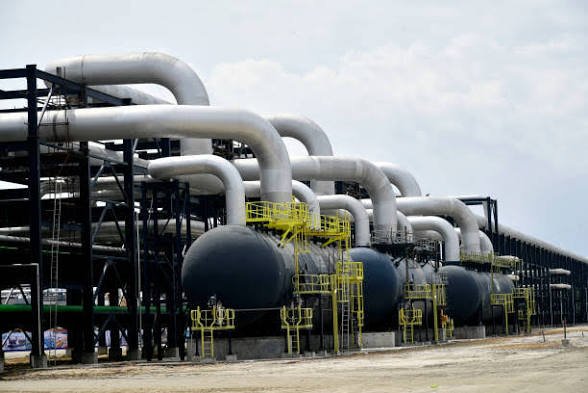
Refineries across the world are no charity organisations and NNPC is not a charity enterprise and neither were the Refineries built to exist only as national museums and perfidy. They were built to refine crude oil to serve the nation.
Therefore, pumping billions of dollars into a refinery that produces little or nothing is not smart thinking. The operations of the Refineries clearly showed that countries do not fail for lack of strategy, countries can commit to success but end up falling.
Nigeria 4 Refineries are a classical examples as the world is waking up to the reality that energy security is global security and economic disaster averted does not carry the same weight as a disaster experienced.
The former come with direct and concentrated pain. In the moment of hard economic realities as currently experienced, a leader’s impact should not be abstract, it must shape systems and futures in a way that extends far beyond a stage.
This is because governance is the spotlight and leadership in real life as leadership remains the ability to continue to capture citizens heart with commitment, chemistry and shared dreams.
Consequently, effective leadership always bring good governance to the front during chance economic challenges like the US/Israel/Iran war. The war may have its benefits, it should complement policies and not replace it.
Economic emergencies provides the period for leaders to treat their countries like sanctuary and not a waiting room. It creates the opportunities for leaders to remind their citizens that governance isn’t frivolous but restorative and that
without a choice, some wrong choices bite very hard: consider the conversation to sell the Refineries, subsidy removal and floating of the currency but until you summon the courage to lose sight of the shore, you can never cross the ocean.
According to Transparency International, many countries rich in oil and gas are home to world poorest people. The war has clearly shown that governance is a concentrated conflate of decisions from various sectors in a condensed framework.
In a day, a year worth of conversations, negotiations and ideas are compressed into intense rapid economic growth and development.
The current situation of the global energy sector disruptions reveals how power and influence are exercised through suitable solutions, appointments, trusts and the ability to move seamlessly between policies and the citizens.
Crude oil business is good business, it yields good profits, creates good job and wealth. Because it is lucrative, it is also hotbed of global corruption. Anywhere there is crude oil money, there are high probabilities of graft.
AVM (RTD) AKUGBE IYAMU MNSA fsi
CONSULTANT ON CLIMATE CHANGE AND ANALYST ON ENVIRONMENTAL POLICIES
PRESIDENT ASSOCIATION OF ENVIRONMENTAL PROTECTION AND CLIMATE CHANGE PRACTITIONERS
By Chidi Anselm Odinkalu
“Minor judges have been known to abuse the contempt of court jurisdiction in an attempt to enhance their own dignity.” – David Pannick QC, Judges, 119 (1987)
Sardar Tejendrasingh lived in England but, by his own admission, was devoid of “respect for this country or its civilization or its courts.” In 1982, as plaintiff in a case for debt recovery at the Cambridge County Court, he chose to address the court sitting down. The court registrar, who took the view that this was contempt of court, decided in August 1982 to pause proceedings in Mr. Tejendrasingh’s case until he was purged of this contempt. One year later, in September 1983, Alan Garfitt, the trial judge, informed Mr. Tejendrasingh of the court’s decision to indefinitely suspend hearing of his case unless and until he provided a written undertaking to stand while addressing the court.
Mr. Tejendrasingh appealed against this to the Court of Appeal which affirmed the decision of the trial judge. In its decision in November 1985, the Court of Appeal reasoned: “if a court orders somebody to stand when addressing it or giving evidence, that order is not different from any other order of the court. It is something which has to be obeyed.”
The nature of orders that courts can give or which suitors in court are obliged to obey in such situations has varied through the ages. In his book on The Lives of the Lord Chancellors and Keepers of the Great Seal of England, John Lord Campbell tells a story from the first quarter of the 17th century of a “Catholic gentleman nearly eighty years old” who was sentenced to “be fined £1000, lose his ears, stand on the pillory at Westminster and Lancaster, and suffer perpetual imprisonment, for merely presenting a respectful petition to the King, praying for inquiry into the conduct of one of the judges of assize, who had condemned to death a neighbour for entertaining a Jesuit.”
Others have been even less lucky. In 1631, Chief Justice Richardson of the Court of Common Bench was on his way out of court after pronouncing a sentence of death upon a suspect on trial for a felony when “the prisoner found himself able to express his dissent from the sentence pronounced upon him by hurling a brickbat at the Chief Justice’s head.” For his contempt, the prisoner was reportedly “immediately hanged in the presence of the court.”
Recent events in Nigeria have extinguished any misapprehensions that these flashes of judicial savagery may have ended with the transition from the Medieval to the early modern period. In the past week, a judge of the Federal High Court, Mohammed Umar, reopened the question as to what kind of orders a judge may be at liberty to give in seeking to uphold his or her judicial authority or dignity.
The circumstance was the trial of publisher and politician, Omoyele Sowore, who is being prosecuted by the State Security Service on the charge of having called Nigeria’s president, Bola Ahmed Tinubu, a criminal. At the resumed trial on Monday, 16 March 2026, contretemps reportedly erupted between the judge and the defence counsel, Marshall Abubakar, over the scheduling of a date for the defence to argue its no-case submission at the end of the prosecution’s case. The defence apparently desired a longer adjournment than the court was willing to grant.
Ordinarily, this should not have been raucous. In the midst of the exchanges over the dates, however, the judge reportedly took exception to the inflection or tone of counsel and threatened to cite him for contempt. Almost immediately, it appears, the judge thought the better of it or lost his temper “and ordered the lawyer to step forward and kneel down as punishment for what he described as contempt of court.”
In response, Marshall Abubakar is reported to have informed the court that “kneeling before a judge was unknown to Nigerian law and could not be imposed as a lawful punishment.” At this point, other lawyers present in court, fearing the onset of a judicial meltdown, reportedly rose in collective de-escalation. They eventually managed to stay the hand of His Lordship from also asking the lawyer to raise his hands over his head, close his eyes, and expose his buttocks for licks from a judicial Sjambok.
The Nigerian Bar Association (NBA), through its president, Afam Osigwe, a Senior Advocate of Nigeria (SAN), took a serious view of the matter. In a statement issued the following day, the NBA president cautioned that “directing a legal practitioner or indeed any person whatsoever to kneel in court is not a recognised judicial sanction under our laws and does not align with the standards of judicial conduct expected on the Bench.”
At the heart of the objection by the NBA is the guarantee of the right to human dignity in section 34 of Nigeria’s constitution, reinforced by the prohibition of torture, cruel, inhuman or degrading treatment or punishment. The Uganda Law Society (ULS) also weighed in. Their reaction issued through its president, Isaac Ssemakadde, warned that “no judge possesses the legal power to order a legal practitioner to kneel. That directive was not discipline; it was humiliation.”
This episode raises important questions concerning both the limits of judicial power and standards of professional comportment for participants in the judicial and legal process.
For advocates of the rule of law, judicial orders are to be obeyed at all times. So, should the lawyer (not) have obeyed the order to kneel down even if he could then have appealed against it subsequently?
The pivotal question here is when is an order judicial? The exercise of the power to punish for contempt of court or to preserve the authority of the judicial office is not at large. In exercising it, a judge is not precluded from the obligations to observe the basic rules of fair hearing or respect for constitutional guarantees.
In this case, the order to “kneel down” was a sentence issued without the opportunity of a hearing, formal conviction, or even a record. To be quite plain, there was nothing judicial about it. Even if the lawyer was minded to obey and then appeal later, the likelihood is that there would have been no record on the basis of which to appeal for, surely, the judge could not have written: “I hereby convict Mr. Abubakar and sentence him to kneel down.”
Whether or not the facts justified the judge in invoking the power of contempt is not in dispute at this time. For present purposes, that point is conceded. However, having done so, the court thereafter chose to sacrifice its power on the altar of abuse. In the circumstances, regrettably, Mr. Abubakar was well within his rights to be slow in complying with “kneel down.” Put differently, there was no order to obey.
It is not as if the judge was without options in the circumstances. He could have referred the lawyer to the Legal Practitioner’s Disciplinary Committee or, indeed, tried and convicted him for contempt before deciding what sentence to impose.
Even better, he may have been better served if he had read Brian McKenna’s famous lecture at the University of Durham in February 1969.
In the lecture, McKenna, a judge, tells the story of the conclusion of one of his earliest trials as a judge following which “a temperamental Irish lady flung her handbag in my direction after I had sentenced her delinquent brother to a period of training.” In response, he writes, “I gave her the benefit of doubt; I assumed that her target was the Clerk of the Court sitting beneath the throne, no myself.”
Mr. Justice Kneel Down may one day discover virtue in judicial forbearance.
A lawyer and a teacher, Odinkalu can be reached at chidi.odinkalu@tufts.edu
By Victor Oladokun
In the last decade, I have deliberately avoided publicly commenting on Nigeria’s often toxic political discourse.
2 reasons guided this decision.
■ Any stance invites criticism from all sides.
■ My past roles, first as Director of Communication at the #AfricanDevelopmentBankGroup; then as Senior Advisor to its then President, of which both required strict diplomatic adherence to neutrality on the affairs of member countries.
For the first time in 10 years, this rare milestone compels me to speak, as President #BolaAhmedTinubu and First Lady #OluremiTinubu receive the full pomp and pageantry of a State Visit from #KingCharles III at #WindsorCastle this week, the first by a Nigerian head of state in 37 years.
It is time to acknowledge the quiet, determined work underway. #PresidentTinubu’s administration has taken the bull by the horns with bold economic reforms. Though results are uneven and unfolding, they are creating macroeconomic stability, unlocking investments, and gaining recognition.
#TheEconomist (January 2026) described Nigeria’s economy as potentially “back from the brink,” with painful reforms showing results: sharp inflation drop (from 34.8% peak to around 15%), naira stabilization, and reserves at 7-year highs ($46 billion).
The #WorldBank has hailed Nigeria as a “global reference point” for steady, credible reform implementation and results over the past two years.
Nigeria is repositioning itself as a serious global partner with vast potential, and NOT as a perpetual supplicant.
This State Visit carries deep mutual strategic significance.
For Nigeria, it showcases a reform story and opens doors to fresh capital, technology transfer, and market access. For the #UnitedKingdom, it strengthens ties with Africa’s largest economy and most populous nation. Bilateral trade already stands at a record £8.1 billion annually.
Yet, while the red carpet rolls out in London, some voices at home and abroad remain stuck in perpetual de-branding mode.
Don’t get me wrong. #Nigeria faces real issues and challenges. But, we have a built-in cycle of demonization that ignores progress.
Professional critics seize every headline to paint the nation as hopeless, amplifying setbacks while dismissing strides. Their endless negativity deters investors, demoralizes youth, and markets Nigeria as a risk rather than an opportunity.
Constructive criticism has its place, but weaponized cynicism is not patriotism. It is self-sabotage.
Fellow Nigerians, let us choose pride and opportunity over perpetual complaint and a sense of hopelessness.
To investors and global partners eyeing Africa’s future, the door is wide open. Come see the real Nigeria. A nation brimming with youthful innovation, determination, and ready to deliver in a stable, reforming environment.
My humble plea is simple … Let us move forward united, focused, and unapologetically proud.
God bless you & God Bless the Federal Republic of Nigeria.