
Government
EU Commits €22m Grant for Nigeria’s Fibre Expansion as EBRD Launches First Sovereign Deal


The European Union has pledged a €22 million grant to support Nigeria’s nationwide fibre-optic expansion under the Federal Government’s BRIDGE Project, in a move signalling deepening digital cooperation with the European Bank for Reconstruction and Development (EBRD).
Announced in Abuja on Wednesday, the grant will be channelled through the EBRD and passed on to Nigeria’s Federal Ministry of Communications, Innovation and Digital Economy. The funding complements an €86 million sovereign loan from the bank its first major sovereign operation in Nigeria since the country joined as a shareholder last year.
Nigeria’s Communications Minister, Bosun Tijani, described the agreement as a key milestone toward delivering Project BRIDGE on schedule, expressing appreciation for the EU’s commitment to enhanced engagement with Nigeria’s digital sector.
The announcement coincided with the official visit of EBRD President Odile Renaud-Basso, who said the partnership would help unlock private investment and ensure resilient, inclusive and cyber-secure connectivity nationwide.
At the centre of the initiative is a plan to deploy about 90,000 kilometres of fibre-optic cable across the country through a Special Purpose Vehicle structured to include 51 per cent private sector participation. The EBRD financing is expected to align with additional sovereign support from the World Bank and the African Development Bank.
EU Ambassador to Nigeria, Gautier Mignot, said digital infrastructure has become a central pillar of EU–Nigeria relations, stressing the shared priority of building trusted and resilient networks that meet international standards.
Beyond financing, the EU package blends investment support with technical assistance. It will fund preliminary design work for the first 40,000 kilometres of network, including route surveys, digital mapping, quality assurance systems and security risk assessments, effectively creating a ready-to-deploy blueprint once full financing is secured.
The grant will also train 2,000 technicians, subsidise equipment for rollout, and support smaller contractors through pooled procurement arrangements. Officials estimate these measures could cut deployment costs by 20–30 per cent while ensuring compliance with both Nigerian and EU technical requirements.
Industry analysts say the deal’s structure particularly cybersecurity and open-access provisions tied to the EBRD loan reflects an effort to anchor Nigeria’s broadband expansion on transparency, competition and global best practice.
For Nigeria, Africa’s largest economy and one of its fastest-growing digital markets, the BRIDGE Project is expected to close connectivity gaps, strengthen digital public services and position the country as a continental technology hub, while advancing Europe’s Global Gateway strategy through blended finance and private-sector mobilisation.






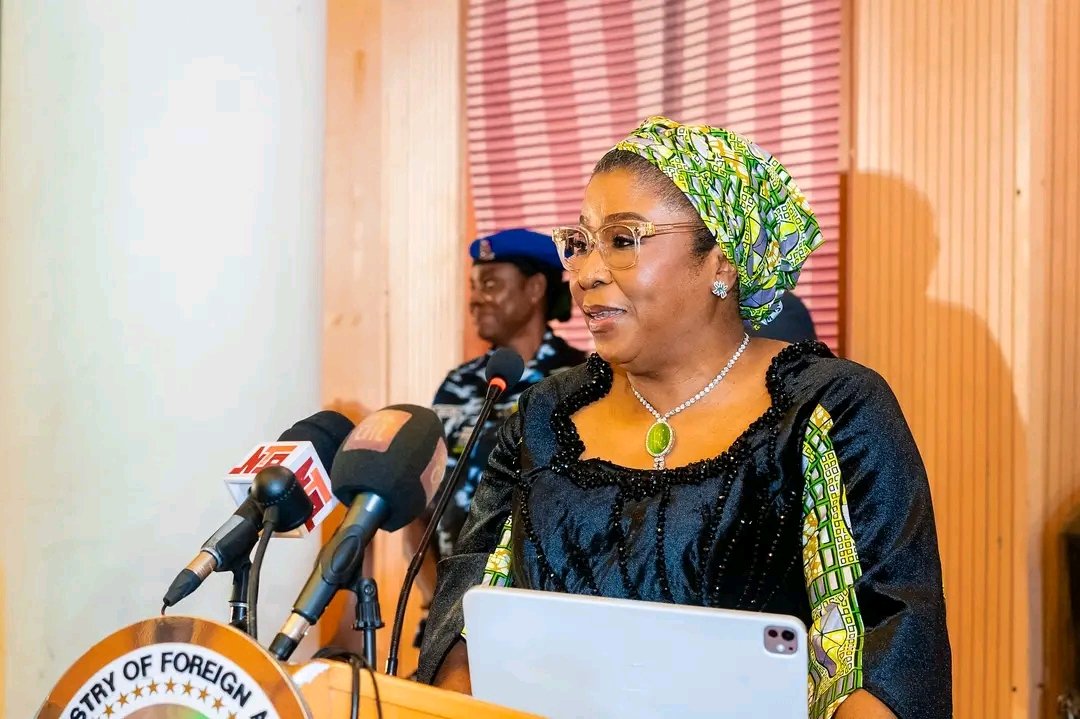
The Federal Government has announced that salaries of unverified workers in the Federal Civil Service will be discontinued from March 2026 following the conclusion of the ongoing Personnel Audit and Skills Gap Analysis (PASGA).
The directive was contained in a memo issued by the Office of the Head of the Civil Service of the Federation and obtained on Tuesday.
The memo was signed by Didi Walson-Jack, Head of the Civil Service of the Federation, and addressed to Tunji Olaopa, Chairman of the Federal Civil Service Commission.
The Federal Government began the Personnel Audit and Skills Gap Analysis in 2025 as part of reforms aimed at strengthening efficiency and integrity within the public service.
The audit followed a directive by President Bola Ahmed Tinubu during the 2025 maiden International Civil Service Week.
According to the President, the exercise was designed to ensure that “the right people with the right competencies” are assigned appropriate responsibilities in the civil service and to identify irregularities on the federal payroll, including unverified personnel.
Although the exercise commenced in 2025, the Office of the Head of the Civil Service said some officers had yet to complete the required verification and assessment processes.
In the memo, Walson-Jack announced a final two-week window for affected officers to regularise their status, after which sanctions would apply.
“The Office of the Head of the Civil Service of the Federation hereby directs the commencement of the final mop-up and closure of the Personnel Audit (physical verification) and the Skills Gap Assessment (Online Assessment) for all Federal Civil Service servants who are yet to complete either or both components.
It has become necessary to conclude this exercise decisively in order to strengthen establishment control and ensure that only duly verified and assessed officers remain on the federal payroll.
Accordingly, a final window of two weeks has been approved for this mop-up exercise, after which the PASGA exercise will be deemed conclusively closed with no further extension.”
The memo stated that the PASGA Physical Verification mop-up would hold from Monday, February 16 to Friday, February 27, 2026, at two venues in Abuja — Atiku Hall, Block A, 1st Floor, OHCSF, and Afolabi Hall, Block D, 1st Floor.
It clarified that the exercise is strictly for officers with outstanding cases and represents the final opportunity to regularise personnel records under the PASGA programme.
“For the avoidance of doubt, completion of PASGA requires successful completion of both components: Personnel Audit (Physical Verification) and Skills Gap Analysis (Online Assessment).
All officers who have not completed the Skills Gap Assessment are hereby directed to proceed immediately to complete the assessment within the same final window (not later than 27th February 2026).
Any officer who fails to complete both the Personnel Audit and the Skills Gap Assessment within the stipulated final window shall be deemed non-compliant with the PASGA exercise.”
The government warned that non-compliant officers would face sanctions, including suspension of salaries.
“In line with government policy on payroll integrity and fiscal accountability, salaries of officers who remain non-compliant at the close of the mop-up window shall be stopped with effect from March 2026.
Furthermore, such officers will be subjected to an administrative process to terminate their appointments in line with the Public Service Rules.”
Officials said the directive is rooted in longstanding concerns about payroll irregularities within the Federal Civil Service, including cases of individuals residing abroad while remaining on government payrolls.
Successive administrations, they noted, have uncovered instances where civil servants relocated overseas for extended periods without formal leave, secondment, or resignation, yet continued to receive monthly salaries.
In some cases, such officers were found to have secured employment or academic placements abroad while still listed as active staff in federal ministries, departments, and agencies.
The government has repeatedly described such practices as a drain on public finances and a distortion of workforce planning.

Patients at Asaba Specialist Hospital are now benefiting from a more affordable path to life-saving kidney care, thanks to Delta State’s dialysis subsidy programme. The cost per dialysis session has dropped sharply to ₦38,000, down from the previous ₦70,000 and even below the earlier subsidized rate of ₦45,000.
In just over five months, the hospital has conducted more than 200 dialysis sessions, providing crucial support to residents living with chronic kidney disease.
Dr. Peace Ighosewe, Chief Medical Director of the hospital, noted that the government’s intervention has significantly improved access to treatment for patients.
She emphasized that the initiative forms part of Governor Sheriff Oborevwori’s broader strategy to make essential healthcare more affordable and widely available to the people of Delta State.
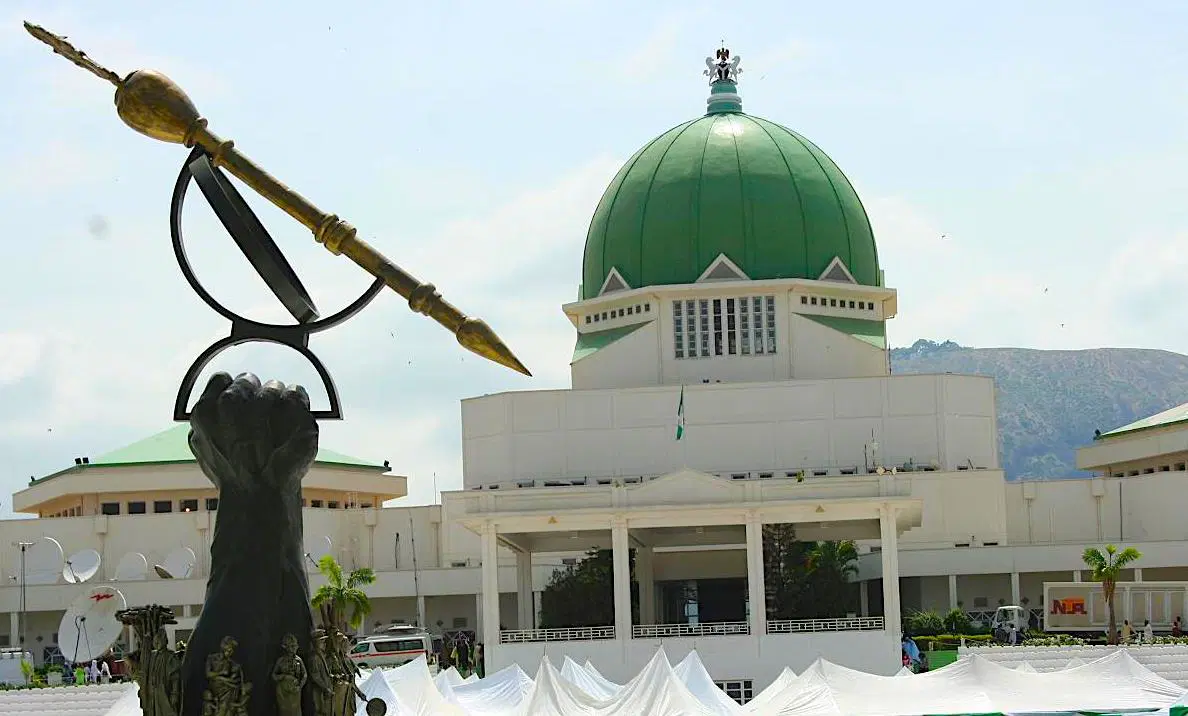
The National Assembly on Tuesday commended the Minister of Interior, Olubunmi Tunji-Ojo, for what lawmakers described as sweeping reforms across agencies under his supervision, while urging authorities to fast-track ongoing recruitment exercises.
The commendation came during a joint session of the Interior Committees of the Senate and the House of Representatives, where the minister and his team defended the ministry’s 2026 budget proposal.
Chairman of the Senate Committee on Interior, Adams Oshiomhole, speaking on behalf of the joint panel, said reform measures introduced by the ministry were already yielding measurable results both locally and internationally.
He highlighted improvements within the Nigeria Immigration Service, noting increased professionalism and better public perception at airports, which he said reflects positively on Nigeria’s global image.
Oshiomhole also cited a recent federal directive assigning VIP protection duties to the Nigeria Security and Civil Defence Corps, describing it as evidence of growing confidence in the corps’ capacity to protect lives and property.
The committee further acknowledged restructuring efforts within the Federal Fire Service and the Nigerian Correctional Service, commending their leadership for aligning with the minister’s reform agenda.
According to the lawmaker, the Senate had earlier passed a resolution directing the ministry to deploy officials to Kano to assess recent fire outbreaks that destroyed shops and private property, stressing the need to strengthen emergency response systems nationwide.
Despite praising the progress recorded, the panel urged the Civil Defence, Correctional, Immigration and Fire Service Board to accelerate its recruitment process. Lawmakers noted that candidates who recently sat for examinations were awaiting results and should be notified promptly, describing timely completion of the exercise as a matter of national importance.
The committee maintained that sustained reforms, combined with prompt administrative action, would further enhance public confidence in agencies under the ministry.