
World News
ICE UNDERGOES MAJOR STAFF REORGANIZATION AS TRUMP ADMINISTRATION PUSHES FOR MASS DEPORTATIONS


The US Immigration and Customs Enforcement (ICE) agency has announced a significant staff reorganization as part of the Trump administration’s efforts to ramp up deportations. Kenneth Genalo, the acting director of Enforcement and Removal Operations (ERO), is retiring and will serve as a special government employee with ICE. Robert Hammer, the acting head of Homeland Security Investigations (HSI), will transition to another leadership role at headquarters.

Marcos Charles will become the new acting head of ERO, while Derek Gordon will lead HSI. The agency said the changes would help achieve President Trump’s mandate of arresting and deporting criminal immigrants and making American communities safe.
The reorganization comes after White House deputy chief of staff Stephen Miller announced a goal of 3,000 ICE arrests per day, with the possibility of increasing the number further. Miller said, “President Trump is going to keep pushing to get that number up higher each and every single day.”

If achieved, the daily arrest target would mark a significant increase from the current average of 656 arrests per day. Between January 20 and May 19, ICE arrested 78,155 people. The administration’s plan would also fund the removal of 1 million immigrants annually, house 100,000 people in detention centers, and hire 10,000 more ICE officers and investigators.
The staff shakeup is part of a broader effort to supercharge immigration enforcement, with the administration pushing for a major funding boost. However, logistical challenges, including limited detention beds and planes, may hinder the plan’s implementation.


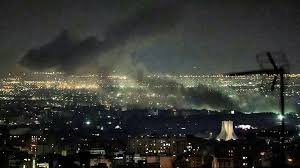
Iranian media reported an unusual Israeli drone attack in Tehran on Wednesday night, with the semiofficial Fars news agency saying Israeli drones struck security checkpoints at several locations across the capital. Fars, which is affiliated with the regime, said explosions and clashes were reported at multiple points in Tehran and that about 10 security personnel were killed, including members of Iran’s security forces and the Basij, the militia linked to the Islamic Revolutionary Guard Corps.
Other sources, however, said the toll among regime operatives was significantly higher, claiming dozens of Basij members were killed within minutes. “This operation is a joint effort by the Mossad and monarchist elements to infiltrate terrorists and sabotage the country. This operation will fail,” a knowledgeable source was quoted as saying in the statement carried by the agency aligned with the mullah regime.
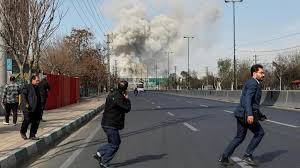
Fearing unrest, the regime’s Basij forces set up checkpoints on major streets to restrict civilian movement across Tehran. The drone attack was intended to signal to regime opponents that its internal security forces are vulnerable, while also instilling a sense of fear among Basij operatives in the hope they would be deterred from carrying out similar actions against civilians later on.
Before the reported attack, Reza Pahlavi, the son of Iran’s former shah, called on his supporters to stay home. “We are at a very critical stage in our final struggle. For your safety, leave the streets and remain in your homes,” Pahlavi said in a recorded statement. “Continue to strike and not go to work,” he added. “Continue singing loudly at night to show your solidarity. To the army and law enforcement forces: this is your last opportunity to separate yourselves from the forces of repression and join the people.”
Prime Minister Benjamin Netanyahu also addressed the Iranian public. “In the coming days, we will create the conditions for you to take your fate into your own hands. Your dreams will create reality. When the right time comes—and it is approaching quickly—we will pass the torch to you,” he said.
Earlier Wednesday, the IDF announced that dozens of Israeli Air Force fighter jets, guided by military intelligence, had completed large waves of strikes against Iranian regime infrastructure in Tehran and other areas of Iran. According to the military, aircraft carrying out the strike missions identified personnel at an IRGC headquarters in the heart of Tehran and, within seconds, fighter jets struck the site, killing those inside. The operation also targeted headquarters and bases belonging to Iran’s internal security forces and the Basij, along with the regime’s intelligence headquarters.
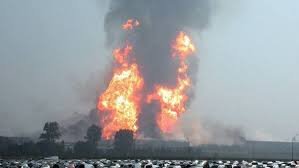
Authorities in Belgium have condemned an early-morning explosion outside a synagogue in the city of Liège as a serious act of anti-Semitism.
The blast occurred shortly before 4 a.m. on Monday outside the synagogue in Liège. No injuries were reported, though windows in buildings opposite the synagogue were damaged.
Police closed the street and established a security perimeter while the investigation continues.
Liège Mayor Willy Demeyer strongly condemned the incident, describing it as an extremely violent act of anti-Semitism. The mayor and the city council express their total condemnation of this extremely violent act of anti-Semitism, which is contrary to the Liège tradition of respect for others, Demeyer said, according to the Belga news agency.
He also warned against bringing international conflicts into the city, referring to the ongoing war involving Israel, the U.S. and Iran.
Yves Oschinsky, president of the Committee of Jewish Organizations in Belgium, described the blast as an extremely disturbing, serious and worrying anti-Semitic act.

Asian stock markets dropped Monday as oil prices soared 30 per cent on fears about supplies from the Middle East, as the US-Israeli war against Iran continued into a second week with no sign of letting up.
Investors, already spooked by concerns over extended tech valuations and the huge spending on AI, ran for the hills as crude rocketed to its highest level since the Russian invasion of Ukraine in 2022.
Fears grew that the Middle East conflict could last for some time after US President Donald Trump said only the unconditional surrender of Iran would end the war. He added at the weekend that the spike in prices was a small price to pay to eliminate Irans nuclear threat, reiterating the White Houses insistence that the rise is temporary.
Both main contracts, which had surged more than a quarter last week, spiked as Iran carried out retaliatory strikes against crude-producing Gulf nations. West Texas Intermediate, the main US oil benchmark, jumped as much as 30 per cent to hit a high of $118.88 per barrel, while Brent spiked 28 percent to as much as $118.73.
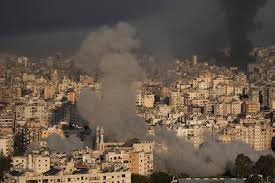
Since the beginning of the war, WTI is up more than 75 per cent and Brent more than 60 per cent.
Attacks on oilfields were reported in southern Iraq and in the northern autonomous Kurdistan region, which forced a US-run oilfield to cease production, while the United Arab Emirates and Kuwait have started reducing output. That came with maritime traffic in the Strait of Hormuz through which a fifth of global crude and gas passes halted since the war began on February 28.
The prospect of high energy prices for a sustained period has fanned fears of a fresh spike in inflation that could hit the global economy while preventing central banks from cutting interest rates to support growth.
With the prospect of the global economy taking a blow from the crisis, equity markets extended last weeks losses. Seoul, which had been the best performer this year thanks to a tech rally, tumbled more than eight percent at one point, while Tokyo shed seven percent and Taipei fell more than five percent. Hong Kong, Shanghai, Sydney, Singapore, Manila, and Wellington were also sharply lower.
Futures for all three main indexes on Wall Street were down more than two percent, while the dollar jumped against its peers as traders sought out its safe-haven status.
The deeper shock is spreading across the production chain, said SPI Asset Managements Stephen Innes. Gulf producers are scaling back output because storage hubs are filling up and export flows are seizing. Qatar has halted liquefaction at key gas facilities, a move that will take weeks to reverse even if the conflict cools tomorrow. In other words, the market is not dealing with a headline shock. It deals with a physical disruption of oil molecules. Oil above $100 is not just a commodity rally. It becomes a tax on the global economy.
However, Trump sought to offer reassurance that the spike in crude would not last long. Short term oil prices, which will drop rapidly when the destruction of the Iran nuclear threat is over, is a very small price to pay for U.S.A. and World, Safety and Peace, he wrote on social media Sunday evening Washington time.