
General News
LAGOS –IBADAN EXPRESSWAY CLOSURE RAISES FRESH QUESTIONS OVER RECURRENT INFRASTRUCTURE FAILURES

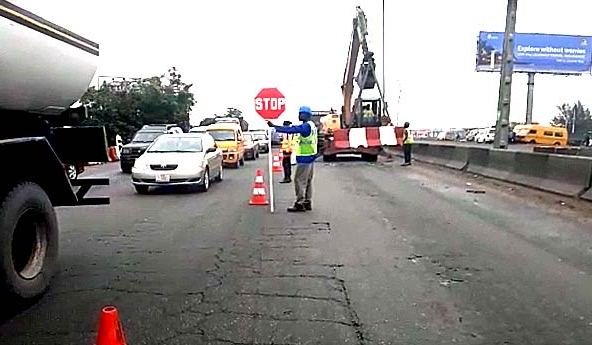
The Federal Government’s announcement of a six-week partial closure of the Lagos–Ibadan Expressway for urgent repairs has sparked renewed scrutiny over the quality and oversight of one of Nigeria’s most expensive and strategic road projects.
The closure, which affects key sections of Kara Bridge, Magboro Bridge, and Arepo–Punch Bridge, is intended to address deteriorated expansion joints officials say now pose safety risks. But for many road users and infrastructure observers, the latest repairs raise a more uncomfortable question: Why is a highway that underwent extensive rehabilitation still requiring repeated emergency interventions?
The Lagos–Ibadan Expressway is Nigeria’s busiest highway, linking Lagos to the South-West, North-Central, and Northern regions. Any disruption along the corridor has immediate ripple effects on commerce, logistics, and daily commuting.
With the partial closure expected to last six weeks, motorists are already bracing for prolonged traffic congestion, increased fuel consumption, and rising transport costs, challenges that have become familiar during previous repair exercises on the same route.
Expansion joints are essential bridge components designed to absorb movement caused by traffic load and temperature changes. Engineering experts note that when properly constructed, such joints should last several years.
The reported deterioration at three major bridges; particularly Kara Bridge, has raised concerns about construction standards, material quality, and supervision during earlier rehabilitation works. Despite official assurances, authorities have not disclosed when the defects were first detected or why repairs only resumed after reports of crashes and visible damage.
Officials confirmed that rehabilitation works on the Lagos-bound section of Kara Bridge were previously suspended following complaints about traffic congestion. Critics argue that halting repairs on structurally compromised infrastructure may have worsened the problem.
Some commuters told reporters that the damaged joints had been visible for months before the closure announcement, with deep grooves forming on bridge surfaces long before intervention began.
“If this was known earlier, why did it take accidents and public pressure before action was taken?” a commercial driver asked.
CBC Construction Company, the contractor handling the repairs, has promised to complete the work within six weeks, with phased execution across the affected bridges. However, there has been no public clarification on whether the premature failure of the joints will attract sanctions, independent technical reviews, or adjustments to existing contracts.
Infrastructure analysts warn that without transparency, such repair projects risk becoming routine stop-gap measures rather than long-term solutions.
The latest Lagos–Ibadan closure highlights a recurring issue in Nigeria’s infrastructure sector, reactive maintenance rather than preventive planning. As public funds continue to be channelled into road rehabilitation nationwide, citizens are increasingly demanding answers on durability, value for money, and accountability.
For now, motorists are once again adjusting their schedules and expectations, paying the price for infrastructure that was previously declared completed but appears far from settled.
