Analysis
MACHINA: THE CITY THAT REFUSES TO SLEEP
A Homeland Honouring Its Son
By Mualeem Ibrahim
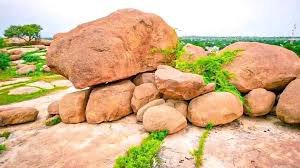
There are cities that exist on maps, and there are cities that live in the bloodstream of their people. Machina—ancient, resilient, and proud—belongs to the latter. Nestled in the northwestern sands of Yobe State, this Emirate has carried its traditions with a devotion that has outlived empires. Its formal leadership, historians remind us, stretches back to 980 AD, when Mai Hariyu Bolo Kandira ascended the throne and began a lineage of guardianship that still stands, unbroken, like a desert baobab defying time.
Machina is not merely a place; it is a pulse. A memory that breathes. A heritage that refuses to dim. Chinua Achebe once wrote that “a people are as strong as the stories they tell about themselves.” Machina’s story is one of endurance, dignity, and a cultural splendour that glows like embers in the Sahel night.
SEVEN DAYS WHEN TIME STANDS STILL
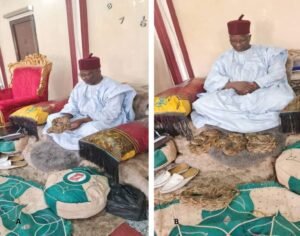
Each year, Machina calls its sons and daughters home—no matter how far their journeys have taken them. For seven radiant days, the city becomes a living tapestry of colour, rhythm, and ancestral pride. The Machina Annual Cultural Festival (MACUF) is not merely an event; it is a homecoming of the spirit. It draws dignitaries, scholars, traditional rulers, journalists, activists, and admirers from across Nigeria and beyond.
Like the festivals in Soyinka’s Death and the King’s Horseman, MACUF reminds us that culture is not a relic to be archived—it is a living force, a heartbeat that binds generations.
But the 2026 edition was touched by something deeper. Something historic.
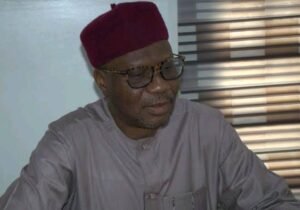
Dr Kole Ahmed
A FESTIVAL CROWNED BY HONOUR
This year, the desert winds carried whispers of anticipation. Machina was preparing to honour one of its most illustrious sons—Dr. Kole Ahmed Shettima. The city swelled with visitors: activists, civil society leaders, academics, politicians, and cultural custodians converged to witness a moment destined for the Emirate’s chronicles.
On January 31, beneath the watchful eyes of ancestors and the jubilant gaze of his people, the Emir of Machina, His Royal Majesty Mai Bashir Abishir Bukar, OON, L’ONN, turbaned Dr. Kole as Zanna Yuroma. It was the crowning jewel of MACUF 2026.
The Emir spoke with warmth and conviction. This honour, he said, was not merely a recognition of Dr. Kole’s service to Machina, but a tribute to a man whose compassion radiates far beyond the borders of his birthplace. His love for humanity, the Emir declared, is as expansive as the Sahel sky.
And on Sunday, February 1, the festival’s grand finale, Machina seemed to overflow its own boundaries. It felt as though the entire cabinet of Yobe State had migrated to the Emirate. The Executive Governor, His Excellency Hon. (Dr.) Mai Mala Buni, the SSG, former governors, and over 40 Emirs from across northern Nigeria graced the occasion. Security agencies worked tirelessly to guide the sea of humanity—each person eager to witness history.
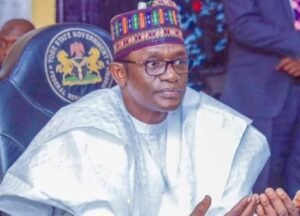
Buni
One lesson stood out like a desert sunrise: though Machina is an Islamic city, it does not silence its women. Draped in radiant traditional attire, they danced with grace, perfumed the air with sweet fragrances, and infused the celebration with a joy reminiscent of Senghor’s immortal tribute— “Naked woman, black woman… your beauty strikes me to the heart.”
A LIFE OF SERVICE, A LEGACY OF IMPACT
For more than three decades, Dr. Kole Ahmed Shettima has walked the intertwined paths of scholarship, philanthropy, and public service with the quiet dignity of a man who understands that true leadership is measured not in titles, but in lives touched. His journey has been neither loud nor ostentatious; instead, it has been steady—like the desert wind that shapes dunes over centuries, transforming landscapes with patience and purpose.
From the lecture halls of academia to the frontlines of development work, Dr. Kole has carried with him a philosophy rooted in empathy. He believes, deeply, that knowledge must serve humanity, and that privilege must bend toward justice. His work reflects this conviction.
Through the Kole Shettima Trust Fund and the Machina Emirate Development Association, he has built a legacy that stretches across generations:
• Scholarships for hundreds of undergraduates, ensuring that the dreams of young people do not wither for lack of opportunity.
• Feeding the poor, not as charity, but as an affirmation of dignity.
• Clothing orphans, wrapping them not only in fabric but in hope.
• Building places of worship, where communities gather to pray, reflect, and find solace.
• Constructing water points, bringing life to communities where water is a daily struggle.
• Paying medical bills, so that illness does not become a death sentence for the vulnerable.
• Mentoring youth, guiding them with the wisdom of experience and the tenderness of a father.
• Settling fines for the imprisoned poor, freeing men and women whose only crime was poverty.
• Improving learning conditions for secondary school students, because he knows that education is the first step toward liberation.
These are not mere acts of generosity; they are acts of remembrance. They are the gestures of a man who never severed the umbilical cord that ties him to his homeland. “What is probably important,” he often reflects, “is being rooted in my community since my primary school education.” That rootedness is his compass. It is what keeps him grounded even as his influence spans continents.
His leadership has shaped institutions, strengthened governance, and inspired a generation of thinkers, activists, and public servants. His contributions to humanity are not abstract—they are stories. Stories of children who stayed in school because he believed in them. Stories of families who found relief in moments of despair. Stories of communities whose futures were rewritten because one man chose to act.
Ngũgĩ wa Thiong’o reminds us that “writers and scholars are the memory of a nation.” In many ways, Dr. Kole has become part of Machina’s living memory—preserving its values, expanding its possibilities, and embodying its highest ideals.
His life is a testament to a simple truth: service is the most enduring form of greatness.
MACHINA REJOICES
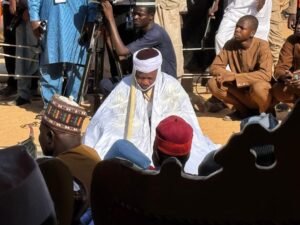
When the turban was tied and the title bestowed, Machina did not simply applaud—it exhaled. A collective breath, held for generations, was released into the desert air. The joy that followed was not the fleeting excitement of a festival; it was the deep, resonant pride of a people witnessing one of their finest sons return home in honour.
The city transformed into a living organism—its streets pulsing with movement, its courtyards humming with anticipation, its skies echoing with the sounds of celebration. Men, women, elders, youth, and children poured into the open spaces as though answering an ancestral call. It felt as if the very soil of Machina had awakened to join the festivities.
The celebration unfolded with the splendour of an epic:
• Drums thundered, their rhythms rolling across the Emirate like distant storms announcing abundance.
• The Kakaki trumpet pierced the air, its regal notes slicing through the crowd with the authority of centuries-old tradition.
• Dancers swirled in vibrant attires, their garments catching the sunlight and scattering it like shards of colour across the sand.
• Wrestlers stepped forward, their bodies glistening with pride, embodying the strength and honour of the land.
• Snake charmers mesmerized the crowd, their movements fluid, ancient, and hypnotic—echoes of a time when magic and culture were inseparable.
• Praise singers chanted genealogies, weaving Dr. Kole’s name into the long tapestry of Machina’s history.
• Music flowed like a river, winding through alleyways, courtyards, and open fields, binding strangers and kin in a shared rhythm.
It was not merely a festival; it was a rebirth.
The Emirate glowed with a unity rarely seen in modern times. Farmers stood shoulder to shoulder with scholars. Traders danced beside civil servants. Children clapped in delight as elders nodded in approval, their eyes shimmering with memories of festivals past. The air was thick with incense, dust, perfume, and the unmistakable scent of celebration—a fragrance that only a city deeply in love with its heritage can produce.
Even the desert seemed to pause. The wind softened, as though listening. The sun lingered a little longer on the horizon, reluctant to set on such a moment. And when night finally draped itself over Machina, lanterns and fires lit up the darkness, turning the Emirate into a constellation on earth.
It was a scene reminiscent of the grand communal gatherings in Achebe’s Arrow of God—a people united not by necessity, but by pride, memory, and shared destiny.
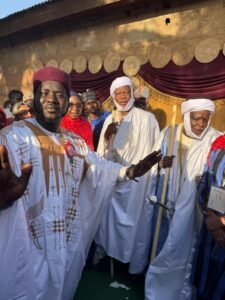
Machina did not merely celebrate a title; it celebrated a legacy, a lineage, a reaffirmation of who it is and what it stands for. In honouring Dr. Kole, Machina honoured itself.
A Tribute to a Worthy Son
In honouring Dr. Kole Ahmed Shettima, Machina honoured the values it cherishes most—service, humility, scholarship, and humanity. The title of Zanna Yuroma is not just a recognition; it is a covenant between a son and his homeland.
And so, with pride and admiration, we join millions across Nigeria in celebrating High Chief Dr. Kole Ahmed Shettima. May his reign as Zanna Yuroma bring wisdom, compassion, and progress to Machina and beyond.
Long may he serve.
Long may Machina flourish.
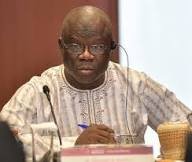
Mualeem Ibrahim is the Executive Director, Resource Centre for Human Rights and Civic Education (CHRICED). He writes from Abuja
Analysis
THE GREAT RIP OFF: HOW FUEL ATTENDANTS MANIPULATE METER READINGS AT FILLING STATIONS TO CHEAT UNSUSPECTING CUSTOMERS
Friday Lines (105) With;
Engineer Abubakar Alkali (PhD)
20/1/26
The practice of ‘cheating through meter manipulation’ at filling stations has been ongoing since records began. However, the issue becomes more critical when juxtaposed with the very huge spike in the ex-pump price of premium motor spirit (PMS) a.k.a petrol from N200 per litre pre-Tinubu’s Presidency to an average of N1,000 or more today depending on the location.
The over 800% jerk up in the price of petrol and other petroleum products was as a result of the presumed and theoretical removal of fuel subsidy by President Tinubu in 2023 which sent prices of goods and services into the skies and mostly beyond the reach of the average Nigerian.

The sharp practice in petrol meter wheeler-dealing involves the manipulation of the meter at the pump by the fuel attendants such that the reading seen on the pump’s display unit is higher than the exact fuel dispensed and paid for.
It works such that if you buy a N10,000 fuel, what actually goes into your tank is about N7,000 or N8,000 worth or even less as the case may be. Through this fraud, the volume of fuel you paid for is more than what goes into your tank. You drive out of the station with less fuel while the fuel attendant smiles home with his loot.

A few motorists and other consumers have done a field research through the use of kegs where they use a 10 litre keg to buy fuel at the station only to realise that the fuel mark stopped at around 8 litres. This means they have been shortchanged 2 litres. The situation is even more pathetic out-of-pump in remote areas where petrol sellers at the black market use conceptualized estimates to sell fuel.
The crux of this ‘fuel fraud’ is that you could buy petrol worth which normally takes you to Ikoyi Lagos from Ibadan but on getting to Ogere, your fuel gauge goes red and you still have about an hour’s drive to get to your destination depending on the normally chaotic Lagos traffic. At that point, you realise that the actual is actually different from the estimated. That the fuel in your tank is less than what you paid for.
Apart from manipulating the meter, the fuel attendants use other methods to perpetrate this fraud one of which is to ensure that the customer is not issued a receipt. If you dare ask for a receipt after you have been served, the normal excuse from the fuel attendant is ‘There is no paper Sir’ or ‘this particular POS machine does not give receipt’ or ‘please let me go and get a receipt’ expecting you to say ‘no don’t worry I am in a hurry’ before you zoom off at the delight of the fuel attendant.
If you insist on getting your receipt, you may be shocked to find out that between N2,000 – N3,000 worth of fuel has not been dispensed into your tank. It has been retained in the pump and the fuel attendant will collect his loot after the day’s work. Normally, the fuel attendants are supposed to dip the fuel tank and record the closing reading when they close their shift or close work. However, usually they find a way round it by attributing any errors in closing figures to what they call ‘calibration problem. But this has nothing to do with the customer. It is between the attendants and their employers which goes to show that the attendants cheat both the customers and their employers.
Another method used by the fuel attendants is to block you from seeing the actual reading on the meter by taking you into long conversations often times on flimsy and irrelevant topics such as;
‘This your car fine o! etc.
‘E be like say you come to buy fuel in our station last week’ etc.
By the time you realise what is going on, the fuel attendant has finished dispensing and dropped the nozzle. You haven’t seen the last reading to know how much or how many litres were dispensed in your tank. That’s it? You have been cheated!
Sometimes, the meter may be correct but since you are not watching and you are in too much a hurry to collect your receipt, the fuel you paid for will not be the actual quantity that goes into your tank. It pays to always collect your receipt from the fuel attendant to ascertain whether the actual fuel is same as the dispensed.
Many passengers have bought fuel worth that on previous trips, took them to Zaria from Abuja but on getting to Kaduna, they realise that they are already at red on the dashboard because they have been defrauded at the pump.
Looking at the daily domestic demand for petrol (PMS) which is estimated at about 35 million litres, even at a worse case scenario of 20% meter fraud, it means that Nigerians could be shortchanged by 7 million litres of petrol daily.
Do the maths:
7 million litres * N1000 = 7, 000, 000,000
This estimated N7 trillion daily diversion is huge and presumably going into the pockets of fuel attendants and their collaborators
This fraud is perpetrated despite the fact that Nigeria has a sea of regulators saddled with the responsibility of ensuring that what you pay for is what goes into your tank.
Some of these regulators are as follows;
1. The Nigerian midstream and downstream petroleum regulatory authority (NMDPRA) is the chief regulator of the downstream sector of the Nigerian petroleum industry but has not shown the wherewithal to check the meter fraud. Their excuse is that they cannot be at every filling station. How flimsy!
2. The weights and measures department of the Federal ministry of industry, trade and investment (FMITI) which is saddled with the responsibility of ensuring that all products are accurately measured so as to protect consumers from being shortchanged.
3. The standards organisation of Nigeria (SON) which is meant to ensure standardization and quality assurance
4. The federal competition and consumer protection commission (FCCPC) whose primary responsibility is to stop such sharp practices that could shortchange the customer and distort competition.
You can go on and on naming these MDAs that were created to ensure that such chicanery and subterfuge are completely eradicated in our dear country.
The apparent lack of resolve to eradicate this fuel meter fraud gives credence to allegations that these fuel attendants and their collaborators and cotravellers are working in cahoots with the regulators especially the NMDPRA to perpetrate this crime against Nigerians who are struggling anyway under Tinubu’s hardship measures which are presented as ‘economic reforms.
The key regulator NMDPRA must up its game and stop this abuse at the pump even if to cushion the excruciating economic strangulation implicated by President Tinubu’s abrupt removal of fuel subsidy in May 2023 in addition to other abrupt removals such as removal of electricity subsidy, removal of education subsidy etc.
The need to ensure that this fuel fraud at the pump is completely eradicated is moreso when juxtaposed with the fact that Nigerians are currently going through the worst economic hardship since records began. Inflation is now at double digits (12.94%). Multidimensional Poverty (MDP) is spreading like wild fire amid very high insecurity resulting in senseless killings and abductions.
At least half of Nigeria’s population (100 million) is living in abject multidimensional poverty (MDP) as the leaders leave in unparalleled affluence with their families and behave as if all is normal in the country.
Moreso, insecurity has resulted in the inability of farmers to go to their farms thus leading to the current food insecurity in this nation that can potentially feed the whole of Africa.

Engr. Abubakar Alkali is an Academic & Activist.
Currently a Senior Lecturer in Petroleum & Gas Engineering at Baze University.
Analysis
THE TAX REFORM ACT — PROCESS FAILURE, CREDIBILITY CRISIS, AND THE IMPERATIVE OF PUBLIC ACCOUNTABILITY
By Obiageli ‘Oby’ Ezekwesili
As a practitioner in economic policy, I am naturally disposed to support tax reforms that strengthen growth, equity, fiscal sustainability, and state capacity—without compromising core principles of taxation or the credibility and legitimacy of the lawmaking process.

*Unfortunately, the Nigerian Tax Reform Act—as currently handled—suffers a deficit of both policy coherence and process credibility.*
What should have been a confidence-building, growth-enhancing reform has instead become a source of confusion, distrust, and resistance—driven largely by process failure, policy incoherence, and political tone-deafness.
*The gazetting controversy is an assault on constitutional democracy*
All actions so far taken by the Executive and Legislative branches regarding the gazetting of a wrong version of the recently passed and assented Tax Reform Act constitute a grave threat to constitutional governance and must be halted.
The version that was gazetted reportedly contains constitutionally-troubling provisions that raise serious concerns, including:
• provisions lacking clear, traceable legislative origin;
• expansions of administrative discretion that weaken taxpayer protections; and
• federalism and legality issues that demand immediate clarification.
*Stop, rescind, and reset the process in the public interest*
I call on the Executive and Legislature to prioritize the public interest and immediately:
1. Terminate and rescind all steps taken on the wrong gazetted version;
2. Suspend implementation of any version pending a credible resolution; and
3. Restart transparently, returning to the Legislature for a renewed process that begins from the Public Hearing stage, so Nigerians can see, test, and trust the text that will govern them.
Accordingly, the @NGRPresident @officialABAT should announce an immediate postponement of implementation of whatever version is currently being treated as the operative Tax Reform Act, until the integrity of the legislative text is resolved beyond doubt.
*“Re-gazetting” without investigation is not accountability*
Gazetting a wrong Bill as an Act is prima facie unlawful and potentially unconstitutional. If the wrong version was knowingly substituted or altered, then it may also implicate serious criminal liability.
It is therefore deeply troubling that the National Assembly appears to have proceeded by merely instructing a “re-gazetting” of the “right version” without a transparent, independent inquiry into how this happened.
That approach does not meet democratic standards. It compounds the harm.
*Nigeria is not a personal grocery shop*
The Executive and Legislative branches must stop running Nigeria like a personal grocery shop where rules are bent, processes are improvised, and the public is asked to accept “corrections” without accountability.
*This pattern of the Executive and Legislature acting in ways that negate democratic norms of public accountability while ignoring public outcry cannot continue.*
*A functioning democracy requires that when something this significant goes wrong, government triggers a system check: review, investigation, evaluation, and full disclosure.*
Public accountability is to good governance what water is to fish.
*Nigerians deserve the full facts: error or forgery?*
Nigerians deserve to know: How did a wrong version come to be gazetted in the first place?
*I join many citizens demanding a transparent, independently constituted probe to establish whether this was*:
• an innocent administrative error; or
• a deliberate act of document substitution—i.e., officials knowingly causing a text to be published as an Act of the National Assembly when it was not the text duly passed.
If any alteration or substitution was done with intent to deceive, the public deserves to know:
• who altered or substituted the authentic text;
• who authorised it or knew about it; and
• what safeguards failed—and why.
*What should happen on January 1, 2026*
*The proper and only thing that should commence on January 1, 2026 is an Inquiry Process that will:*
1. Establish the factual divergence between the authentic legislative text and the gazetted text;
2. Identify the point(s) of alteration/substitution in the chain of custody;
3. Determine who authorised, enabled, or had knowledge of it;
4. Assess intent, recklessness, or gross negligence; and
5. Apply appropriate administrative sanctions and, where warranted, criminal liability.
*Nigeria cannot build a credible tax system on a credibility crisis.*
*A tax reform that lacks legitimacy will not command voluntary compliance. A democratic government that evades accountability cannot deliver good governance.
This must be stopped. The facts must be established. The process must be reset.

Obiageli “Oby” Ezekwesili is Founder, SPPG- School of Politics, Policy and Governance.
THIS WRITE UP IS ENDORSED AND AMPLIFIED BY THE GOOD GOVERNANCE GROUP (GGG)
Analysis
“WHEN SILENCE SPEAKS TOO LOUDLY”
By Dr. Pedro Obaseki
“In every society, there are moments when what is said matters. There are also moments—far more dangerous—when what is not said matters even more.”
On Sunday, 28 December 2025, while I was playing football at Uwa Primary School on Igbesanmwan Street in Benin City, I was attacked and forcibly abducted by a group of men, some of whom were armed.
I was kidnapped beaten, stripped completely naked, and dragged through public streets, including in front of Holy Aruosa Church. I was paraded in that condition over a distance of about five kilometres and taken forcibly into the Oba’s Palace, where the assault and humiliation continued. My abductors/kidnappers claimed severally that they were instructed to abduct me by the Palace of the Oba of Benin.
I was later taken to the Oba Market Police Station, where I was detained for about five hours. During that time, I was informed that my release depended on clearance from the Oba.
These are facts. They are not opinions.
Let me say this clearly and firmly:
What happened to me is unacceptable in a constitutional democracy. No citizen should be abducted in broad daylight, stripped naked, assaulted, humiliated, or detained without lawful cause—no matter who is involved or who is named.

Many Nigerians have rightly asked:
Why has there been no public denunciation of this violence by the Palace or by the Edo State
Government?
This question matters.
I am not accusing anyone of ordering or endorsing what happened. But when an act of such gravity occurs—public, violent, and degrading—silence from institutions with moral and political authority is not neutral. Silence creates fear. Silence weakens confidence in the rule of law. Silence risks normalising abuse.
Let me be clear:
Calling for denunciation is not an attack on tradition. It is a defence of order, dignity, and restraint.
The Benin Kingdom has survived centuries because it adapted, exercised moral authority, and commanded respect—not fear.
A clear and unambiguous statement condemning the violence against me (which the perpetrators claimed boldly and unequivocally was carried in the name of the Oba of Benin), affirming that no one may take the law into their own hands, and reaffirming respect for constitutional rights would have reassured Edo people and Nigerians everywhere.
This is not about tradition versus modernity.
It is about law versus lawlessness.
I have petitioned the appropriate authorities, including the Inspector-General of Police, and I have submitted evidence, including video recordings circulated to humiliate me.
My demands are simple:
• A transparent and independent investigation
• Accountability for anyone who broke the law
• And protection for myself and my family
A simple statement condemning violence, affirming due process, and reiterating respect for constitutional rights would have helped heal wounds and calm tensions. That opportunity remains open.
History teaches us this:
Institutions are not judged only by the injustices they commit, but by the injustices they fail to condemn.
Nigeria’s democracy may be weak. Yes. Nigeria’s democracy will not collapse because one man was abused. But it will weaken further if such abuse is met with silence.
I have chosen the path of law, not anger. I have chosen institutions, not mobs. I still believe that justice, spoken clearly and acted upon courageously, strengthens us all.
I am calm. I am peaceful. But I am firm.
Nigeria cannot protect its democracy if it cannot protect the dignity of one citizen, who was dehumanized and brutalized in broad daylight, and on the alleged orders of non-state actors.
I pray that you never suffer my fate.

– Pedro Agbonifo Obaseki, MBA, PhD.
_(Victim)_