
Education
Macmillan Unveils Prof. Adeniyi’s New Book on African Migration Narratives

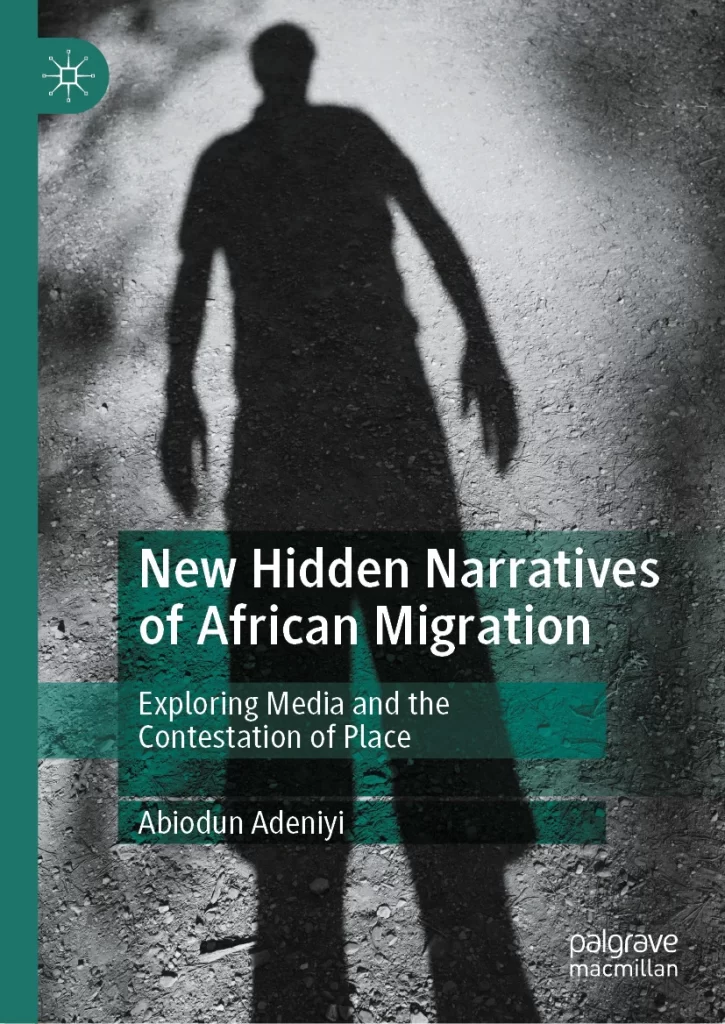
Leading academic publisher Palgrave Macmillan has unveiled a new book by Professor Abiodun Adeniyi titled New Narratives of African Migration: Exploring Media and the Contestation of Space.
Prof. Adeniyi, a scholar known for his research at the intersection of media, identity and Africa’s geopolitical dynamics, is a faculty member in the Department of Mass Communication at Baze University, Abuja.
The newly released book moves beyond dominant headlines about the global migration crisis to present a rigorous scholarly interrogation of how media, collective memory and digital technologies are reshaping African mobility and identity.
In the work, Adeniyi addresses what he describes as the persistent “epistemic silence” surrounding African migration experiences. Conceptually structured as a journey, the book opens by mapping the emotional landscapes of displacement and the “fractured bonds” that emerge when the idea of home becomes distant, symbolic or contested.
Through his examination of the “stranger within,” the author offers fresh insights into evolving diasporic identities and the gendered transformations migration often triggers within families and communities.
A key strength of the book lies in its focus on what Adeniyi terms “unspoken journeys” — the largely overlooked patterns of intra-African migration that receive limited attention in Western media narratives. The study draws from migrants’ personal archives, exploring the cultural meanings of the items they carry and the digital platforms where belonging is constantly negotiated.
The book argues that in an era marked by surveillance and rapid technological change, social media has emerged as a critical “space of hybridity,” enabling migrants to challenge dominant representations and transform silence into visible presence.
It further interrogates the politics of migration governance, critiquing enduring colonial legacies while highlighting the vulnerability of the nation-state amid intensified global mobility.
By centring the voices of returnees and migrants in transit, the publication redefines notions of “home” and advances a layered analysis of cultural fluidity and mediated identity formation.
New Narratives of African Migration is now available globally and is recommended for scholars, policymakers and media professionals seeking deeper insight into the complex dynamics shaping African migration in the 21st century.

A 10-year-old Primary Five pupil of Diamond Specialist School, Owerri, Jeffery Obinna, has emerged winner of the fourth edition of the Smart Kids Mathematics Competition organised by Shekinah British International School (SBIS), Ihiagwa, in Owerri West Local Government Area of Imo State.
The competition, held in Owerri, rewarded the champion with ₦500,000 cash, a ₦15 million education scholarship grant and a brand new laptop.
Two other pupils — Okwaraoka Chinedu and Jekwu Ebere, both aged 10 and from Limitless School, Owerri — clinched the second and third positions respectively. They received ₦300,000 and ₦200,000 cash prizes, alongside brand new laptops. About 20 other participants received consolation prizes.
The initiative, sponsored by the Chairman/CEO of SBIS, Chief Dr. Obinna Smart Unegbu, provided free online registration to ensure broad participation by interested pupils across the state, regardless of background or location.
Participating schools included Living Word Academy, Rosykids, White Label School, Great Achievers School, New Day School, Dayton’s Montessori Academy, Our World International School, Great Excel, Milky Way and Best Kids Montessori School, among others.
Out of 145 pupils who took part in the first stage, only eight finalists advanced after screening and a keenly contested Computer-Based Test (CBT).
Speaking at the event, the Imo State Commissioner for Education, Prof. B.T.O. Ikegwuoha, who was represented by the Director of School Sports in the ministry, Mr. Joseph Chukwuemeka Nwonu, described the initiative as a major step toward rekindling interest in mathematics among young learners, many of whom tend to favour arts-related subjects.
He commended SBIS for setting a standard worthy of emulation by both public and private schools and reaffirmed the state government’s willingness to partner with initiatives that promote academic excellence.
In his remarks, SBIS Chairman, Unegbu, said the competition was borne out of a passion to nurture a new generation of mathematicians capable of transforming society. He noted that many pupils perceive mathematics as difficult, stressing the need to build strong foundational skills early.
Expressing gratitude, the winner, Jeffery Obinna, thanked God, his teachers and the school’s management for the opportunity.
“I thank the proprietor of Shekinah British International School for giving me the scholarship, the computer and the cash prize. May God replenish him,” he said, adding that the victory has motivated him to aim higher in his academic pursuits.
Some mathematics teachers at the event, including Mr. Amadi Chigozie of Award International Nursery and Primary School, Owerri, and Mr. Kalu Michael John of Limitless School, described the competition as a milestone in boosting awareness and strengthening mathematical competence among pupils.
The event drew commendations from stakeholders who described it as a laudable effort to promote excellence in science and mathematics education in Imo State.


The Senate has expressed concern over the rising revenue profile of the Joint Admissions and Matriculation Board (JAMB), warning that the increasing financial demands on candidates could be worsening access to tertiary education for poor Nigerians.
The concern was raised during a budget defence session before the Senate Committee chaired by Senator Muntari Mohammed, where the Director of the Registrar’s Office, Mufutau Bello, presented the agency’s financial performance and projections.
In his presentation, Bello stated that JAMB proposed ₦19.8 billion as Internally Generated Revenue (IGR) for the 2025 fiscal year and realised ₦18.8 billion, describing the outcome as a strong showing despite prevailing economic constraints. For 2026, the examination body is projecting ₦23.8 billion in IGR, indicating a notable increase aimed at strengthening operations and improving service delivery.
However, lawmakers questioned the steady rise in the agency’s revenue, noting that much of the income is sourced from registration fees paid by prospective students. They expressed worry that the upward trend may be placing an unfair burden on candidates from low-income families.
Members of the committee stressed that while financial sustainability is important, it must not override the fundamental objective of ensuring broad and equitable access to education. They urged JAMB to demonstrate greater social responsibility by adopting measures that would reduce pressure on candidates and their families.
The committee also sought clarification on the increase in personnel costs captured in the proposed 2026 budget. Senators demanded a detailed breakdown to justify the higher expenditure, insisting that any rise in staff-related spending must correspond with measurable improvements in productivity and service efficiency.
Despite the reservations, the lawmakers commended JAMB for its operational performance and revenue efficiency, while emphasizing that transparency, accountability and fairness must remain central to its mandate.
The committee reiterated its resolve to sustain strict oversight of government agencies, especially institutions whose activities have direct implications for millions of Nigerians pursuing higher education.
Education
NUJ PRESIDENT SEEKS STRATEGIC PARTNERSHIP WITH TETFund TO ADVANCE EDUCATION, PROPOSES JOINT PROJECT INSPECTION TOUR

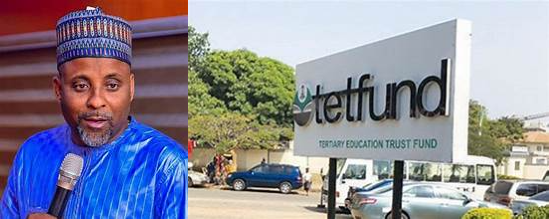
The National President of the Nigeria Union of Journalists (NUJ), Comrade Alhassan Yahya, has called for a strategic partnership with the Tertiary Education Trust Fund (TETFund) to support education development in Nigeria. He made the call on Monday when he led a delegation on a courtesy visit to the Executive Secretary of TETFund, Sonny Echono, in Abuja.
Comrade Yahya commended the Agency for its role in revitalising tertiary institutions across Nigeria, pledging deeper collaboration to strengthen public awareness of education sector interventions. The president said the union had consistently monitored the agency’s activities and was satisfied with the execution of projects in institutions nationwide. “This visit is aimed at strengthening institutional partnership and exploring ways both organizations could work together to advance national development through improved education outcomes and informed public engagement,” he added.
The NUJ president appreciated the Executive Secretary of TETFund for what he described as commendable performance in the implementation of intervention programmes across the country. He said the union’s leadership considered it necessary to engage directly with the Agency to enhance visibility for its activities and ensure Nigerians are better informed about ongoing developments in tertiary education. According to Comrade Yahya, the NUJ is proposing a joint inspection tour of selected tertiary institutions across the six geopolitical zones to assess projects executed and showcase their impact. He explained that the proposed tour would involve visits to selected states in each zone, allowing journalists to independently observe interventions and communicate their significance to the public.

Comrade Yahya noted that the union had previously passed a vote of confidence in the leadership of the Agency and had also advocated increased federal funding for TETFund, stressing that timely release of funds remains essential to sustaining intervention programmes across institutions. He said the proposed collaboration would also include joint public sensitisation on ongoing projects, adding that broader public awareness would help Nigerians appreciate the scale of work being carried out in tertiary institutions.
The NUJ president further appealed for support for the International Institute of Journalism, an NUJ-owned training institution dedicated to strengthening professional standards and improving the quality of journalism practice in Nigeria. He also proposed periodic engagement between the union and TETFund through structured quarterly briefings, stating that the platform would enable journalists to provide feedback from field observations and contribute constructive input that could support the Fund’s operations. Comrade Yahya additionally sought TETFund’s support for the NUJ’s planned 2026 Media Summit in Abuja, which he said would bring together academia, policymakers and other stakeholders to deliberate on issues of education funding and national security as they relate to the development of the education sector. He expressed optimism that stronger collaboration between the media and TETFund would improve public understanding of education interventions and contribute to national progress.
In his response, the Executive Secretary of the Tertiary Education Trust Fund (TETFund), Sonny Echono, said Nigeria’s tertiary education system requires sustained investment, public trust and stronger institutional support to overcome infrastructure and research gaps. He stressed that the Agency was established to halt the decline in academic standards and restore confidence in the nation’s universities and other higher institutions. Echono explained that the intervention agency emerged from widespread concern over what stakeholders at the time regarded as a serious deterioration in academic quality across the tertiary education system. According to him, the creation of the Fund was intended as a targeted response to reverse declining standards, strengthen institutional capacity and incentivise growth in the education sector, particularly at a period when many skilled personnel were leaving and infrastructure deficits had become severe.
Echono said although considerable progress has been made through sustained government support and structured intervention programmes, major challenges persist across institutions. He identified deficiencies in physical infrastructure, research facilities and the general conditions under which teaching, learning and research take place as areas that continue to require significant investment. He noted that addressing these gaps demands long term commitment and consistent funding. The Executive Secretary said the Fund has undertaken extensive intervention projects across institutions nationwide, adding that evidence of ongoing work can be seen in multiple institutions where facilities have been constructed, upgraded or rehabilitated to improve academic delivery.
Echono stressed that communicating these interventions to the public remains essential to building confidence in the system. According to him, demonstrating what has been achieved with available resources will help sustain trust and strengthen national support for continued investment in tertiary education. On collaboration with the media, he said the Fund engages the media through coverage of project commissioning activities and academic publications produced to support institutional development. Echono expressed support for the NUJ IIJ by ensuring staff will be sponsored to enroll in the institution and expressed readiness to develop broader collaboration with the union that reflects national visibility.
Echono pointed to electricity expenses as a major challenge, explaining that in many cases institutional allocations are insufficient to cover utility bills for extended periods. He said the severity of these constraints has compelled the Fund to intervene in essential infrastructure beyond academic facilities, including support for power supply systems, access roads and water provision, describing such measures as necessary to sustain institutional operations. Amid these efforts, he expressed appreciation to President Bola Ahmed Tinubu for continued federal backing of the education sector, noting that sustained government support has strengthened the Fund’s capacity to implement critical interventions and stabilise institutions facing structural challenges. Echono said the sustainability of tertiary education depends not only on infrastructure development but also on broader policy support, stakeholder collaboration and consistent national commitment to education financing. He thanked the visiting delegation for the engagement and reiterated the Fund’s commitment to supporting institutions in addressing structural challenges, improving academic standards and sustaining progress in Nigeria’s tertiary education system.