
Weather
MASSIVE WINTER STORM BRINGS TRAVEL DISRUPTIONS TO EASTERN US

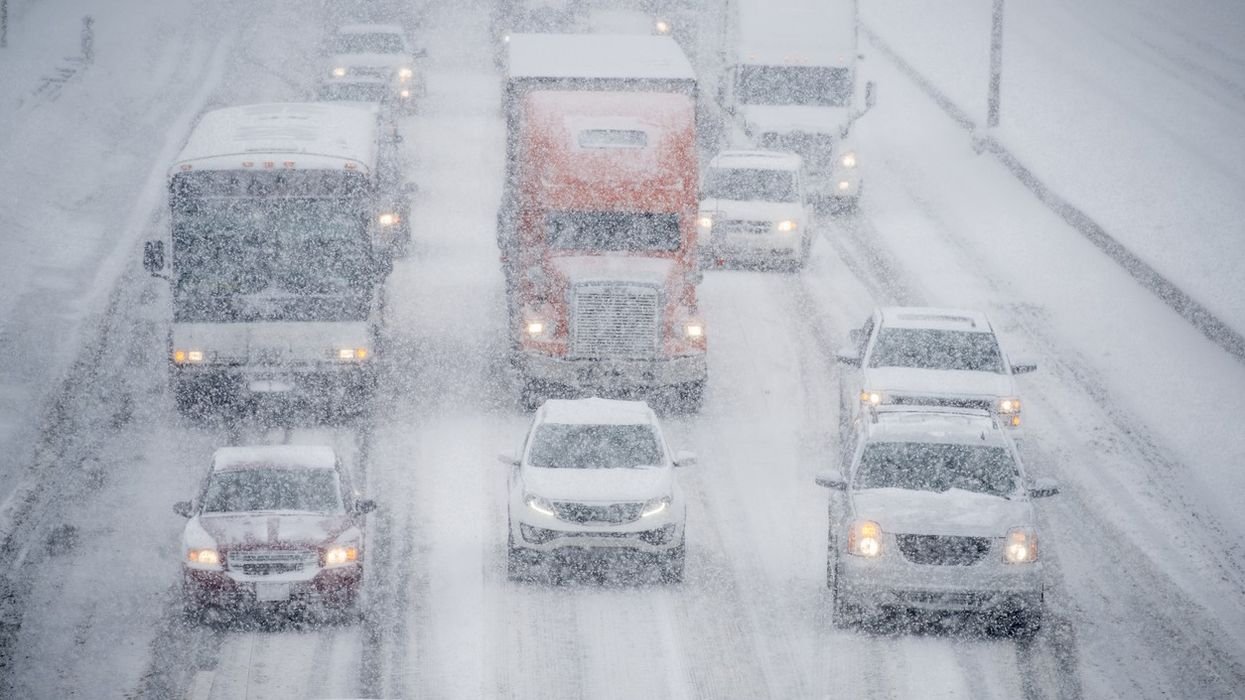
A powerful winter storm has gripped the eastern United States, bringing widespread travel disruptions and the heaviest snowfall in over a decade. The storm has resulted in thousands of flights being delayed or cancelled, with St Louis, Missouri being the worst-hit airport.

The National Weather Service (NWS) has warned of “considerable disruptions to daily life” and “dangerous or impossible driving conditions and widespread closures” into Sunday. A polar vortex has brought frigid weather down from the Arctic, with extreme weather conditions accompanying it.
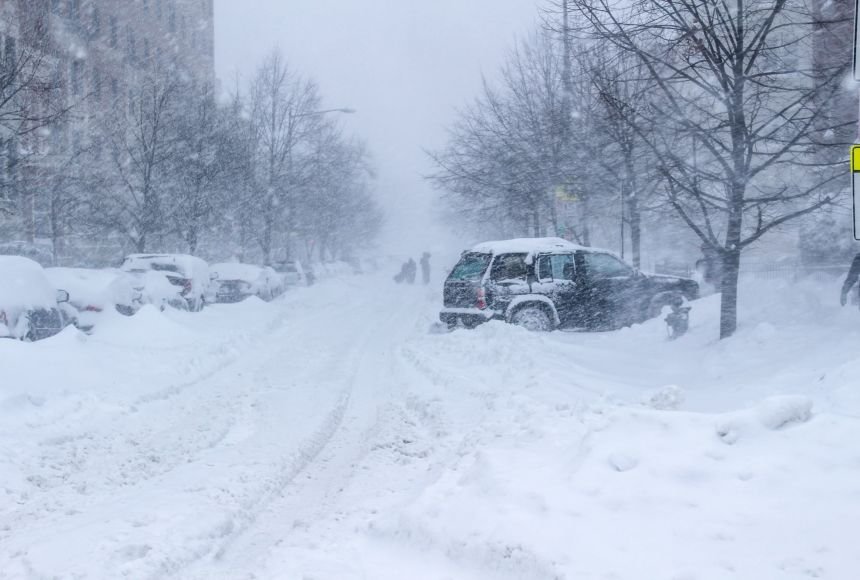
Kansas and Missouri are under blizzard warnings, with whiteout conditions forecast. A state of emergency has been declared in several states, including Kentucky, Virginia, Kansas, Arkansas, and Missouri.

As the storm continues to wreak havoc, residents are advised to exercise extreme caution and stay indoors to avoid the treacherous conditions. The NWS has emphasized the need for people to be prepared for the severe weather, with the potential for prolonged disruptions to daily life.


General News
NIMET’S 2026 SCP PREDICTS LONGER-THAN-NORMAL RAINFALL, WARNS FARMERS AGAINST EARLY CULTIVATION

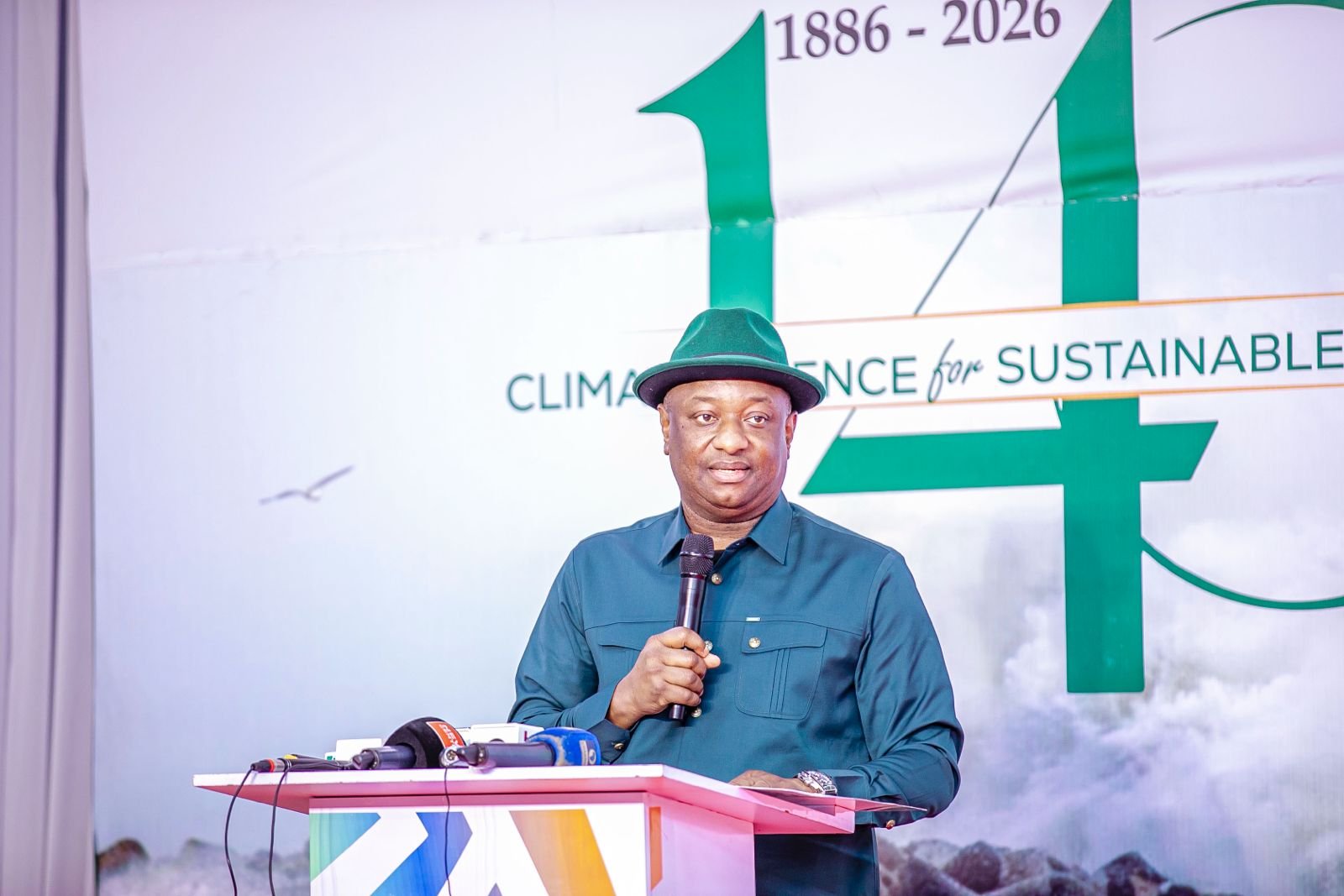
The Minister of Aviation and Aerospace Development, Festus Keyamo, SAN, has said that normal annual rainfall amounts are expected in most parts of Nigeria in 2026 when compared to the long-term average.

Keyamo stated this in a keynote address at the Nigerian Meteorological Agency (NiMet) 2026 Seasonal Climate Prediction (SCP) presentation held in Abuja on Tuesday, February 10, 2026.
The Seasonal Climate Prediction provides comprehensive climate forecasts designed to guide agricultural planning, water resource management, and disaster preparedness across critical sectors of the Nigerian economy. It also offers projections on key climate variables, including rainfall distribution and temperature patterns for the year.

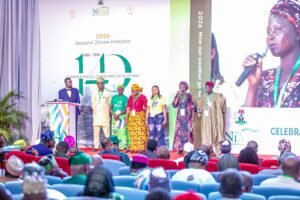
The 2026 SCP, themed “Climate Science for Sustainable Development,” outlines variations in rainfall onset, cessation, duration, and intensity across different parts of the country.
According to the forecast, early rainfall onset is expected in Bayelsa, Rivers, Akwa Ibom, Cross River, Benue, Kogi, Nasarawa, Oyo, and parts of Kebbi, Niger, Jigawa, Katsina, Kano, Adamawa, and Taraba States. Conversely, a late onset of rainfall is predicted for Borno State.
Rainfall cessation is expected to occur earlier than normal in parts of Ogun, Osun, Ondo, Imo, Rivers, Akwa Ibom, Kogi, and Niger States. However, a delayed end to the rainy season is anticipated in Lagos, Ogun, Anambra, Enugu, Cross River, Benue, Nasarawa, and Kaduna States.

Dr. Anosike
A longer-than-normal rainy season is projected for Lagos, Benue, Enugu, Ebonyi, Ogun, Oyo, Nasarawa, Anambra, Kwara, Kebbi, Kaduna, Gombe, and Taraba States. In contrast, parts of Borno, Yobe, and Niger States are expected to experience a shorter-than-normal rainy season.
NiMet further forecasts above-normal rainfall in Borno, Sokoto, Kebbi, Kaduna, Enugu, Cross River, Abia, Ebonyi, Akwa Ibom States, and the Federal Capital Territory. Below-normal rainfall is, however, expected in parts of Katsina, Zamfara, Kwara, Oyo, and Ogun States.
During the March to May period, severe dry spells lasting more than 15 days are likely in parts of Oyo and Ogun States. Moderate dry spells are predicted across Ekiti, Kogi, Osun, Ondo, Ogun, Edo, Ebonyi, Abia, Cross River, Delta States, as well as parts of Kogi and Kwara States.
For the June–July–August season, severe dry spells of up to 21 days are expected in parts of Bauchi, Borno, Gombe, Jigawa, Katsina, Kano, Kebbi, Kwara, Nasarawa, Niger, Oyo, Plateau, Sokoto, Yobe, and Zamfara States.
The Little Dry Season (LDS), popularly known as the “August Break,” is forecast to begin by late July and is expected to be severe and prolonged over Lagos, Ogun, Ekiti, and parts of Oyo States.
The number of days with little or no rainfall during this period is projected to range between 28 and 40 days. A moderate LDS effect is expected over Ondo and parts of Kwara and Edo States.
NiMet also predicts that both daytime and nighttime temperatures will be warmer than the long-term average across most parts of the country in January, February, March, and May 2026.
The Minister advised farmers and stakeholders engaged in rain-fed agriculture and other rainfall-dependent activities to rely on the predicted onset dates outlined in the SCP or consult NiMet for appropriate guidance to avoid losses associated with premature cultivation.
Goodwill messages were delivered by the Permanent Secretary of the Federal Ministry of Aviation and Aerospace Development and NiMet’s international partners, including the Secretary-General of the World Meteorological Organization (WMO), Prof. Celeste Saulo.
Members of the All Farmers Association of Nigeria also shared testimonials in various Nigerian languages, recounting the effectiveness of NiMet’s SCP in improving agricultural decision-making.
As NiMet marked 140 years of service to Nigeria, past Directors-General of the agency were recognised for their contributions.
The event’s highlights included the official launch of the 2026 SCP report by the Minister of Aviation and Aerospace Development, with support from the Director-General of NiMet, Prof. Charles Anosike, and other key stakeholders.
Featured
CLARION CALL FOR URGENCY AND IMMEDIACY OF ACTION BY SUB NATIONAL GOVERNMENT ON THE NEW WEATHER PATTERN AND RAINFALL IN THE STATES (CLOUD BURSTS)


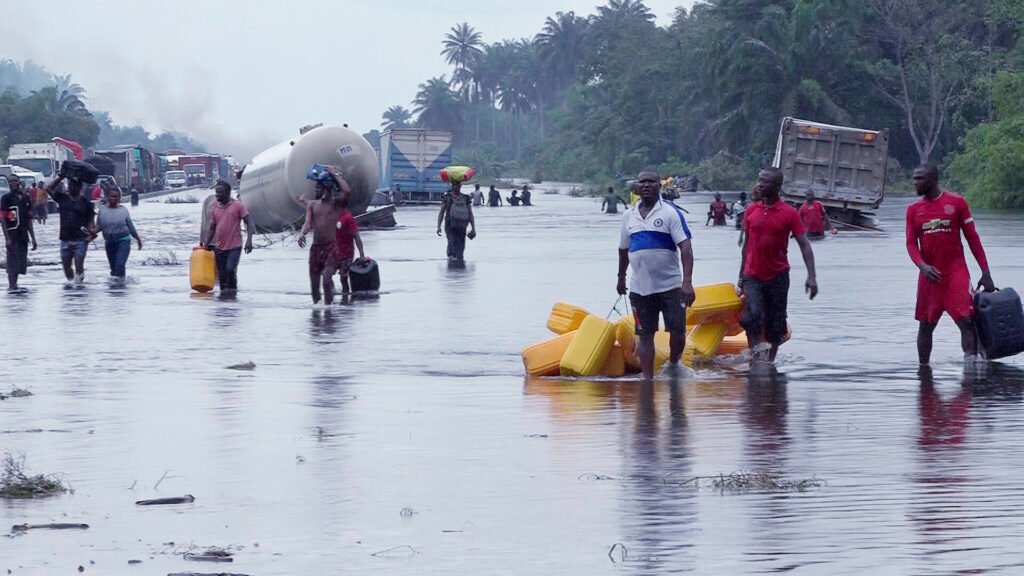
The heavy downpours in the last couple of days are no coincidences but the announcement of the arrival of a new weather pattern and flooding that do not show any signs, it just pours with devastating consequences. Nigeria has enjoyed stable weather conditions for centuries to the extent that no serious consideration was ever given to finding lasting solutions to flooding consequences.
The belief was that Typhoon, monsoon, tornadoes and hurricanes including “cloud burst” were the exclusive reserve of the western world to the extent that we never invested in advance weather predictions, disaster management systems among others. Since 1981 when the 1% ecological funds was muted in the aftermath of ogunpa and ojirami flooding, nothing substantial was put in place to show a nation in preparation for a world where climate have moved into economic challenges.
The warnings signal were sounded loudly by Exxon Mobil and other IOCs in the 80s that by 2000, the global temperature will hit 1▪︎c with clear consequences for vulnerable countries like Nigeria. Not even the 1992 increase of the ecological funds to 2% sounded the alarm bells nor encouraged any meaningful response that the leadership needed to invest in climate change and flooding. The fund was seen as a lagesse for sub national government for other problems other than the environmental issues.
The birthing process of the IPCC and UNFCCC including subsequent addition of 1% first line charge in 2002 bringing the funds to 3% was not enough to spur the sub national government to invest in climate change mitigation and enduring solutions to flooding. The sub national governments did not realise that nature always bid it’s time for disaster. The ecological funds since the 80s was akin to a mortgage market, no matter how long it is delayed, payments must be made with great cost. That is the current situation in the sub national governments across the country.
The expenditure of the “arrears” of the ecological funds is no longer a choice but now an emergency: It must be vomited.
Now with a dwindling economy, shrinking revenue and foreign exchange challenges, the options for dealing with climate change and flooding are very limited. My question remains, are we going to borrow again for a situation that have been adequately provided for since 1981?
The arrival of cloud burst and flooding have limited the country to only one choice IMMEDIACY AND URGENCY. When you are restricted to just one choice of action, it is normally not the best but a worst case scenario.
Climate change and flooding are the areas that are not in the realm of politics but reality.
The sub national governments must now provide the arrears of ecological funds since 1981 not as a choice but by compulsion as we are now in the jaw of the shack because today’s cloud burst is the devil’s alternatives; what ever the options, citizens must face the consequences of lack of visionary leadership.
CLOUD BURST HAVE NO SYMPTOMS BUT DISASTROUS CONSEQUENCES.
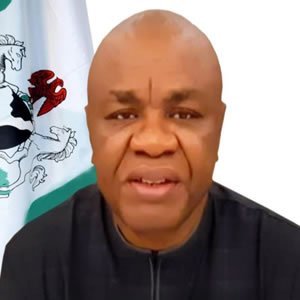
AVM (RTD) AKUGBE IYAMU fsi MNSA.
CONSULTANT ON CLIMATE CHANGE AND POLICY ANALYST ON ENVIRONMENTAL ISSUES.
PRESIDENT ASSOCIATION OF ENVIRONMENTAL PROTECTION AND CLIMATE CHANGE PRACTITIONERS
General News
LAGOS GOVERNMENT URGES RESIDENTS TO REMAIN CALM AS HEAVY RAINFALL CAUSES FLASH FLOODING CONCERNS

The Lagos State Government has called for calm from all residents of the state as it experiences over 12 hours of heavy rainfall, with an assurance that the state has put in place resilient infrastructure to combat flash flooding. In a statement, State Commissioner for the Environment and Water Resources, Tokunbo Wahab, informed residents that a new weather advisory from the Nigerian Meteorological Agency warned of heavy rainfall and thunderstorms for the next three days.

Director (Public Affairs) MOE&WR, Kunle Adeshina, in the statement, quoted Wahab as saying, “It is not impossible that some parts of the state may experience flash flooding because of the inability of the major collectors not being able to contain the run-off resulting from the very heavy rainfalls.” Adeshina further quoted Wahab as reminding residents that the peculiar nature of Lagos as a coastal city and the effect of climate change makes it susceptible to vagaries of flash flooding.

Wahab explained that Lagos being a coastal state, and with the heavy rainfalls, the level of water in the lagoon is bound to rise and will result in a tidal lock which will prevent discharge from all collectors. According to him, all areas that are abutting the rivers and lagoons in Lagos are also at risk of experiencing flash floods, which may come with high currents. Kunle Adeshina added that Wahab called for extra vigilance, especially during the holiday period, and advised residents not to dispose of refuse into the drains as the rains fall, warning that there are consequences for such acts.

The Commissioner reiterated the earlier advisory to motorists and pedestrians not to wade through floods as there is the tendency that vehicles may be submerged and people swept away with such heavy floods. The state is intensifying the year-round cleaning and maintenance of all drainage channels as well as awarding contracts for the concrete lining of new ones to be able to contain run-off from rainfalls.