Business
Naira May Trade Below ₦1,000/$1- Otedola Cites Dangote Refinery Impact
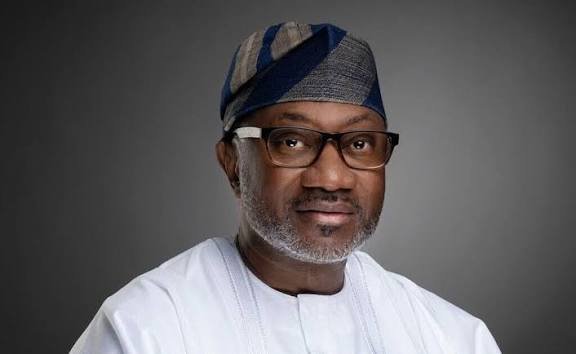
Billionaire investor Femi Otedola has expressed optimism that the naira could strengthen to below ₦1,000 against the U.S. dollar before the end of the year, citing the full-scale operations of the Dangote Group refinery as a major catalyst.
In a post on X, Otedola congratulated Africa’s richest man, Aliko Dangote, on achieving the refinery’s full production capacity of 650,000 barrels per day, describing the milestone as a game-changer for Nigeria’s economy.
He noted that the refinery’s ability to supply up to 75 million litres of Premium Motor Spirit (PMS) daily marks a historic shift from decades of dependence on imported petroleum products.
“With domestic refining now fully underway, the pressure on Nigeria’s foreign exchange market is expected to ease considerably,” Otedola stated. He added that reduced demand for dollars to fund fuel imports could significantly strengthen the naira, making sub-₦1,000/$1 exchange rates increasingly realistic before year-end.
For years, Nigeria relied heavily on imported refined petroleum products, a situation that drained foreign reserves and intensified demand for foreign currency. According to Otedola, large-scale domestic refining will reverse that trend, improve energy security, and stabilise the currency market.
He further revealed that Dangote has initiated a $12 billion expansion project to increase refining capacity to 1.4 million barrels per day. The expansion will also scale up petrochemical production, including 2.4 million tonnes of polypropylene and 400,000 metric tonnes of Linear Alkyl Benzene, a vital input in detergent manufacturing.
Describing the development as more than an industrial milestone, Otedola said it represents a broader economic reset capable of strengthening the naira, stimulating manufacturing, and reducing Nigeria’s exposure to global supply, shocks.
The projection comes at a time when the federal government is implementing sweeping economic reforms aimed at stabilising the currency and boosting domestic production.
Business
BOI Disburses Historic N636bn in 2025, Tinubu Says Reform Agenda Is Working
President Bola Ahmed Tinubu has commended the Bank of Industry (BOI) for disbursing a record N636 billion to more than 7,000 businesses in 2025; the highest annual financing in the bank’s history.
According to a State House statement, N202 billion went to agro-allied enterprises, N100 billion to critical infrastructure such as broadband, power and transportation, N79 billion to manufacturing, N77 billion to extractive industries, and N55 billion to services. An additional N73 billion was deployed as managed and matching funds.
Breakdown by business size shows large enterprises received N375 billion, SMEs N178 billion, nano businesses N51 billion, and micro enterprises N32 billion.
Under the Federal Government’s N200 billion MSME intervention programme, BOI reportedly achieved over 95 percent performance as a disbursing institution, while the Presidential Conditional Grant Scheme reached 957,400 beneficiaries in 2025.
The bank’s financing activities contributed to the creation and retention of about 1.6 million jobs and supported over 7,000 MSMEs and 570 startups.
Inclusive programmes saw women-owned enterprises access funding under a N10 billion facility, while youth-owned businesses received N12 billion. In rural areas, 880 enterprises accessed N6.5 billion across the 36 states and the FCT.
BOI maintained a non-performing loan ratio below 1.5 percent and strengthened its lending capacity with a €2 billion syndicated facility secured in 2024 and €210 million mobilised in 2025.
President Tinubu described the milestone as evidence that ongoing economic reforms are expanding access to long-term capital and supporting industrial growth.
Business
CAC REMOVES OVER 400,000 COMPANIES FROM REGISTRY IN 2025
The Corporate Affairs Commission (CAC) has removed over 400,000 inactive companies from its official registry in 2025 as part of sustained efforts to enhance transparency, strengthen economic integrity, and boost investor confidence.
The Registrar-General of the Commission, Hussaini Magaji, SAN, disclosed this on Saturday in Abuja during the CAC’s monthly fitness walk, organised as part of activities marking the commission’s 35th anniversary.
Magaji explained that the affected entities were largely companies that had failed to file statutory annual returns for several years and were no longer in operation, noting that their continued presence on the register posed risks to Nigeria’s economic system.
“In 2025 alone, we deregistered over 400,000 companies from our records. These were largely companies that had become inactive and failed to meet statutory obligations, including filing annual returns,” he said.
“Such entities pose threats to economic operations. Cleaning up the register was necessary to build confidence and ensure that Nigeria has a credible and reliable corporate registry.”
He stated that the deregistration exercise forms part of the CAC’s broader reform agenda aimed at maintaining a transparent, credible, and dependable corporate registry capable of attracting both domestic and foreign investments, while also curbing the misuse of corporate structures for illegal activities.
Magaji emphasized that a transparent corporate register is critical to Nigeria’s economic growth and investor trust.
He further disclosed that the CAC has transitioned into a fully digital, end-to-end service provider, enabling businesses to register and manage their operations remotely on a 24-hour basis. According to him, the digital transformation aligns with the Federal Government’s ease-of-doing-business reforms.
In addition, Magaji revealed that in collaboration with the Small and Medium Enterprises Development Agency of Nigeria (SMEDAN), the commission facilitated free registration for 250,000 micro, small, and medium enterprises (MSMEs) in 2025, alongside the provision of training and capacity-building support.
He added that improved staff welfare and ongoing digital reforms have significantly enhanced service delivery across the commission.
Business
SHELL CEO CREDITS TINUBU’S LEADERSHIP FOR PLANNED $20 BILLION NIGERIA INVESTMENT
The Chief Executive Officer of Shell Plc, Mr. Wael Sawan, has stated that the leadership and vision of President Bola Tinubu are the primary reasons the energy giant is prepared to invest an additional $20 billion in Nigeria. Sawan made the declaration during a meeting with President Tinubu at the Presidential Villa.

He praised the President for creating a healthy investment climate and restoring investor confidence, which has propelled Shell to deepen and expand its investments. Sawan emphasized that Nigeria under Tinubu is now a top destination for global oil company investments, contrasting with a previous period when Shell was pulling back.
“We have really been in a space where we are very keen to invest in Nigeria. But I would say this has not always been the case. Your leadership and your vision have created an investment climate over the last few years that, I will be very honest with you, propelled us to invest,” Sawan said.

He detailed Shell’s recent commitments, including $5 billion in Bonga North and $2 billion in HI, alongside gas projects for NLNG. The major new project is Bonga Southwest, which Sawan described as potentially “one of the biggest energy projects in the world.” He stated that reaching a Final Investment Decision on Bonga Southwest could see Shell and its partners invest around $20 billion in foreign direct investment.
“Stability in today’s environment will honestly have a premium for corporates because we are investing not for one administration or five or 10 years, we want to invest for 20, 30, 40 years and in the case of Nigeria, for many, many decades,” Sawan added.
The Shell CEO also commended the professionalism of the President’s team, calling them “amongst the best that we are dealing with anywhere in the world.”
In response, President Tinubu approved the gazetting of targeted, investment-linked incentives to support the proposed Bonga South West deep offshore oil project. He directed his Special Adviser on Energy, Mrs. Olu Arowolo-Verheijen, to facilitate the process.
“These incentives are not blanket concessions,” President Tinubu stated. “They are ring-fenced and investment-linked, focused on new capital and incremental production, strong local content delivery, and in-country value addition.”
The President set a clear expectation, adding, “My expectation is clear: Bonga South West must reach a Final Investment Decision within the first term of this administration.”
Sawan described Shell’s renewed commitment as a “sea change” and thanked the President for the leadership that provided the “incremental incentives” making the massive project viable.