Tech news
Nigeria and Global Partners Push for Country-Led AI Adoption to Accelerate Malaria Elimination

Health leaders, development partners and diagnostics experts have called for a country-led approach to adopting artificial intelligence and other technologies to accelerate malaria elimination and maximize limited health resources.
The call was made at a high-level event titled “Smarter Investment, Greater Impact: Harnessing AI to Accelerate Disease Elimination,” held on the sidelines of the 81st session of the United Nations General Assembly in New York.
The event was co-hosted by the Global Institute for Disease Elimination, the RBM Partnership to End Malaria and Nigeria.
Participants examined how AI could support more efficient health investments amid shrinking donor budgets and sustained pressure on development financing.

They also explored how AI could strengthen disease surveillance, improve decision-making and enable more targeted interventions against preventable diseases including malaria, polio and neglected tropical diseases.
Delivering the keynote remarks, the Coordinating Minister of Health and Social Welfare, Prof. Muhammad Ali Pate, said countries should determine how emerging technologies are adopted within their health systems.
Pate, who was represented by Dr Michael Adekunle Charles, Chief Executive Officer of the RBM Partnership to End Malaria, stressed that malaria-endemic countries understood the context and lived realities of affected communities.
“Malaria-endemic countries must be in the driving seat, whether determining how artificial intelligence and new technologies are applied or strengthening manufacturing and resilient supply chains,” Pate said.
He noted that the RBM Partnership’s “Big Push against Malaria” brings partners together around country priorities and connects countries with expertise, partners, data and resources needed to act.
Nigeria accounts for the largest share of the global malaria burden and is implementing the Health Sector Renewal Investment Initiative to strengthen primary healthcare and domestic financing.
Dr Farida Hosani, Chief Executive Officer of GLIDE, said progress toward malaria elimination depended on translating global knowledge and innovation into practical capabilities at country level.
She said the partnership with RBM would help connect technical capacity building with a global network of partners supporting country-led action.
The panel discussion, chaired by Mr Sam Macintosh, Co-Founder of Metli, focused on the investment and implementation conditions required to scale AI-enabled health programmes.
Panelists included Priya Basu, Executive Head of the Pandemic Fund; Joanna Sickler, Vice President for Health Policy and External Affairs at Roche Diagnostics; and Spencer Knoll, Director of U.S. Policy and Advocacy at Malaria No More US.
They highlighted the importance of connecting capital with viable opportunities while ensuring that data infrastructure, workforce capacity and health-system integration were in place to support sustainable progress.
GLIDE also announced new AI training programmes for national programme managers and public health leaders.
The programmes include the GLIDE Leadership Excellence in AI for Health, designed for senior decision-makers, and AI for All, developed by the Mohamed bin Zayed University of Artificial Intelligence in collaboration with GLIDE for public health professionals worldwide.
According to GLIDE, the programmes are intended to equip health leaders with the knowledge, confidence and safeguards required to apply AI to strengthen health systems and accelerate disease elimination.
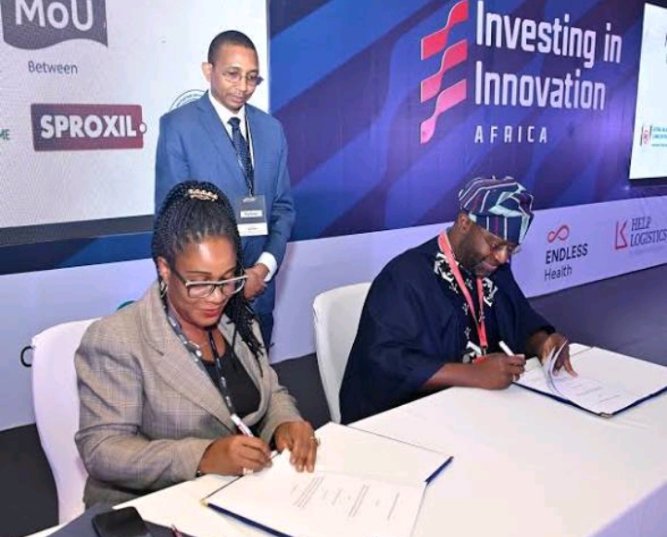
The event concluded with the signing of a Letter of Mutual Understanding between GLIDE and the RBM Partnership to End Malaria.
The agreement formalizes collaboration between the two organizations to place countries most affected by malaria at the centre of malaria control and elimination efforts.
It also provides a framework for connecting global expertise, AI and technical innovation, and capacity building with the priorities of national malaria control programmes and affected communities. The partnership aligns with the World Health Organisation’s Global Technical Strategy for Malaria.