
Oil and Gas
NOSDRA CONTAINS OIL SPILL IN BAYELSA COMMUNITY


By Xtian Itoto-Ogodo
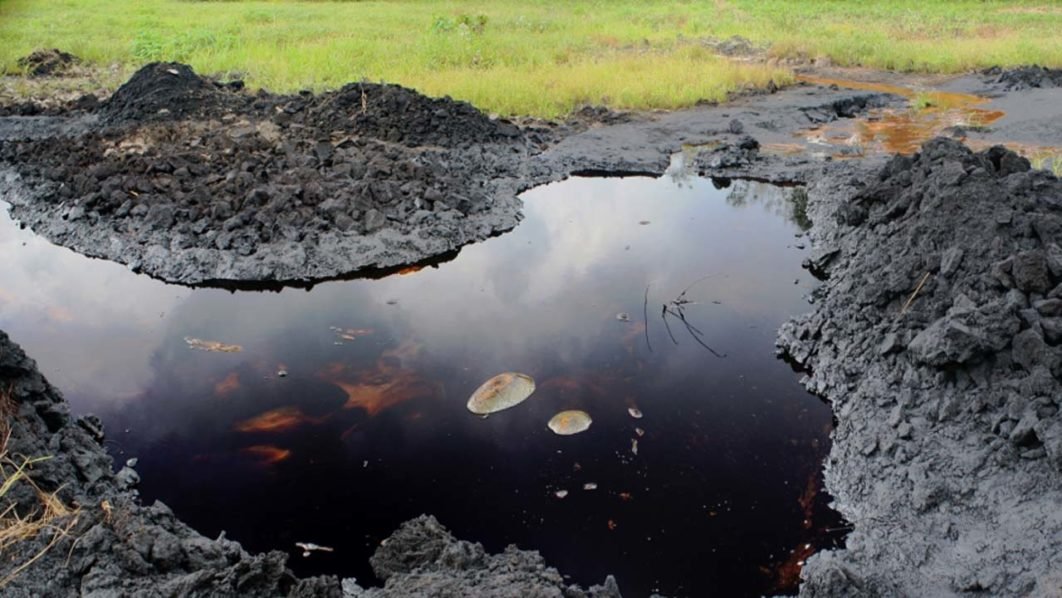
The National Oil Spill Detection and Response Agency (NOSDRA) has launched an investigation into a crude oil spill from Shell Petroleum Development Company (SPDC) 16″ Nun River-Kolo creek pipeline at Obololi community in Southern Ijaw LGA, Bayelsa State. The Agency received a report on Monday, February 17, 2025, and immediately convened a Joint Investigation Visit (JIV) to the incident area on Tuesday, February 18, 2025.

In a statement, the Director General/Chief Executive of NOSDRA, Engr. Chukwuemeka Woke, said the investigation team comprised relevant stakeholders including SPDC, the Bayelsa State Ministry of Environment, and the Community. The team was established to determine the indices around the incident and recommend necessary regulatory compliance actions to mitigate it. Woke noted that the cause of the spill is unknown because the suspected leak point/pipeline is submerged in the water, implying that the JIV is inconclusive.

SPDC is currently preparing a coffer dam to enable the team to access the spill point. Containment of the spill area has been completed, and temporary storage tanks are in transit to the spill location. Recovery of free phase oil is expected to commence on Friday, February 21, 2025. Woke stated that the Agency is actively monitoring the ongoing response and continuously evaluating the situation to ensure that appropriate response actions are deployed accordingly.

The Agency will provide further details as events unfold, Woke added. Chukwuemeka Woke emphasized that NOSDRA is committed to ensuring that the oil spill is effectively managed and mitigated.





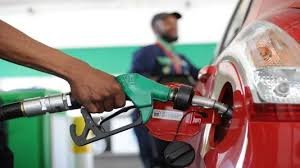
The Petroleum Products Retail Outlets Owners Association of Nigeria has warned that petrol price in Nigeria may rise to as high as N2,000 per litre if the Middle East war persists. In a statement on Monday, Billy Gillis-Harry, national president of PETROAN, said diesel price could rise to about N3,000 per liter if the current situation continues.
“PMS could rise close to N2,000 per liter while AGO may approach N3,000 per liter if the situation persists,” Gillis-Harry said. The PETROAN executive said with no clear end to the conflict, petroleum product prices in both international and domestic markets are expected to rise sharply in the coming days.

Gillis-Harry, therefore, called on Bayo Ojulari, group chief executive officer of the Nigerian National Petroleum Company Limited, to facilitate the immediate commencement of production at Nigeria’s local refineries, particularly the Area 5 plant at Port Harcourt refinery and the Warri refinery. He emphasized that revamping Nigeria’s refineries for immediate domestic production is critical.
Local refining, the PETROAN president said, would reduce exposure to international market volatility, especially as Nigeria has abundant crude oil resources under the custody of the NNPC. Gillis-Harry noted that government-owned refineries are less vulnerable to global supply disruptions compared to privately-owned refineries, which are dependent on imported crude.
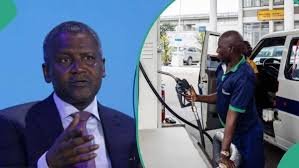
He warned that continued fuel price increases “would worsen inflation, cause job losses, deepen economic hardship, increase transportation costs, and raise prices of goods and services nationwide”. “PMS remains essential for daily mobility, while AGO is vital for manufacturing and industrial operations,” the PETROAN president said.
“The ongoing conflict involving Israel, the United States, and Iran is pushing global petroleum prices to alarming levels. Sustained drone and missile attacks now threaten critical oil routes and infrastructure, creating uncertainty in global supply chains.”
Gillis-Harry assured Nigerians that President Bola Tinubu’s reform policies will ultimately bring relief to citizens and stimulate economic growth. On Monday, global crude oil price crossed the $100 per barrel mark, signaling the highest surge since July 2022 as the US-Iran war continues. The conflict has triggered a hike in petrol costs, with fuel stations in Nigeria raising pump prices.
Oil and Gas
NIGER DELTA STAKEHOLDERS URGE FG TO NAME TANTITA SOLE CONTRACTOR FOR OIL PIPELINE SURVEILLANCE


A group of stakeholders in the Niger Delta has called on President Bola Ahmed Tinubu and the National Assembly to designate Tantita Security Services Nigeria Limited as the sole contractor responsible for the surveillance of oil pipelines and other critical national assets in the region. The appeal extends to securing offshore facilities, with proponents arguing that the company has demonstrated unmatched competence.
In a joint statement, Amb. Fred Igere JP and Chief Williams Tortor, speaking on behalf of the stakeholders, emphasized that the protection of oil infrastructure is a matter of national importance that should transcend ethnic considerations. They expressed disapproval of recent attacks against the security firm, highlighting its contributions beyond its core mandate.
The stakeholders questioned the motives behind the criticism, pointing to Tantita’s record of community development. “Has any pipeline surveillance contractor before now achieved or done what Tantita is doing in terms of empowering businesses, involving more youths by creating more jobs, and building infrastructures for various institutions across the country?” they asked rhetorically, framing the firm’s work as an unprecedented contribution to national development.

According to the statement, the opposition to Tantita’s role is being fueled by individuals who are envious of its success and fearful of losing their own influence. Amb. Igere and Chief Tortor alleged that these detractors are sponsoring protests aimed at forcing the government to divide the surveillance contract among multiple parties. They warned those participating in such demonstrations against being used as tools by “enemies of progress,” cautioning that it would portray them as “shallow minded.”

The stakeholders posed a series of questions to the protesters, urging them to consider the broader context. “Those that are allowing themselves to be used to protest against Tantita, are they aware that securing oil pipelines is a national issue and not a local one? Do they know the history behind this current option that the government, having tried other alternatives and failed, settled for, because it is producing positive results?”
In light of what they describe as the company’s proven capacity, the group is urging the federal government to not only ignore the protests but to expand Tantita’s portfolio. “We are calling as well as urging the federal government to expand the surveillance scope of Tantita to include offshore surveillance of national assets as the company is more than capable to do the job,” the statement read.
The stakeholders concluded their appeal by urging national leaders to prioritize competence over ethnic sentiments when making critical decisions. “Also, if this country is to move forward, the time has come for its national leaders to base their decisions on competence, not subject such to ethnic affiliations or sentiments. He, who the cap fits, should wear it, and High Chief Government Oweizide Ekpemupolo alias Tompolo, the Chairman of Tantita, is a leader that everyone knows the cap fits,” they added.
Oil and Gas
FG MOVES TO SECURE ALTERNATIVE CRUDE SUPPLY FOR DANGOTE REFINERY AMID RISING PETROL PRICES
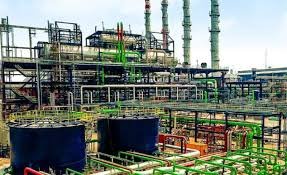
Fresh efforts are underway by the Federal Government to sustain domestic refining operations as authorities explore alternative crude oil supply channels for the Dangote Petroleum Refinery.
The intervention is being coordinated through the Nigerian National Petroleum Company Limited, which is reportedly engaging international crude traders to provide additional supply to the refinery located in Lekki, Lagos State.
Industry officials, however, indicated that the move may not immediately lead to a reduction in petrol prices as Nigerians continue to grapple with rising fuel costs following recent price adjustments by the refinery.
Market sources disclosed that the refinery recently suspended the loading of Premium Motor Spirit, also known as petrol, a development that triggered speculation of another possible price increase.
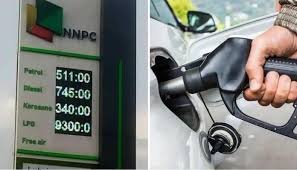
Recent pricing changes have already pushed the refinerys gantry price from about N774 to N995 per litre within a short period. As a result of the adjustments, retail pump prices in several states have climbed above N1,000 per litre, with some filling stations reportedly selling petrol for about N1,200 per litre.
Market data has also shown a shift in Nigerias crude sourcing patterns in recent months. Statistics released by global energy analytics firm Kpler revealed that Nigerias crude imports from the United States increased to 41.13 million barrels in 2025, compared with 15.79 million barrels recorded in 2024.
With fuel prices rising, motorists and business operators across Nigeria have expressed concern about the possible impact on transportation costs and the prices of goods and services.

Energy analysts have also linked the situation to volatility in the international crude oil market. Tensions in the Middle East, particularly the confrontation involving Iran and the United States, have disrupted global oil supply chains and pushed the price of Brent crude above 92 dollars per barrel. Concerns have also been raised about the security of the Strait of Hormuz, a major global energy shipping route.
Officials familiar with the arrangement explained that the national oil company is relying on its global trading network to secure third-party crude supplies for the refinery at competitive international prices. One senior official, who spoke on condition of anonymity, said the company remains committed to supporting domestic refining and strengthening Nigerias energy security.
Sources within the refinery indicated that importing crude oil may not immediately reduce petrol prices because international energy prices have risen sharply. The refinery also attributed part of the challenge to limited domestic crude supply, noting that it currently receives about five cargoes per month from NNPC. This allocation falls short of the 13 cargoes required under the naira-for-crude policy to sustain full production and meet local fuel demand. According to refinery officials, the limited allocation has forced the facility to rely partly on imported crude purchased at international market rates.