
Politics
Presidency Accuses ADC, NNPP of Spreading Disinformation Over Electoral Act Amendment


The presidency has dismissed allegations by opposition parties concerning the recently amended Electoral Act, describing their claims as misleading and politically motivated.
In a statement issued on February 26, 2026, Special Adviser to the President on Information and Strategy, Bayo Onanuga, criticised leaders of the African Democratic Congress (ADC) and the New Nigeria Peoples Party (NNPP) for what he termed “reckless and spurious allegations” against President Bola Tinubu and the All Progressives Congress (APC)-led Federal Government.
The opposition parties had raised concerns over certain provisions in the amended Electoral Act, particularly the inclusion of Form EC8A as a backup in cases where real-time electronic transmission of results fails.
Responding to the criticism, the Presidency said the amendment does not prohibit real-time transmission of election results but provides a contingency plan in the event of technical or network challenges. It maintained that Form EC8A remains a primary source document for validating election results.
The statement also clarified the role of the Independent National Electoral Commission’s Results Viewing Portal (IReV), noting that it is meant for public viewing of uploaded results and not for official collation.
On the issue of party primaries, the presidency defended the provision for direct primaries and consensus arrangements, arguing that the system promotes broader participation by party members. It criticised the delegate-based system, which it described as prone to corruption.
The presidency further rejected claims that the amendment was pushed through without adequate consultation. According to the statement, the National Assembly engaged stakeholders, experts, and members of the public over a two-year period before passing the amendment.
Addressing accusations that President Tinubu aims to create a one-party state, the Presidency described the claim as unfounded, stressing that Nigeria remains a multiparty democracy with several registered political parties.
The statement concluded by asserting that the new Electoral Act strengthens Nigeria’s electoral framework and closes perceived loopholes in the previous law.
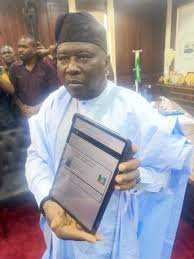
Governor Ahmadu Fintiri of Adamawa State has defected from the Peoples Democratic Party (PDP) to the All Progressives Congress (APC), ending months of speculation about his political future.
Fintiri, who was elected on the platform of the PDP, announced his defection in a statewide broadcast on Friday. He disclosed that the move was taken alongside members of his cabinet and all PDP officials across the state.
According to the governor, the decision to join the APC was made in what he described as the “developmental interest” of the people of Adamawa State. He noted that aligning with the ruling party at the federal level would enhance collaboration and accelerate ongoing infrastructure and social development projects in the state.
The defection marks a significant political shift in Adamawa, a state long considered a stronghold of the PDP in the North-East region. Political observers say the move could alter the balance of power ahead of the 2027 general elections.
Details of the governor’s formal reception into the APC and reactions from party stakeholders are expected in the coming hours.
General News
Breaking: INEC Announces New Dates for 2027 General Election, Reschedules Osun Governorship Poll


The Independent National Electoral Commission (INEC) has released a revised timetable for the 2027 general election and adjusted the schedule for the 2026 Osun State governorship election following the enactment of the Electoral Act 2026.
The commission disclosed this in a statement issued late Thursday by National Commissioner and Chairman of the Information and Voter Education Committee, Mohammed Kudu Haruna.
According to the revised timetable, the Presidential and National Assembly elections will now hold on January 16, 2027, while the Governorship and State Houses of Assembly elections are scheduled for February 6, 2027.
The adjustment follows the repeal of the Electoral Act 2022, which previously guided electoral timelines, and the introduction of new statutory provisions under the 2026 law.
The commission explained that the review was necessary to ensure compliance with the updated legal framework governing pre-election and electoral activities.
Under the new schedule, political party primaries, including the resolution of disputes arising from the exercises, will run from April 23 to May 30, 2026.
Presidential and National Assembly election campaigns will commence on August 19, 2026, while campaigns for governorship and state assembly elections will begin on September 9, 2026.
INEC reiterated that all campaigns must end 24 hours before election day and urged political parties to strictly adhere to the approved timelines, warning that the commission would enforce compliance.
The commission also confirmed that preparations for the Ekiti and Osun governorship elections had already begun but stated that outstanding activities would now be conducted in line with the provisions of the Electoral Act, 2026.
INEC stressed that the revised timetable aligns with the Constitution of the Federal Republic of Nigeria and called on political parties and stakeholders to cooperate in ensuring peaceful, credible, and inclusive elections.
“The successful conduct of the forthcoming elections remains a collective responsibility,” the commission said, urging citizens to support efforts aimed at strengthening the country’s electoral process.
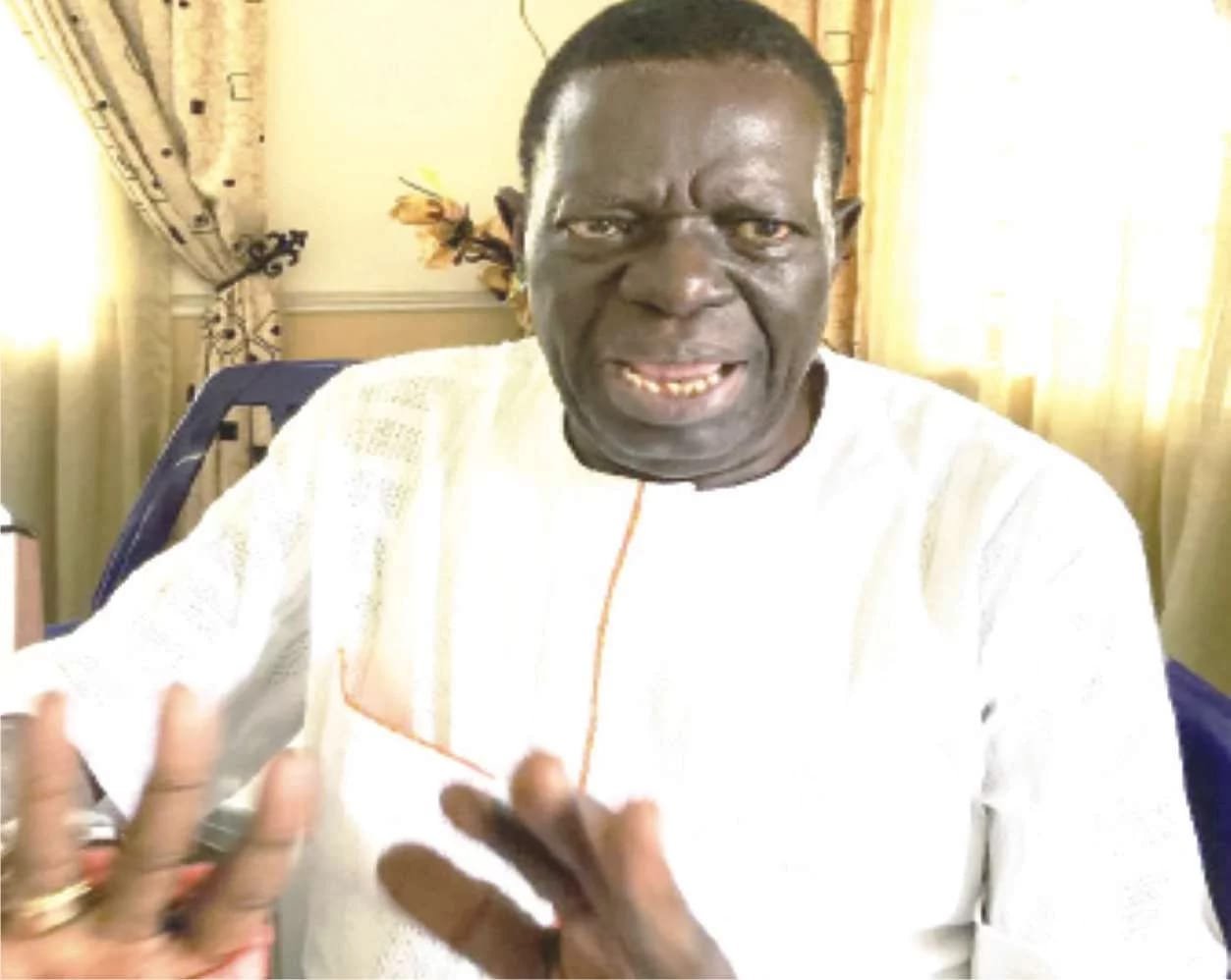
A former Chief Whip of the Nigerian Senate, Senator Rowland Owie, has firmly denied any involvement in the violent attacks that disrupted a political gathering of the African Democratic Congress (ADC) in Benin City, Edo State.
The incidents occurred on Wednesday at the ADC Secretariat along Ogbelaka Road and at the residence of former national chairman of the All Progressives Congress (APC), Chief John Odigie-Oyegun, on Reservation Road.
The meeting had drawn several prominent political figures, including former Labour Party presidential candidate, Mr. Peter Obi, former Edo State governor, Prof. Oserheimen Osunbor, Chief Odigie-Oyegun, Senator Owie, and other ADC leaders. The gathering was held to formally receive the 2024 Edo State governorship candidate of the Labour Party, Mr. Olumide Akpata, into the ADC.
According to reports, suspected gunmen stormed the ADC secretariat shortly after the event, opening fire and injuring three party members while also vandalising property. The attackers reportedly proceeded to Chief Odigie-Oyegun’s residence, where they shot sporadically and damaged several vehicles parked nearby.
Reacting to allegations circulating in some quarters that he sponsored or encouraged the attacks, Senator Owie dismissed the claims as false and defamatory.
“In all my political life since 1979, when I was first elected into the House of Representatives, I have never been associated with violence,” he said. “My political journey has been anchored on dialogue, legislative responsibility, and service. I will not destroy a four-decade legacy.”
He described as “illogical and insulting” any suggestion that he would orchestrate an attack on a meeting attended by respected figures, including Chief Odigie-Oyegun and Mr. Obi.
The senator further stressed that he maintains zero tolerance for violence and reiterated that the ADC remains committed to peaceful political engagement.
He called on the Edo State Commissioner of Police, Mr. Monday Agbonika and other security agencies to investigate those responsible for the disruption rather than entertain what he described as fabricated accusations.
Meanwhile, Chief Odigie-Oyegun had earlier linked the attack to remarks reportedly made by the Edo State Governor, Monday Okpebholo, who allegedly warned that Mr. Obi must obtain permission before visiting the state.
However, other observers have connected the violence to an earlier incident that occurred on Monday, February 23, 2026, at Odigie-Oyegun’s residence. On that day, Senator Owie and some ADC leaders were reportedly denied access to a meeting at the premises. The group protested by barricading the entrance gate until security operatives from the Edo State Police Command intervened and persuaded them to disperse.
Those involved in the earlier protest were also present at Wednesday’s political gathering prior to the attacks.
Security agencies have yet to issue a comprehensive statement on the incidents as of press time.