
Economy
PRESIDENT TINUBU COMMENDS IFC’S $50 MILLION INVESTMENT IN LAGOS FREE ZONE

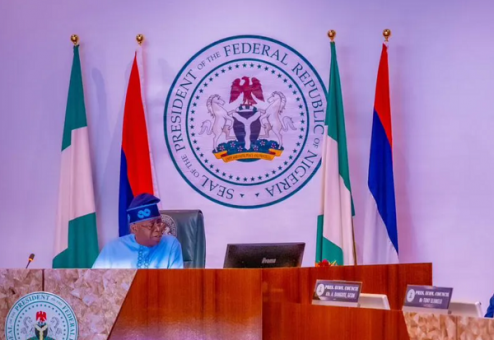
President Bola Ahmed Tinubu has commended the International Finance Corporation (IFC) for its continued confidence in Nigeria’s economy. The President made the commendation following IFC’s $50 million equity investment in the Lagos Free Zone, a Tolaram initiative to support the development and expansion of Nigeria’s first deep-sea port-based, private special economic zone.

In a statement, the Special Adviser to the President (Information & Strategy), Bayo Onanuga, stated that President Tinubu described the investment as a testament to the growing trust of global financial institutions in Nigeria’s economic direction under his administration. Onanuga added that the President emphasized that such strategic partnerships reinforce the country’s position as a prime destination for foreign direct investment and industrial growth. “The expansion of the Lagos Free Zone is critical to our vision of positioning Nigeria as the gateway for trade and investment in West Africa and across the continent,” President Tinubu said.

Onanuga stated that the Lagos Free Zone, strategically integrated with the Lekki Deep Sea Port, is designed to ease import and export operations, strengthen Nigeria’s role in regional and global value chains, and create a more efficient business environment. Bayo Onanuga also noted that the IFC’s investment will support land development, industrial expansion, and logistics infrastructure within the 860-hectare zone, ensuring full integration into Nigeria’s broader economic diversification strategy.

The President also acknowledged Tolaram’s long-standing commitment to Nigeria’s economic development, noting that the group’s deepening investments reflect Nigeria’s strong potential as an investment destination. Onanuga stated that President Tinubu welcomed the company’s continued efforts to drive industrialisation, create jobs, and foster economic growth. Bayo Onanuga added that while appreciating the IFC’s investment, President Tinubu reaffirmed his administration’s commitment to fostering a business-friendly environment that attracts even larger, transformative investments across key sectors.

Onanuga stated that President Tinubu also highlighted the IFC’s growing partnership with Nigeria, including its $70 million support for power sector initiatives aimed at strengthening the country’s energy security. “We value the IFC’s commitment to Nigeria’s economic progress and look forward to deeper engagements that will drive large-scale infrastructure projects, strengthen our industrial base, and create thousands of jobs for Nigerians,” the President added.









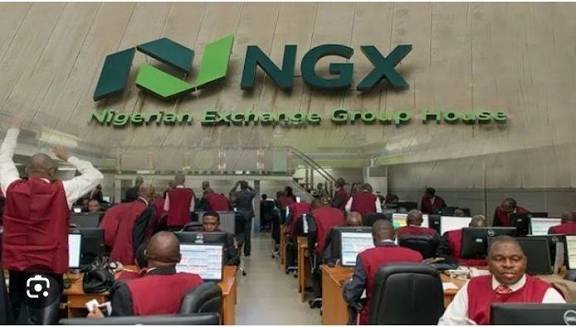
The Nigerian equities market returned to negative territory on Wednesday as investors lost about N101 billion following sell-offs in several major stocks after two straight sessions of gains.
Losses in key equities including Dangote Sugar Refinery Plc, Jaiz Bank Plc, Chemical and Allied Products Plc, Union Dicon Salt Plc and Haldane McCall Plc weighed on overall market performance.
At the close of trading on the Nigerian Exchange Limited, market capitalisation declined to N126.097 trillion from N126.198 trillion recorded in the previous session, representing a loss of N101 billion or 0.08 per cent.
Similarly, the All-Share Index (ASI) dropped by 158.74 points, or 0.08 per cent, to settle at 196,463.22 points, down from 196,621.96 points recorded on Tuesday. Despite the decline, the market maintained a year-to-date return of 26.25 per cent.
Market breadth closed negative as 37 stocks recorded losses compared to 22 gainers.
On the losers’ chart, Dangote Sugar Refinery Plc and Jaiz Bank Plc topped the list after each shed 10 per cent to close at N74.70 and N10.80 per share respectively.
Chemical and Allied Products Plc declined by 9.97 per cent to N84.85 per share, while Union Dicon Salt Plc dropped 9.94 per cent to N14.95. Haldane McCall Plc also fell by 9.89 per cent to close at N3.92 per share.
On the gainers’ side, Premier Paints Plc led the table with a 10 per cent increase to close at N12.10 per share. Fortis Global Insurance Plc rose by 9.73 per cent to N1.24, while UAC of Nigeria Plc gained 7.78 per cent to close at N115 per share.
Other notable gainers included Eterna Plc, which advanced by 6.38 per cent to N35, and Custodian Investment Plc, which added 6.06 per cent to close at N70 per share.
Trading activity weakened compared to the previous session. Total volume traded declined by eight per cent, while the value of transactions dropped by 14 per cent. The number of deals also fell by 18 per cent.
Investors exchanged 805.3 million shares worth N38.4 billion in 71,312 deals, compared with 880 million shares valued at N44.5 billion traded in 86,761 deals on Tuesday.
Veritas Kapital Assurance Plc recorded the highest trading volume with 56.42 million shares, accounting for 7.01 per cent of the total market turnover.
Meanwhile, MTN Nigeria Communications Plc led in transaction value with trades worth N7.08 billion, representing 18.42 per cent of the total value exchanged during the session.
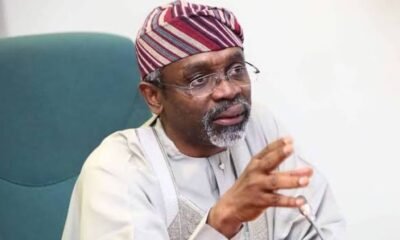
Nigeria will officially launch its long-awaited National Single Window (NSW) platform on March 27, marking what the Chief of Staff to the President, Femi Gbajabiamila, described as a landmark reform in the country’s trade and fiscal architecture.
Gbajabiamila made the disclosure during a high-level stakeholders’ meeting at the State House, Abuja, attended by ministers, heads of key government agencies, and senior officials.
He noted that the initiative, first introduced by President Bola Ahmed Tinubu nearly two years ago, represents a major fiscal reform designed to simplify trade processes, boost operational efficiency, and strengthen Nigeria’s global competitiveness.
“We are about to launch yet another reform by this administration — one that is transformational in nature,” he said. “As the name implies, it is a single national window, replacing multiple fragmented systems. This meeting is to assess our progress and secure collective commitment to ensure a smooth transition.”
The Chief of Staff commended the professionalism and dedication of participating institutions, including the Central Bank of Nigeria, the Nigeria Revenue Service, and the Nigeria Customs Service, among others.
Earlier, the NSW Coordinator, Mr. Tola Fakolade, urged agencies to intensify collaboration in the remaining 23 days before the platform goes live. He explained that the first phase will facilitate online processing of import permits, electronic submission of cargo manifests, and deployment of a centralised risk management system.
Fakolade disclosed that nationwide user training is already underway, while pilot testing will soon commence to guarantee a seamless rollout. He added that cargo manifests will be electronically transmitted to relevant agencies automatically, eliminating manual intervention and duplication.
“The support from all agencies is even more critical at this stage. Documents will be submitted once and shared across all relevant agencies without duplication,” he stated.
The Coordinating Minister of the Economy and Minister of Finance, Wale Edun, reaffirmed the ministry’s backing, describing the initiative as growth-enhancing and vital to economic expansion.
Similarly, the Minister of Industry, Trade and Investment, Jumoke Oduwole, described the NSW as a key pillar of the Renewed Hope Agenda. She noted that the reform is long overdue and pledged intensified engagement with traders, importers, and exporters in the weeks ahead.
Governor of the Central Bank of Nigeria, Olayemi Cardoso, also assured the Bank’s full support, stressing the importance of bridging Nigeria’s trade facilitation gap with peer economies.
Chairman of the Nigeria Revenue Service, Zacch Adedeji, called for stronger inter-agency coordination and political commitment, suggesting that the Trade Minister oversee the final 23-day implementation phase.
On his part, Comptroller-General of the Nigeria Customs Service, Bashir Adeniyi, described the project as historic and pledged sustained stakeholder engagement to ensure its success.
At the close of the meeting, the Minister of Industry, Trade and Investment was formally mandated to lead the final implementation phase ahead of the March 27 launch.
Other agencies represented at the meeting included the Standards Organisation of Nigeria, the Nigerian Maritime Administration and Safety Agency, the Nigerian Ports Authority, the National Agency for Food and Drug Administration and Control, the Federal Airports Authority of Nigeria, the Nigeria Agricultural Quarantine Service, and the National Environmental Standards and Regulations Enforcement Agency.
.
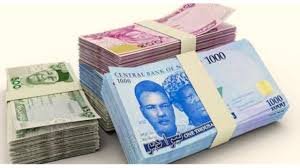
In what supporters describe as a bold transparency drive, the Federal Government has unveiled a monthly revenue dashboard designed to track income and expenditure across the three tiers of government, a move hailed as a potential game-changer in Nigeria’s fight against corruption and fiscal opacity. The initiative, introduced under the supervision of the Ministry of Finance, is expected to provide a public-facing template for monitoring allocations and spending patterns at Federal, State and Local Government levels.
Reacting to the development, the Tinubu Media Volunteers applauded the move, describing it as a decisive step toward accountability in public finance management. In a statement jointly signed by its Chairman, Chukwudi Enekwechi, and Secretary, Segun Ogedengbe, the group said the dashboard would significantly reduce corruption by exposing revenue inflows and deployment to greater public scrutiny. The Tinubu Media Volunteers noted that the dashboard becomes even more critical following the presidential executive order freeing up more oil revenues from NNPC Limited and the anticipated inflows from the newly implemented tax reforms.
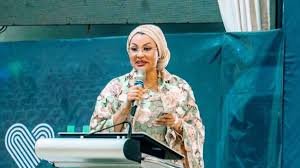
According to the group, the digital monitoring framework will enable authorities to track the enormous resources expected to accrue to federal, state and local governments. The statement from the Tinubu Media Volunteers said, “We acknowledge that the federal government, under the auspices of the Ministry of Finance, has decided to utilise this template to monitor and track the enormous resources that would be accruing to the three tiers of government.” The group aligned itself with the position of the Minister of State for Finance, Doris Uzoka-Anite, expressing confidence that improved revenues would translate into more productive capital deployment.
The Tinubu Media Volunteers said it expects governments at all levels to prioritise capital expenditure over recurrent spending, channeling funds into infrastructure, agriculture, energy and other growth-stimulating sectors. By doing so, it argued, Nigeria could curb excessive consumption patterns, stimulate economic productivity and strengthen long-term development. Beyond infrastructure investment, the group projected that enhanced revenue transparency and increased inflows would help reduce debt burdens across the three tiers of government. It added that higher revenues could enable governments to clear outstanding arrears while boosting sectors capable of driving sustainable growth.
Crucially, the Tinubu Media Volunteers expressed optimism that the revenue dashboards would empower citizens to hold public officials accountable by providing clearer visibility into how funds are generated and spent. For years, calls for fiscal transparency have echoed across civil society platforms, with critics lamenting opaque allocation processes and weak monitoring structures. With the introduction of the monthly dashboard, supporters say the era of guesswork in public finance may be drawing to a close. Whether the platform delivers on its promise remains to be seen but one thing is clear: the Federal Government has placed revenue transparency squarely in the spotlight.