
War
RUSSIA POUNDS UKRAINE, 15 KILLED IN KIEV BOMBARDMENT


Russia launched a massive overnight attack on Ukraine, targeting its capital city Kiev and other major cities. According to Ukrainian officials, at least 15 people were killed in the capital city, where several targets were hit, and scores of victims remained missing, presumed under the rubble of their fallen buildings.

The bombardment comes as Russia continues to take advantage of its numerical superiority and dominance of the skies to ceaselessly pound Ukraine. Ukraine suspects that Russia seeks to launch a winter military campaign to take and annex more territory, particularly in the bordering Sumy Region, where Russia has massed troops in an attempt to create a buffer zone.

The attacks occurred amid flagging prospects of meaningful dialogue between both countries for an end to their three-year-old war. Although talks were initiated in Istanbul’s Turkish city at the prodding of US President Donald Trump, they have yet to yield significant outcomes beyond mutual prisoner exchanges.

The war, initially tagged a special military operation by Russia, began three years ago when Russia invaded Ukraine to whittle its pro-NATO inclination, among other reasons. However, Russia’s hope of an early victory has been dashed by the resilience of the Ukrainian military capability, which is reoiled from the stock of its Western allies who also provide actionable intelligence.
Ukraine has reportedly received over $450 billion (about N745.5 trillion) in military and humanitarian support since the outbreak of hostilities. In contrast, Russia has had the support of North Korea and Iran and has either fully or partially taken at least four regions in Ukraine.
Recent developments indicate that Ukrainian forces have been engaging Russian forces in various parts of the country. According to reports, Russia has been using motorcycles and all-terrain vehicles to advance through contested areas, likely due to the vulnerability of armored vehicles to Ukrainian drone strikes.



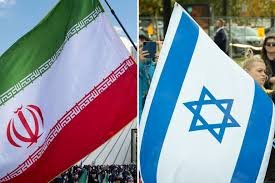



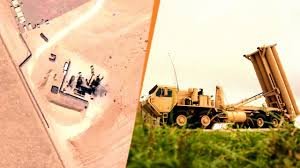
Iran has destroyed a key 300 million dollar radar system crucial to directing US missile defence batteries in the Gulf, a move that risks further straining the region’s ability to counter future attacks, according to a US official. The AN/TPY-2 radar and support equipment used by US THAAD missile defence systems was destroyed at Muwaffaq Salti Air Base in Jordan in the opening days of the war, CNN reported earlier, citing commercial satellite imagery. The destruction of the equipment was later confirmed by a US official.
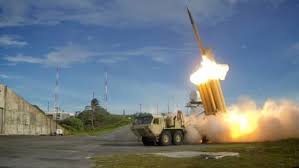
The US has eight THAAD systems globally, including in South Korea and Guam. The batteries cost about one billion dollars each, with the radar comprising about 300 million dollars of that, according to the Center for Strategic and International Studies. These are scarce strategic resources and its loss is a huge blow, said Tom Karako, a missile defence expert with the Centre for Strategic and International Studies. The army’s current eight-battery force is still below the force structure requirements of nine set back in 2012, so there aren’t exactly any spare TPY-2 lying around, he said.
Data gathered by the Foundation for Defense of Democracies think tank show two reported Iranian strikes in Jordan: one on February 28 and one on March 3. Both were reported to have been intercepted. Air and missile defence systems in the Gulf region have been stressed and, at times, overwhelmed by Iranian retaliatory attacks of drones and ballistic missiles. It has prompted fears that stockpiles of advanced interceptors such as THAAD and PAC-3 will soon run dangerously low.

Israel has carried out several strikes on Gaza and ordered a halt to humanitarian aid after accusing Hamas of violating a US-brokered ceasefire.
The truce, which ended months of fighting, is in its second week and has seen previous accusations from both sides of violations, but is now facing its most serious test yet.
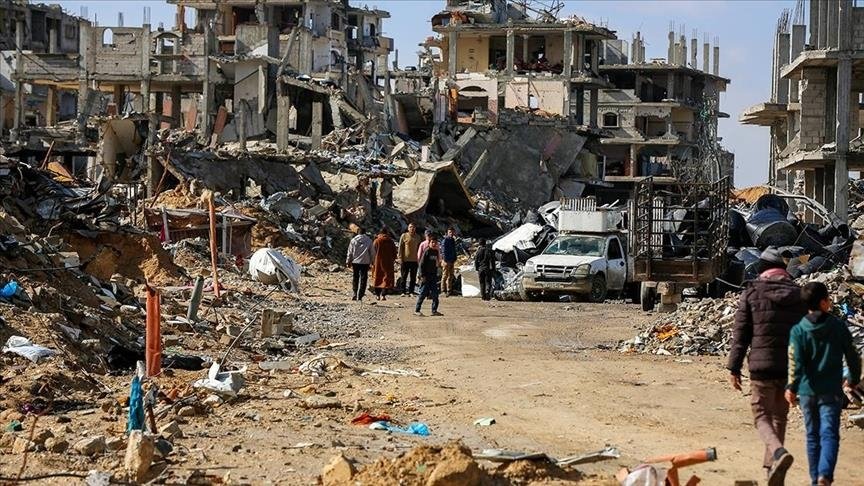
An Israeli military official said Hamas attacked Israeli forces in Rafah in southern Gaza with rocket-propelled grenades and sniper fire, prompting Israel to carry out strikes in the area.
Hamas has denied knowledge of any clashes in Rafah and said it remains committed to the ceasefire agreement.
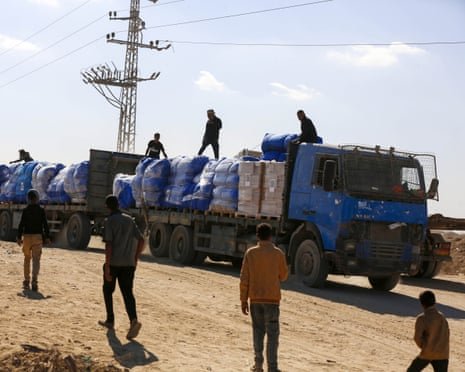
Prime Minister Benjamin Netanyahu has ordered a halt in aid until further notice, and Defense Minister Israel Katz has instructed military chiefs to “act forcefully” against “terrorist targets” in Gaza.
“Hamas will pay a heavy price for every shooting and violation of the ceasefire, and if the message is not understood, the intensity of our responses will continue to increase,” Katz said.
At least eight people were killed in Israeli strikes in several parts of Gaza, according to hospitals and witnesses.
The situation in Gaza remains volatile, with internal clashes between Hamas and rival groups, including an apparent public execution of eight people in Gaza City.

Hamas released all 20 remaining living hostages held in Gaza on Monday, marking a significant development in the ceasefire agreement aimed at pausing two years of devastating war that has pummeled the territory, killed tens of thousands of Palestinians, and left scores of captives in militant hands. Seven of the hostages were freed early Monday, with the remaining 13 released a few hours later.
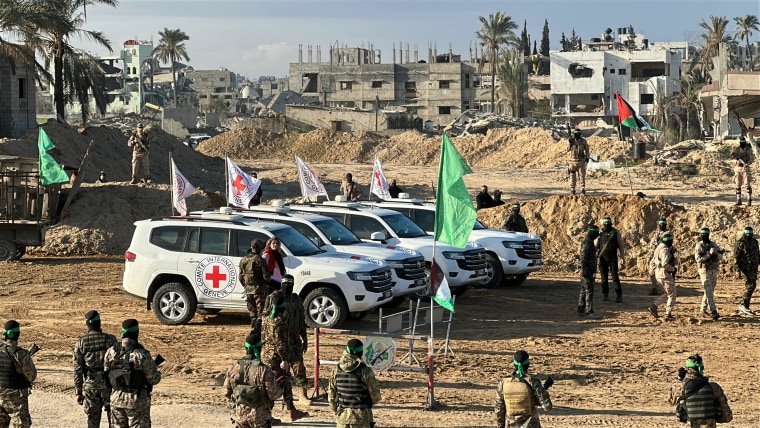
The 20 hostages, all men, were reunited with their families and expected to undergo medical checks. Families and friends of the hostages gathered in Tel Aviv’s Hostages Square erupted in wild cheers as Israeli television announced the first group was in Red Cross custody. Tens of thousands of Israelis watched the emotional transfers at public screenings across the country.
Israel released poignant photos of hostages arriving home, including 28-year-old twins Gali and Ziv Berman embracing upon reunion. Previously released hostages had indicated the twins from Kfar Aza were held separately. The photos showed the first seven hostages looking pale but less gaunt than some freed in January.
“The war is over,” U.S. President Donald Trump told reporters upon arrival in Israel, even as the ceasefire leaves critical unanswered questions about Hamas and Gaza’s future. Trump landed Monday in Israel where he’ll meet hostage families and address the Knesset, Israel’s parliament. Vice President JD Vance said Trump likely would meet newly freed hostages.

Palestinians awaited release of hundreds of prisoners held by Israel. Buses lined up in Gaza’s Khan Younis anticipating prisoner releases. In the West Bank, an Israeli armored vehicle fired tear gas and rubber bullets at a crowd near Ofer Prison; the group scattered amid drones overhead following circulation of a flier warning support for “terrorist organizations” risked arrest.
The bodies of 28 dead hostages are also expected handed over, though timing remains unclear. Gal Hirsch, Israel’s hostages coordinator, said an international task force would locate deceased hostages unreturned within 72 hours.
The hostages’ return caps a painful Israel chapter. Captured in the October 7, 2023 attack igniting war, Israelis wore yellow pins/ribbons in solidarity; tens of thousands demonstrated weekly for their release. Demonstrators previously accused Prime Minister Benjamin Netanyahu of political foot-dragging.
The ceasefire envisions Arab-led international security forces in Gaza alongside Palestinian police trained by Egypt/Jordan; Israeli forces would withdraw as those deploy. Some 200 U.S. troops monitor the ceasefire in Israel. The plan mentions a future Palestinian state – a Netanyahu nonstarter.
Hamas refuses disarmament Israel insists upon; it wants complete Israeli Gaza troop withdrawal. Israel withdrew from much of Gaza City, Khan Younis; troops remain in Rafah, Gaza’s north, and Israel border strip.
The war began with Hamas’s October 7, 2023 surprise attack killing 1,200 Israelis (mostly civilians), taking 251 hostage. Israel’s offensive killed over 67,000 Palestinians per Gaza’s Health Ministry (not differentiating civilians/combatants; ~half women/children). U.N. humanitarian chief Tom Fletcher called Gaza “much of it a wasteland”.
Trump heads later Monday to Egypt for a summit with over 20 leaders on Gaza/Middle East future alongside Egyptian President Abdel-Fattah el-Sissi. Mahmoud Abbas (Palestinian Authority leader) and Netanyahu will attend. The plan envisions eventual Palestinian Authority Gaza role – long opposed by Netanyahu – requiring sweeping reforms spanning years.