
Environment
The Cruel Nature of Humanity: Planetary Exploration, Extortion and Extraction

By AVM (Rtd.) Akugbe Iyamu, MNSA, fsi
The world is now confronting unavoidable planetary emergencies. No nation, institution, or individual can excuse themselves from the chain of actions and inactions that have led to extreme weather events and accelerating climate change.
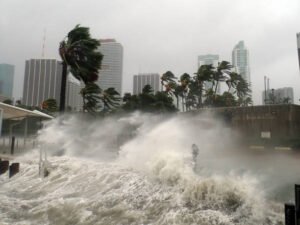
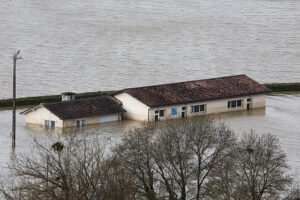
The planet is no longer a self-justifying resource to be created, consumed, and pillaged without restoration. Earth can not sustain endless extraction without deliberate renewal. The extreme weather conditions of 2026 have marked a turning point — a ferment of reckoning — demanding that humanity lead planetary restoration with courage and conviction.
Planets do not degrade themselves. People degrade the planet. Every delay in restoration deepens the damage — economically, socially, and environmentally.
Planetary degradation is the systemic, anthropogenic erosion of Earth’s natural systems — including climate stability, biodiversity, and biogeochemical cycles — driven by overconsumption, pollution, and destructive land-use changes. It represents a breach of safe operating boundaries, such as climate equilibrium and biodiversity thresholds, threatening global stability and potentially the long-term habitability of our world.
Let it be clearly stated: as long as poverty, hunger, displacement, and inequality persist, environmental degradation will continue. Climate change is not isolated from social injustice; it is both a cause and a consequence of structural inequality. Extreme weather patterns are not random episodes — they are stories written by human choices.
A renewed learning process is therefore critical. Humanity must adopt a new attitude — one that prioritizes the greatest good for the greater majority rather than continuous global overconsumption. History has a symmetry: those who dominate in one era are eventually called to account in another.
For industrialized nations of the Global North, the most urgent transition is from the centrality of economic growth to the centrality of climate responsibility. Unrestrained economic expansion has fostered an illusion of indispensability — the belief that development must continue at any cost and that history pauses in their absence. It does not.
Those who once commanded the Industrial Revolution can no longer answer climate questions from the wings. Climate change has entered a cyclical phase where rhetoric meets record, posture meets proof. No matter how skillfully staged, subterfuge ultimately yields to institutional accountability and scientific evidence.
The global climate now stands at a decisive juncture. We are compelled to confront excessive planetary degradation with firm resolve. The choice before us will shape human survival and determine whether we restore collective confidence in our capacity to protect and renew the Earth.
The time for cautious rhetoric has passed. What is required now is structured action, equitable responsibility, and unwavering commitment to environmental restoration.
AVM (Rtd.) Akugbe Iyamu, MNSA, fsi
Consultant on Climate Change and Analyst on Environmental Policies
President, Association of Environmental Protection, and Climate Change Practitioners