
Environment
The Deliberate Destruction of Abuja Green Spaces Have Serious Implications for Citizens’ Health (Renal Diseases)

By AVM (RTD) AKUGBE IYAMU MNSA fsi
Abuja was primarily modeled after Brasília (Brazil)with additional design influences from Washington D.C. (USA) and Paris (France). The city was developed in the 1980s as a purpose-built capital by Japanese architect Kenzo Tange.
It was designed with wide roads, designated green spaces, and a central location to represent national unity.
As synonymous with modern cities, the green space was to absorb the island heat that will be consequential to future development and population growth.
The green areas were to aid carbon emission reduction, make the city liveable and increase carbon sequestration and offset.
Carbon offsets are financial instruments representing the reduction, avoidance, or sequestration of one metric ton of greenhouse gas emissions, used by individuals or organizations to compensate for their own emissions.
They fund projects like reforestation, renewable energy, and methane capture. While aimed at climate mitigation, the market faces scrutiny over effectiveness and “greenwashing”.
Additionally, Abuja green spaces were to act as carbon sink systems in anticipation of future growth in population and economic development. carbon sink is any natural or artificial system that absorbs and stores more carbon dioxide from the atmosphere than it releases, playing a crucial role in reducing greenhouse gas concentrations.
Main examples include oceans (via plankton), forests, and soil. Synonyms include carbon sequestration sites, carbon reservoirs, or carbon storage.
In the case of Abuja, geography was its destiny and the location of Abuja in a trough surrounded by mountains make the city a region of unbearably high temperatures such as experienced in the last couple of days.
A city like Abuja must continuously expand the green space and not destroy the ecosystems because of the adverse effects on the health of citizens particularly the vital organs like the kidney.
Currently findings from the World Health Organisation showed that environmental factors are increasingly recognized as major, often underappreciated, contributors to kidney disease, acting as both direct nephrotoxins and risk multipliers that exacerbate pre-existing conditions like diabetes and hypertension.
Chronic exposure to pollutants can lead to sustained renal stress, reduced kidney function, and accelerated progression to end-stage kidney failure.
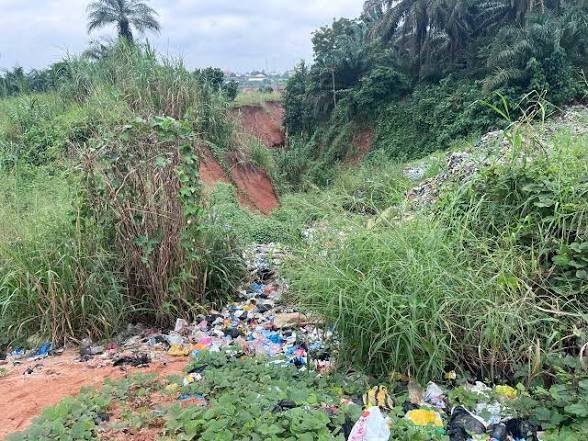
We all need development but not at the expense of the health of the people. For instance, today 13 March 2026 after the previous night rainfall gave the city an awful smell from indiscriminate waste disposal and open defecation.
Additionally, since 2022, the city have struggled to establish international waste management and disposal systems that meet international standards. The efforts is yet to yield the desired outcome.
For a city where individual citizens generate 0.55 to 0.70kg of waste daily and 330,000 metric tons annually, there are more than compelling urgency to have a scientific waste management system.
Dumpsites are no longer fashionable as they aggravate the health problems of citizens. There were noticeable efforts to have major dumpsites and official landfills to manage significant waste aggregation points. These are located across the Federal Capital Territory, primarily in Gosa, Wupa, Bwari, Dutse-Makaranta, Karshi, and Kubwa. These sites, managed or overseen by the Abuja Environmental Protection Board (AEPB) and Area Councils, handle the majority of solid waste, with Gosa and Ajata being major operating landfills.
As we go ahead, the FCT Administration need to realise that the green spaces in the various zones were intentional, deliberate and purpose driven. If nothing else scares us, let the impact of green areas destruction on health be a priority that people wellbeing is the reason our government exists.
AVM (RTD) AKUGBE IYAMU MNSA fsi
CONSULTANT ON CLIMATE CHANGE AND ANALYST ON ENVIRONMENTAL POLICIES
PRESIDENT ASSOCIATION OF ENVIRONMENTAL PROTECTION AND CLIMATE CHANGE PRACTITIONERS
By AVM (Rtd.) Akugbe Iyamu, MNSA, fsi
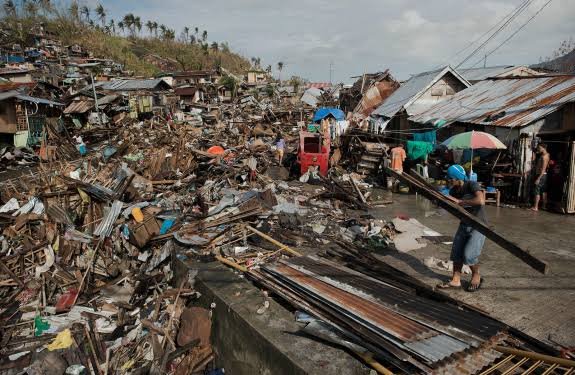
The world is now confronting unavoidable planetary emergencies. No nation, institution, or individual can excuse themselves from the chain of actions and inactions that have led to extreme weather events and accelerating climate change.
The planet is no longer a self-justifying resource to be created, consumed, and pillaged without restoration. Earth can not sustain endless extraction without deliberate renewal. The extreme weather conditions of 2026 have marked a turning point — a ferment of reckoning — demanding that humanity lead planetary restoration with courage and conviction.
Planets do not degrade themselves. People degrade the planet. Every delay in restoration deepens the damage — economically, socially, and environmentally.
Planetary degradation is the systemic, anthropogenic erosion of Earth’s natural systems — including climate stability, biodiversity, and biogeochemical cycles — driven by overconsumption, pollution, and destructive land-use changes. It represents a breach of safe operating boundaries, such as climate equilibrium and biodiversity thresholds, threatening global stability and potentially the long-term habitability of our world.
Let it be clearly stated: as long as poverty, hunger, displacement, and inequality persist, environmental degradation will continue. Climate change is not isolated from social injustice; it is both a cause and a consequence of structural inequality. Extreme weather patterns are not random episodes — they are stories written by human choices.
A renewed learning process is therefore critical. Humanity must adopt a new attitude — one that prioritizes the greatest good for the greater majority rather than continuous global overconsumption. History has a symmetry: those who dominate in one era are eventually called to account in another.
For industrialized nations of the Global North, the most urgent transition is from the centrality of economic growth to the centrality of climate responsibility. Unrestrained economic expansion has fostered an illusion of indispensability — the belief that development must continue at any cost and that history pauses in their absence. It does not.
Those who once commanded the Industrial Revolution can no longer answer climate questions from the wings. Climate change has entered a cyclical phase where rhetoric meets record, posture meets proof. No matter how skillfully staged, subterfuge ultimately yields to institutional accountability and scientific evidence.
The global climate now stands at a decisive juncture. We are compelled to confront excessive planetary degradation with firm resolve. The choice before us will shape human survival and determine whether we restore collective confidence in our capacity to protect and renew the Earth.
The time for cautious rhetoric has passed. What is required now is structured action, equitable responsibility, and unwavering commitment to environmental restoration.
AVM (Rtd.) Akugbe Iyamu, MNSA, fsi
Consultant on Climate Change and Analyst on Environmental Policies
President, Association of Environmental Protection, and Climate Change Practitioners
Environment
Maldives Experience: Nigeria Can Turn Extreme Weather into Prosperity with Good Governance

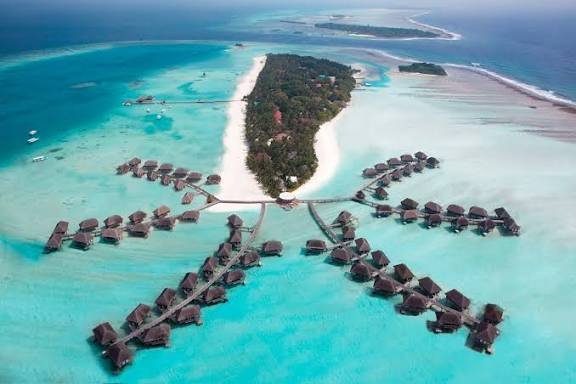
The conversion of Maldives extreme weather experience into economic prosperity is possible in Nigeria if the country fix governance, transparency and accountability.
Three things are implicated and prioritized in building good resistance and resilience against extreme weather, climate change and planetary restorations : accountability, transparency and good governance.
However, Nigeria’s limited adaptive capacity, driven by economic, institutional, and infrastructure challenges, leaves the country highly exposed to these climate hazards.
Let look at climate actions across vulnerable countries like the Maldives, the sahel region and the Gulf of Guinea starting with Maldives where extreme weather threats has been transformed into building good governance, transparency and accountability.
In the Maldives, Climate change poses an existential threat with 80% of its islands sitting less than one meter above sea level, risking total submersion by 2100 due to sea-level rises of up to 0.9 meters.
Key impacts include severe coastal erosion, flooding, destruction of coral reefs, depletion of freshwater aquifers, and threats to tourism and fishing, which are critical to the nation’s economy.
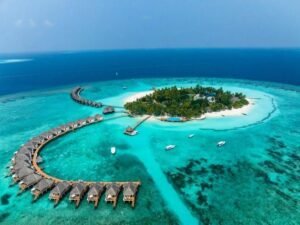
The efforts of the government is creating progress and prosperity in recreational communities and attracting over 2m tourists annually is turning adversity into prosperity.
In corollary, Nigeria sits in the 2 most promising economic areas in the world: the Gulf of Guinea and the sahel region. How does Nigeria create economic growth and prosperity from the crisis in this region starting with the Gulf of Guinea.
Climate change in the Gulf of Guinea drives severe sea-level rise (~3.89 mm/yr), causing intense coastal erosion, flooding, and saltwater intrusion that destroy infrastructure and ecosystems.
Rising temperatures and erratic rainfall threaten fishing, agriculture, and livelihoods, particularly in densely populated cities like Lagos, Accra, and Abidjan.
Nigeria can turn her economic challenges into fortunes if she approaches the sahel region with the Maldives model where climate actions changed threat to prosperity and progress.
On the otherhand, the sahel Savannah is the region of contradictions in poverty, insecurity and prosperity.
The Sahel is experiencing rapid, severe climate change impacts, with temperatures rising 1.5 times faster than the global average.
Key effects include erratic rainfall, severe droughts, and intense flooding, which degrade agricultural productivity, destroy livelihoods, drive displacement of millions, and exacerbate conflict over scarce resources.
Let’s understand the real issue of climate change in Nigeria and the need to redouble efforts and create the pathway and framework for economic growth and development.
How has governance, transparency and accountability change the fight against climate change in Nigeria.
Climate change in Nigeria drives severe environmental and economic crises, including devastating floods in the south, rapid desertification in the north, and extreme heatwaves nationwide, making it one of the world’s most vulnerable countries.
These shifts destroy agriculture, reduce food security, and cause violent conflicts over dwindling resources. As the country prepares for the 2026 season of extreme weather conditions, the choice between politics, elections and environmental protection and economic consequences stares at the nation.
Nigeria must remember that the World Economic Forum has identified extreme weather conditions as the third most disruptive action against global economy because anywhere there is natural disasters, there are also economic disasters.
AVM RTD AKUGBE IYAMU MNSA fsi
CONSULTANT ON CLIMATE CHANGE AND ANALYST ON ENVIRONMENTAL POLICIES
PRESIDENT ASSOCIATION OF ENVIRONMENTAL PROTECTION AND CLIMATE CHANGE PRACTITIONERS
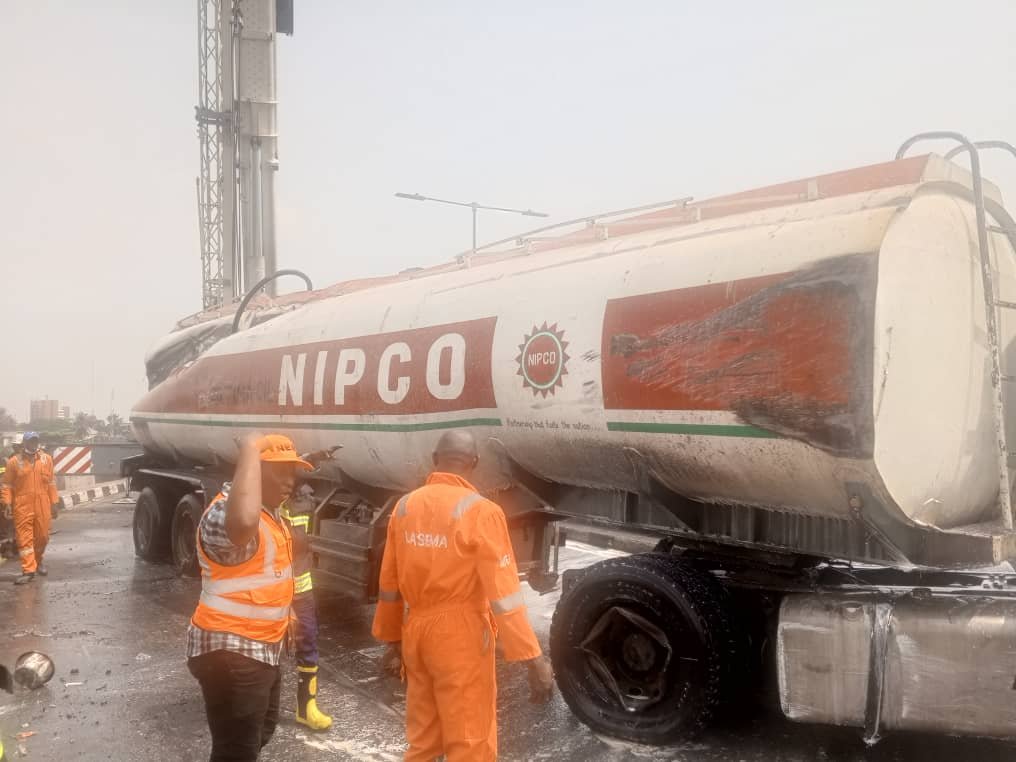
The Lagos State Fire and Rescue Service is actively salvaging a 45,000-litre diesel tanker that upturned at Liverpool bridge outward Apapa, Tin Can Island, Lagos. Emergency officials confirm the situation is now under control.
The tanker was successfully saved from a secondary incident. Security agents were deployed to curtail a crowd attempting to scoop the fuel. “Emergency scene secured from scoopers,” an update confirmed, allowing safe trans-loading of the remaining contents to proceed.
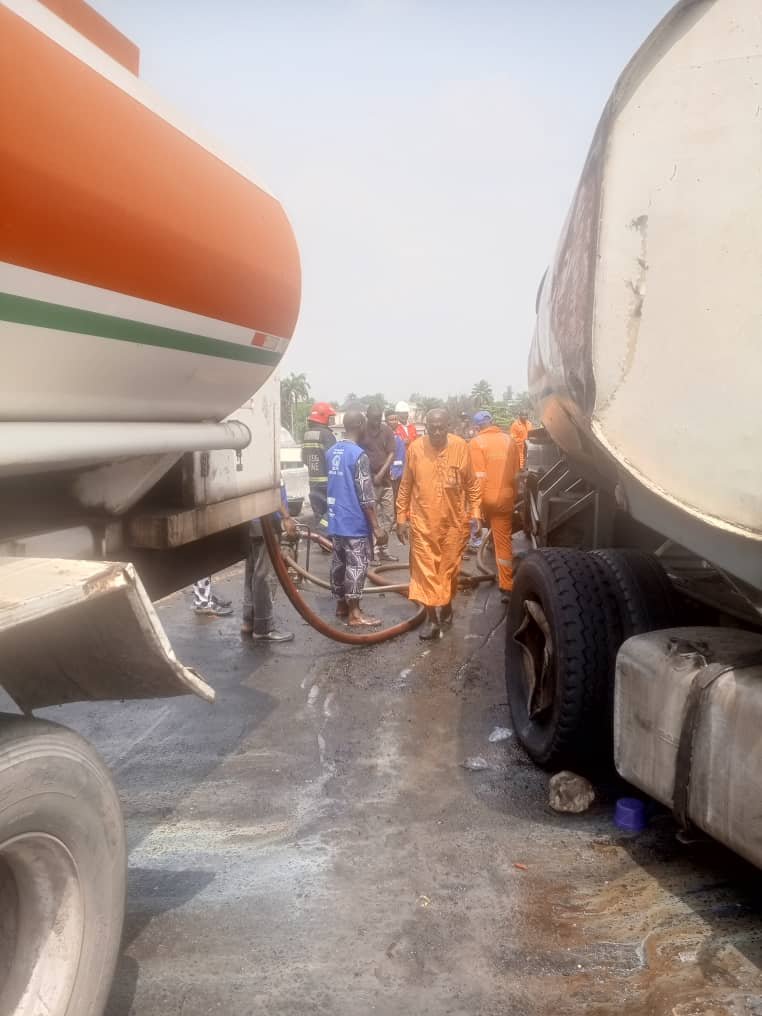
Authorities are urging motorists to take alternative routes while maintaining control of the affected area.
Operations are ongoing with further details expected.