Opinion
The First Lawmakers: My Reflection on Home, Discipline, and Duty-PARENTING

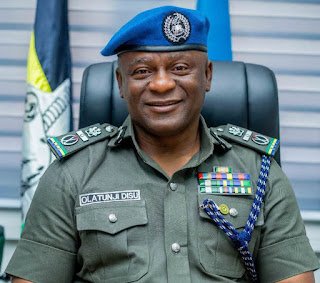
By C.P Tunji Disu.
Law and order do not begin at the police station or the courthouse; they begin at home, in the quiet corners where parents teach their children right from wrong. When this foundation cracks, society inherits the fallout.
As a police officer, I’ve witnessed this truth play out in heartbreaking ways—parents arrive at stations, not with pleas for justice, but with demands for us to parent for them. “I want you to detain my child, I want you to discipline him.” “Torture him,” as though pain alone could rewrite a life long gone astray.
A retired soldier once came into my office in Ago Iwoye, demanding we kill his son, a university student arrested for cultism. His rage was volcanic. Yet, the very next day, that same man returned, food in hand, asking after his son’s well-being. When I joked, “So you don’t want us to kill him again?” his eyes betrayed a truth every parent knows: anger is often the flipside of helpless love.
Years later, I met that young man again in Shagamu. He’d survived his schooling, married, and become a father himself. When I asked if he’d ever want his daughter near cultism, his “No!” was instant.
Another father once begged us to help keep his drug-addicted son for weeks. “Keep him here,” he insisted. We refused—not out of indifference, but because cells are not rehabilitation centres. If anything were to happen to the boy, or if he escaped, who would the father blame? The police. Yet discipline cannot be outsourced. It must be nurtured, patiently and persistently, at home.
This brings me to a delicate truth: many of us grew up in an era where parents and teachers wielded firmer hands. My own father believed in the “reset button” of a good beating—a method he swore straightened my stubbornness (and yes, I laugh about it now). Teachers, too, disciplined freely, with canes and stern words. But times have changed.
Today, some see corporal punishment as archaic, even abusive. I am not here to debate methods—what worked for one generation may not work for another. What matters is engagement.
The problem today isn’t a lack of discipline; it’s a lack of presence. Parents once corrected their children directly, even if harshly. Some have handed that duty to strangers—teachers, police, and social workers. But no institution can replace a parent’s guidance. A child raised without boundaries at home will test them elsewhere—in cults, drug dens, or crime.
To be clear: I am not discouraging parents from reporting wayward children. If your son steals or your daughter vanishes, come to us. We will help. But do not confuse reporting with surrendering. When you hand us your child and say, “Fix them,” you misunderstand our role. We enforce laws; we cannot replace love. We investigate crimes; we cannot teach values.
The retired soldier’s son changed not because we jailed him, but because his father chose to fight for him, not against him.
Parents, hear me: society’s fabric is woven in your living rooms, at your dinner tables, in the quiet moments when you choose patience over fury, presence over absence. The police cannot replace your voice. We cannot instil the values you withhold. Our cells are not classrooms; handcuffs are not teaching tools. When you outsource parenting to the state, you gamble with life—and with the peace of communities.
Yes, parenthood is hard. It is exhausting, thankless, and often terrifying. But it is also sacred. Your children watch how you love, how you forgive, and how you rise after failing. They notice when you prioritize work over conversations, screens over eye contact, and fear over understanding. The boy who joins a cult, and the girl who slips into addiction—they are not born rebels. They are shaped by unmet needs, unheard cries, and lessons left untaught.
To the father who sees his son slipping away: Stay. To the mother who feels out of her depth: Ask for help. To the parent who thinks it’s too late: It isn’t. Discipline without love breeds resentment, but love without discipline breeds entitlement. Find the balance.
My generation’s parents were far from perfect, but they owned their role as first teachers. They scolded, they punished, and they stayed. I urge present parents to do the same—not with the harshness of the past, but with the wisdom of your own heart. Meet your children where they are. Listen. Correct and love.
I write this not as a Commissioner of Police, but as a witness. I’ve seen the worst of humanity—and the best. I’ve watched reformed cultists become devoted fathers. I’ve seen shattered families rebuild. Let us embrace hope and commit to being the first lawmakers in our homes.
C.P Tunji Disu.
Opinion
Right of Reply: Misrepresenting the Facts – Why the PENGASSAN NNPCL Branch Statement Creates Confusion, Not Clarity
By Nick Agule
A public statement attributed to the Petroleum and Natural Gas Senior Staff Association of Nigeria (PENGASSAN), NNPCL Branch, requires a factual response. The statement is riddled with contradictions, misinterpretations, and outright falsehoods that risk misleading the public.
*1. On Direct Remittance of Royalties and Taxes Under PSCs*
PENGASSAN contradicts itself. It claims that all royalties and taxes are fully remitted to the Federation Account, yet simultaneously admits that part of these revenues is used by NNPCL to service debts on behalf of the government. When did NNPCL assume the role of the Debt Management Office?
The correct process is straightforward:
• NNPCL must remit 100% of all proceeds to the Federation Account.
• Debt service should be appropriated through the national budget, not deducted at source.
This is precisely the constitutional order that brings transparency and accountability in the management of the Federation’s revenues restored by the Executive Order.
*2. On Misrepresentation of the 30% PSC Profit Oil/Gas Management Fee*
PENGASSAN’s interpretation of the Executive Order is incorrect. The Order clearly states that NNPCL receives 30% of profit oil and profit gas, not 30% of total PSC revenue. Nowhere does the Order alleged that NNPCL retains 30% of the Federation’s entire oil revenue.
By insisting otherwise, PENGASSAN is constructing a strawman argument, perhaps to inflame public sentiment.
PENGASSAN further argues that NNPCL receives only 1.05% of gross PSC revenue, implying the amount is insignificant. But the issue is not the size. It is the constitutional principle. Even if the amount were 0.000001%, it is still Federation revenue and must be remitted in full as mandated by section 162(1) of the constitution.
PENGASSAN also claims that in other countries, governments fund their national oil companies through profit oil. But what has NNPCL achieved with decades of such funding?
• Refineries: dead
• Gas plants: dead
• Product pipelines: dead
• Upstream assets: limping
Meanwhile, national oil companies elsewhere – Saudi Aramco (Saudi Arabia), Petrobras (Brazil), Petronas (Malaysia), Equinor (Norway) etc – pay massive dividends to their governments and drive national development.
NNPCL argues that the management fee helps it recover costs incurred on behalf of the Federation. If so, NNPCL should invoice the Federation, not unilaterally take 30% of profit oil and profit gas without transparent accounting. No institution- Auditor-General of the Federation, National Assembly, Petroleum Ministry, or even the Presidency – has full visibility into NNPCL’s books.
NNPCL further claims that removing the 30% fee will hinder its ability to fund critical operations. But NNPCL is a limited liability company. It should raise capital like NLNG and other commercially run entities. Accessing the capital market would force transparency and end inefficiencies such as paying refinery staff who refine zero barrels of crude.
*3. Misleading Claims About the 30% Frontier Exploration Fund*
PENGASSAN asserts that the 30% Frontier Exploration Fund under Section 9 of the PIA does not go to NNPCL. This is false. Section 9(5) explicitly empowers NNPCL alone to utilise the funds in the frontier exploration escrow account, subject only to appropriation by the National Assembly.
In practice, NNPCL spends these funds without meaningful legislative oversight. It took months for the National Assembly to compel the GMD to appear, and even then, he provided no substantive information.
PENGASSAN warns that suspending the fund will threaten long-term exploration. But after decades and billions of dollars spent, not a single barrel of crude has been produced from any frontier basin. Nigeria cannot continue funding wasteful exploration while other oil-producing nations are investing petroleum revenues into renewable energy and diversified economic assets – Qatar’s 20% ownership of British Airways is a prime example.
*Soul Searching for PENGASSAN NNPCL*
The nation has entrusted enormous assets and resources to NNPCL. What has been the return?
• Refineries: Dead, causing decades of fuel scarcity, adulterated products, fires, and thousands of preventable deaths. PENGASSAN made running refineries look like rocket science which Dangote refinery has demystified.
• Gas plants: Dead, forcing Nigeria to import gas while flaring continues unabated, harming health and the environment.
• Pipelines: Dead, leading to road destruction, tanker explosions, and inflated product prices.
• Upstream: Underperforming, while peers like Saudi Aramco produce over 10 million barrels per day and Petrobras exceeds 4 million.
*Conclusion*
Every PENGASSAN NNPCL meeting should begin with a minute of silence for the countless Nigerians who have died or suffered due to the collapse of national assets under their watch. They must also reflect on the lost opportunities for national development.
PENGASSAN NNPCL must stop fixating on Federation revenues. Instead, they should focus on reviving refineries, gas plants, pipelines, and upstream assets so that- like NLNG – they can contribute dividends to the Federation Account rather than draining it.
_Nick Agule is an energy expert_

By Ehichioya Ezomon
Nigerians heap all blame of the country’s problems on the leadership, which means politicians, who’ve been running their lives like personal estates. But the ongoing debate and controversies trailing the National Assembly (NASS) amendment to the 2022 Electoral Act, and signing of the review into law by President Bola Tinubu, have shown that Civil Society Organisations (CSOs) and the Media are major contributors to the problems of Nigeria as a democratic nation in progress.
The issue of the day on the road to the 2027 General Election is the clamour by Nigerians for electronic transmission of results in “real-time” as a panacea to the opposition’s claims of massive manipulation of the 2023 poll by the ruling All Progressives Congress (APC), its then-candidate Asiwaju Bola Tinubu, and the Independent National Electoral Commission (INEC).
With the CSOs and the media in the thick of the agitation and protests to “force the NASS to approve real-time transmission of results,” the questions to ask include: Are they altruistic in advocating for certain issues that may impact the 2027 election? Are they ignorantly and glibly aping the opposition without a grasp of the underlying consequences? How can they sound like and behave in sync with the opposition in matters that won’t ensure electoral fidelity but to further perpetrate and perpetuate fraudulent elections?
Haven’t the CSOs and the media decipher the opposition alleged “agenda” to game the 2027 poll – even as they divert attention from their real intent with their hollar against the APC – to gain what they couldn’t achieve in relatively-competitive contests in 2023? As “guardians of democracy,” are the CSOs and the media conniving, and in bed with the opposition?
The lead agitators of real-time transmission of results were reportedly determined, but failed after “millions of attempts” in 2023 to hack into, and manipulate the INEC digital systems, including the INEC Results Viewing (IReV) portal, where poll results are uploaded for members of the public to access timeously.
There’re reports of manipulation of the 2023 election across Nigeria, particularly in a section of the country where a presidential candidate unprecedentedly scored average of 95% votes in the states within his geopolitical zone, and also won in unlikely states in other zones. But what’ve Nigerians, especially the CSOs and the media, done in such a situation to protect democracy they claim to cherish and uphold?
Nigerians have neglected to interrogate how such a “winning formula” was possible without the poll being rigged, which’s as clear as daylight from the result sheets (Form EC8As) issued after the collation and tabulation of votes at the over 176,000 polling units in the 36 States and the Federal Capital Territory (FCT), Abuja, Nigeria’s capital city!
For example, screwed votes in Form EC8As abound on social media, but two polling units’ results stand out as a common reference: One from Abia State in the South-East and the other from Lagos State in the South-West. In the result sheet from the South-East, at Amuzu Hall, Amuzu, Ohiaukwu I in Umuahia South, one Okeke Cynthia acted as both the Presiding Officer and “Polling “Agents” for six political parties, including ADC 1 (vote), APC 2, APGA 2, LP 218, PDP 12, and ZLP 1 vote, totaling 236 votes.
To indicate that these figures were obviously allocated to favour the LP, rather than reflecting the votes genuinely and lawfully cast, Okeke Cynthia signed the Form EC8A as the unit’s Presiding Officer and “Polling Agents” for the six parties that “scored” votes from the 236 “valid” votes cast.
In a different rigging format, the scores recorded for six parties in Form EC8A from the South-West, at Ademola Oluwole Junction I, Egbeda/Alimosho, Alimosho, Lagos, were mutilated, to increase APC’s score from 12 to 36 votes, reduce LP’s votes from 69 to 41, and PDP score from 54 to 6, as the ADC, ADP and NRM retained their 1 vote each, bringing the “total valid votes” to 86.
While one Shobowale Tolani recorded the “votes cast” and siged the Form EC8A, three different signatures were appended against the scores for the APC, LP and PDP. But a closer look reveals that the same ink was applied to record all relevant and mutilated poll figures and signatures by the “Presiding Officer” Tolani, and the three “Polling Agents” that signed the Form EC8A on behalf of the APC, LP and PDP, respectively.
One wonders why the mutilation of the results sheet, Form EC8A, with the supposed connivance of the APC, which increased its score from 12 to ONLY 36, reduced LP’s votes from 69 to 41, and PDP’s votes from 54 to 6, and allowed the LP to win the polling unit! This is abracadabra that only the LP can explain!
The legerdemain here is that the Form EC8As from the South-East and South-West were a product of electoral fraud – with the LP favoured in the South-East polling unit that’s “neatly rigged,” and in the South-West polling unit that’s “untidily manipulated” – which Forms were probably scanned and transmitted via the Biomodal Voter Accreditation System (BVAS) machines to the IReV in “real-time” or delayed time, and accepted as votes freely and fairly cast.
Yet, the same presidential candidate and those who rigged “perfectly with no alterations and cancellations” on his behalf are the ones – joined by the CSOs and the media – shouting at the rooftops that Tinubu, the APC and INEC “stole their mandate,” and displaced the candidate from the first position to the third place.
The poser: Was the candidate able to prove, at the election tribunals, the over “55m votes” – more than double the total votes of all the parties at the election – that his followers bandied on social media? NO! The candidate maintained at the Presidential Election Petitions Court (PEPC) (Appeal Court) and the Supreme Court that he only wanted to prove that the process of the ballot was faulty.”
For failing to prove his case, it took the Supreme Court panel of Justices only 72 seconds to affirm, on appeal, the PEPC’s dismissal of the candidate’s petition as “lacking in merit.” That judgment ought to bring closure to the whirlwind case that put Nigeria on the edge of the cliff, with the opposition simultaneously calling for a military coup to overturn the alleged “flawed election” that they helped orchestrate.
This leads to the main claims of the candidate and his supporters: That they’re robbed of victory due to delays in the “transmission” of the poll results to the IReV; that a substantial number of the uploaded results was illegible; and that INEC’s alleged “technical glitch” in its servers was “contrived” to favour APC’s candidate, now President Tinubu.
The opposition, CSOs and the media wanted, and continue to insist that “real-time transmission of results from polling units to the IReV” be expressly codified in the 2026 Electoral Act that Tinubu assented to on Thursday, February 19, 2026.
Their main grouse is the NASS insertion of a proviso that gives allowance for manual collation of results if electronic transmission fails owing to communication challenges (such as could’ve happened on Saturday, February 21, 2026, in the Area Council Election in the FCT, Abuja, and bye-elections in Kano State and Rivers State, accordingly).
This, they argue, will give the ever-manipulative politicians – allegedly only in the ruling APC – the alibi to induce malfunctioning of the BVAS for the transmission of results to the IReV, “in order for INEC to have recourse to manual collation that’s susceptible to manipulation.”
Another question for the “real-time” agitators: Has Nigeria adopted “electronic voting”? How can we achieve real-time transmission of results if what we do – save accreditation of voters and transmission of results to the IReV – is manual balloting and collation from the polling unit to the ward collation centre, to local government collation centre, to state collation centre, and finally to the national collation centre?
As one Tejudeen Adigun @Tejudeen Adigun observes lately in a post on Facebook, those agitating for abandoning of manual balloting are driven by “emotions and not reality.” According to him, “Who and what determines ‘as quickly as possible’ (the transmission of results to the IReV in real-time)? How will ‘manual’ not come in if: 1) ballot papers are used; 2) how do you count ballot papers if not manually; 3) how will you write results on result sheets if not manually; 4) what is to be transferred if not the scanned result sheets?
“Second stage: 1) How will INEC populate (distribute) the (ballot) papers at the ward level if not manually; 2) How will party agents (sign) on the results sheets if not manually? This last stage will repeat itself at the Local Government, States and National collation centres – all manually done!
“INEC will NOT use results uploaded or transmitted ‘real time’ on IReV to collate results at these collation centres. INEC will use results sheets at lower levels to do the collation! So, I ask you, what again, what is ‘real time’ transmission and how has it impacted the INEC collation process? You see, you are all on a goose chase.”
As both the Appeal and Supreme Courts affirmed in their judgments from the 2023 presidential election, “the IReV isn’t a collation system” but a portal for viewing results by the public. So long as Nigeria hasn’t adopted electronic voting, the IReV can’t replace manual collation and announcement of results. The opposition, CSOs, the media and other advocates should engage the NASS, to persuade members to adopt electronic voting, not for 2027 but other future elections!
One more question by concerned Nigerians: Have agitators for real-time transmission of results decided to aid and abet the opposition to rig the 2027 election, and cause such manipulated results to be uploaded to the IReV, for which they want to blackmail, browbeat and force the INEC to unlawfully turn into a collation system? That’d be rigging the system “real-time,” and stripping the electoral umpire of its independence!
Even with the “partial” approval of electronic transmission of results in “real-time” to the IReV, the alleged manipulation of the 2023 presidential poll will be a child’s play compared to the feared wholesale rigging of the 2027 ballot. As starkly shown in 2023, only one candidate was capable of securing block votes from his zone, and there’s every likelihood he’ll repeat that feat in 2027 with bulk rigging.
Either out of ignorance, connivance, collaboration or intimidation, the results therefrom will be uploaded to the IReV, for real-time viewing, to show the world that the candidate’s won the election – not from a free, fair, credible and transparent voting, but high-voltage fraudulence at the polling units, which’s the reason for the intense clamour for “real-time” transmission of results from polling units!
Sadly, Nigerians are afraid to talk about these “bad things,” to avoid being stereotyped as tribal bigots fanning hatred against people of a particular ethnic group, who, in 2023, executed the electoral heist in their zone, and elsewhere they’ve strongholds across Nigeria. These issues remain, and will manifest in multiple fashions and phases in the 2027 poll. And Nigerians, will once again, have cause to blame politicians and their leaders!
• _Mr Ezomon, Journalist and Media Consultant, writes from Lagos, Nigeria. Can be reached on X, Threads, Facebook, Instagram and WhatsApp @EhichioyaEzomon. Tel: 08033078357_ .
Opinion
Crude Oil Spillage/Pollution Remains One of the Greatest Contributors to Ecosystem Destruction Globally
By AVM RTD Akugbe Iyamu MNSA fsi
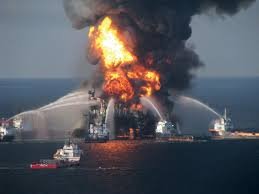
Oil spills in Nigeria, particularly in the Niger Delta have caused extensive, long-term environmental, economic, and health damages, with cleanup costs estimated at over $12 billion.
Frequent spills, often caused by theft and sabotage including ageing infrastructure result in massive economic losses of up to $20 billion annually. These incidents have prompted legal battles, with oil companies like Shell paying millions in compensation. The retinue of oil spillage is frequent with the niger delta with massive oil spillage is happening in Bayelsa.
It is spilling from the well owned by SPDC in Ekeremo area and polluting rivers in Bayelsa and Delta states killing aquatic ecosystems. There has been a good history of oil spillage in recent years starting from 1979 in Ondo state.
Nigeria’s largest spill was an offshore well-blow out in January 1980 when an estimated 200,000 barrels of oil (8.4million US gallons) spilled into the Atlantic Ocean from an oil industry facility and that damaged 340 hectares of mangrove. At this point, it is essential to define the various levels of spills:
Small Spills and Large Spills.
Large spill is considered six (6) gallons or more and a small spill is considered less than six (6) gallons however, consideration must be given to the type of oil that has been spilled (i.e. a hazardous material of a smaller quantity may require HazMat assistance). The oil does not spill itself, it is normally triggered by
accidents involving tankers, barges, pipelines, refineries, drilling rigs, and storage facilities are the most common cause of oil spills, but recreational boats can also release oil out on the water or in marinas. The highest oil spillage in Nigeria history happened in Ondo state in 1979.
While oil exploration began in Araromi, Ondo State as early as 1908, the major infamous oil spillage often associated with 1979 in the region refers to the massive Forcados terminal tank failure, the 1979 Forcados Terminal Spill in July 1979 when the Forcados terminal experienced a massive oil spill, estimated at 570,000 barrels.
This incident is recorded as one of the largest in Nigerian history, spilling over a 21-day period and severely affecting aquatic life and surrounding swamps. Nigeria has a fair amount of success in dealing with oil spillage which involves a combination of regulatory oversight by NOSDRA, immediate containment actions (booms, skimmers, burning), and long-term bioremediation in primarily addressing devastation in the Niger Delta.
Despite these efforts, over 10,000 incidents occurred between 2011-2022, driven by sabotage and aging infrastructure, with cleanup costs are estimated in the billions. Globally, oil spillage is of great concern hence oil spill management focuses on rapid containment and cleanup using a tiered approach (local, national, international) to minimize environmental and economic damage.
Key strategies include deploying booms and skimmers for containment, using dispersants, in situ burning, and bioremediation. Modern management integrates satellite tracking, AI for modeling, and stringent, pre-emptive measures. Pollution remains the greatest contribution to social, economic and environmental hazards. Let’s collectively deal with its various types.
AVM RTD AKUGBE IYAMU MNSA fsi
CONSULTANT ON CLIMATE CHANGE AND ANALYST ON ENVIRONMENTAL POLICIES
PRESIDENT ASSOCIATION OF ENVIRONMENTAL PROTECTION AND CLIMATE CHANGE PRACTITIONERS