
Government
Tinubu Defends Signing of Electoral Act 2026, Says Party Alliances Must Remain Voluntary

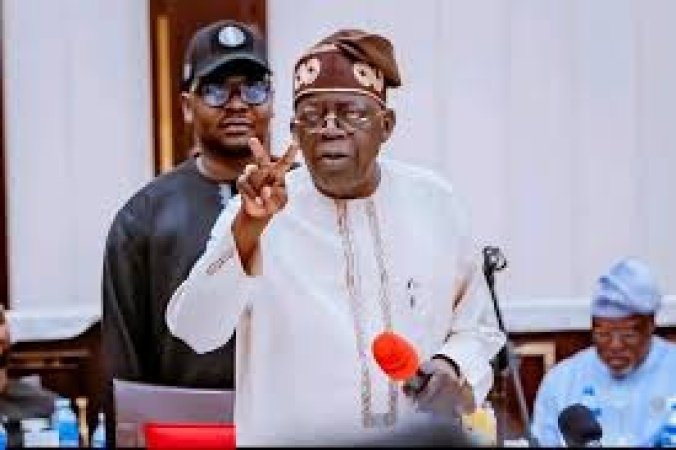
President Bola Ahmed Tinubu has defended his decision to sign Nigeria’s Electoral Act 2026 into law, describing the move as a demonstration of his administration’s commitment to democracy and the rule of law.
The president made the remarks during an interfaith breaking of fast with members of the Inter-Party Advisory Council (IPAC), the umbrella body of political parties in Nigeria, at the State House in Abuja.
Tinubu said the legislation was passed with overwhelming support in the National Assembly of Nigeria, noting that refusing assent could have plunged the country into unnecessary political tension and prolonged disputes over the law.
Describing himself as a “die-hard democrat,” the president stressed that Nigeria’s democratic process must always be guided by the rule of law.
He also emphasised that alliances among political parties should remain voluntary in a democratic system, insisting that no political actor should face intimidation or persecution for choosing which political platform or alliance to support.
Tinubu added that political pluralism and freedom of association remain key pillars of Nigeria’s democratic journey.
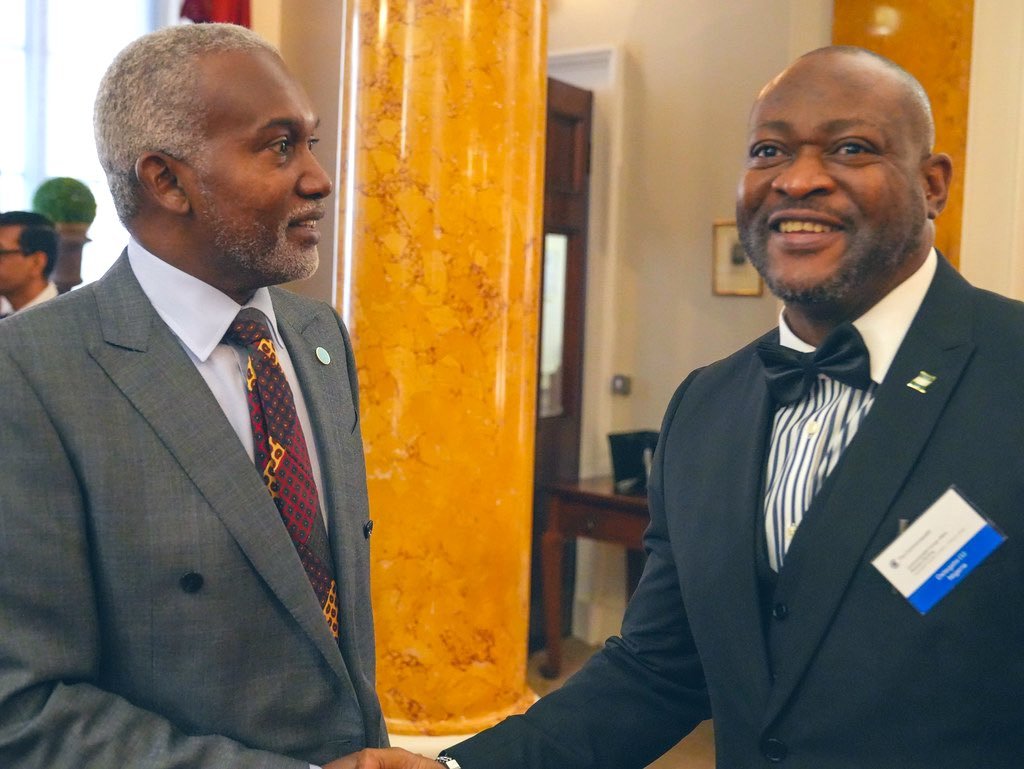
Nigeria’s Minister of Foreign Affairs, Yusuf Maitama Tuggar, has joined fellow foreign ministers from across the Commonwealth of Nations at the 26th Commonwealth Foreign Affairs Ministers Meeting held at Lancaster House.
The meeting focused on reviewing pressing global challenges and strengthening coordination among member states ahead of the upcoming Commonwealth Heads of Government Meeting (CHOGM).
This was confirmed in a statement issued by the spokesperson of the Ministry of Foreign Affairs Nigeria, Kimiebi Imomotimi Ebienfa.
According to the statement, ministers used the platform to discuss strategies for promoting peace, strengthening economic resilience, and advancing democratic governance across Commonwealth member countries.
The meeting also helped align positions and priorities in preparation for CHOGM, the Commonwealth’s highest consultative gathering.
The Commonwealth Heads of Government Meeting is a biennial summit that brings together leaders from the 56 member countries of the Commonwealth to deliberate on global and regional issues, agree on collective policies, and strengthen cooperation among member states on development, security, trade, and governance.
Nigeria reiterated its commitment to active multilateral engagement and continued collaboration with other Commonwealth countries to promote shared growth and stability within the bloc.
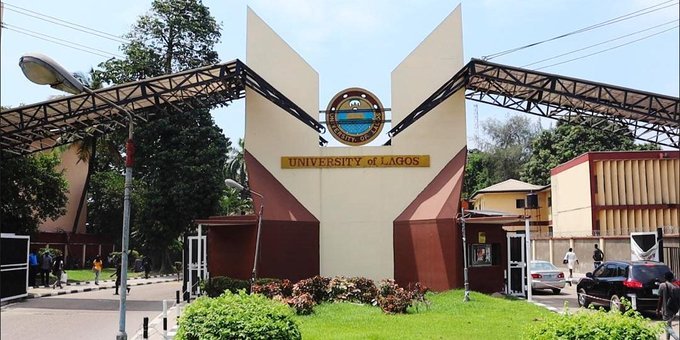
Lecturers at the Academic Staff Union of Universities (ASUU), University of Lagos (UNILAG) chapter, have commenced an indefinite strike over what they described as “amputated” salaries paid to members for January and February 2026.
The decision followed an emergency congress of the union held on Tuesday, where members resolved to withdraw their services until the university management pays the outstanding balance of their salaries in full.
In a communiqué jointly signed by the branch Chairperson, Idou Kehinde, and Secretary, Adesina Arikawe, the union said the industrial action takes effect from Wednesday, March 11, 2026.
ASUU said the strike became necessary after what it described as “extensive and exhaustive deliberations” on the salary deductions implemented by the university administration over the past two months.
According to the union, lecturers across the institution received incomplete salaries in January, with members on the Akoka campus allegedly not paid Earned Academic Allowance (EAA), while those at the Idi-Araba campus were reportedly denied both EAA and the Clinical Academic Training Allowance (CATA).
The union further accused the university management of repeating the same action in February, describing the development as unfair and unacceptable.
“The university discriminately paid amputated salary in January 2026 to all members. At Akoka campus there was no EAA payment, while at Idi-Araba campus there was neither EAA nor CATA payment,” the communiqué stated.
ASUU condemned the deductions, describing them as a violation of acceptable labour practices and an indication of insensitivity by the university administration.
The union also referenced an earlier resolution of its National Executive Council, stating that members would withdraw their services whenever salaries were not paid in full.
ASUU therefore directed its members to stay away from academic activities beginning March 11 until the university authorities settle all outstanding salary payments for January and February.
The strike is expected to disrupt academic activities at the university if the dispute between the union and the management is not resolved quickly.
Energy
NNPC Secures Presidential Approval for $20bn Final Investment Decision on Bonga Deepwater Project
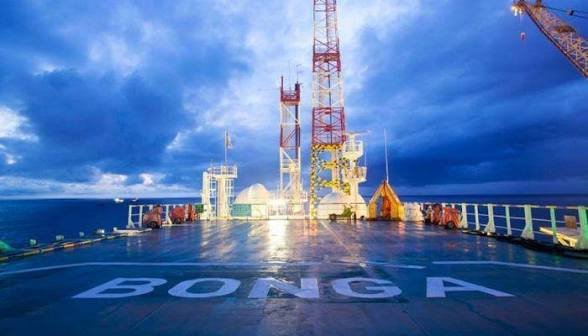
Nigeria’s state oil company, Nigerian National Petroleum Company Limited (NNPC Ltd), has secured presidential approval for a targeted fiscal incentive aimed at unlocking the long-awaited Final Investment Decision (FID) on the Bonga Southwest Aparo Project, a major deepwater oil development project.
The approval was granted by President Bola Ahmed Tinubu, in a move expected to boost investor confidence and accelerate Nigeria’s efforts to attract strategic investments into its oil and gas sector.
According to NNPC Ltd, the Bonga Southwest Aparo project is projected to attract about $20 billion in Foreign Direct Investment (FDI) and is expected to usher Nigeria into a new phase of deepwater oil production.
The project forms part of Nigeria’s broader strategy to expand offshore exploration and production while strengthening the country’s position as a leading energy producer in Africa.
NNPC stated that the fiscal incentive approved by the President is designed to make the project commercially viable and encourage partners to proceed with the final investment decision after years of delays.
Industry analysts say the development could significantly increase Nigeria’s crude oil output and generate additional revenue for the country if successfully implemented.
Further details of the announcement are available on the official website of Nigerian National Petroleum Company Limited.