
Finance
UBA INDUCTS 1,138 GRADUATES INTO ITS GLOBAL WORKFORCE, REITERATES COMMITMENT TO YOUTH EMPOWERMENT AND DEVELOPMENT

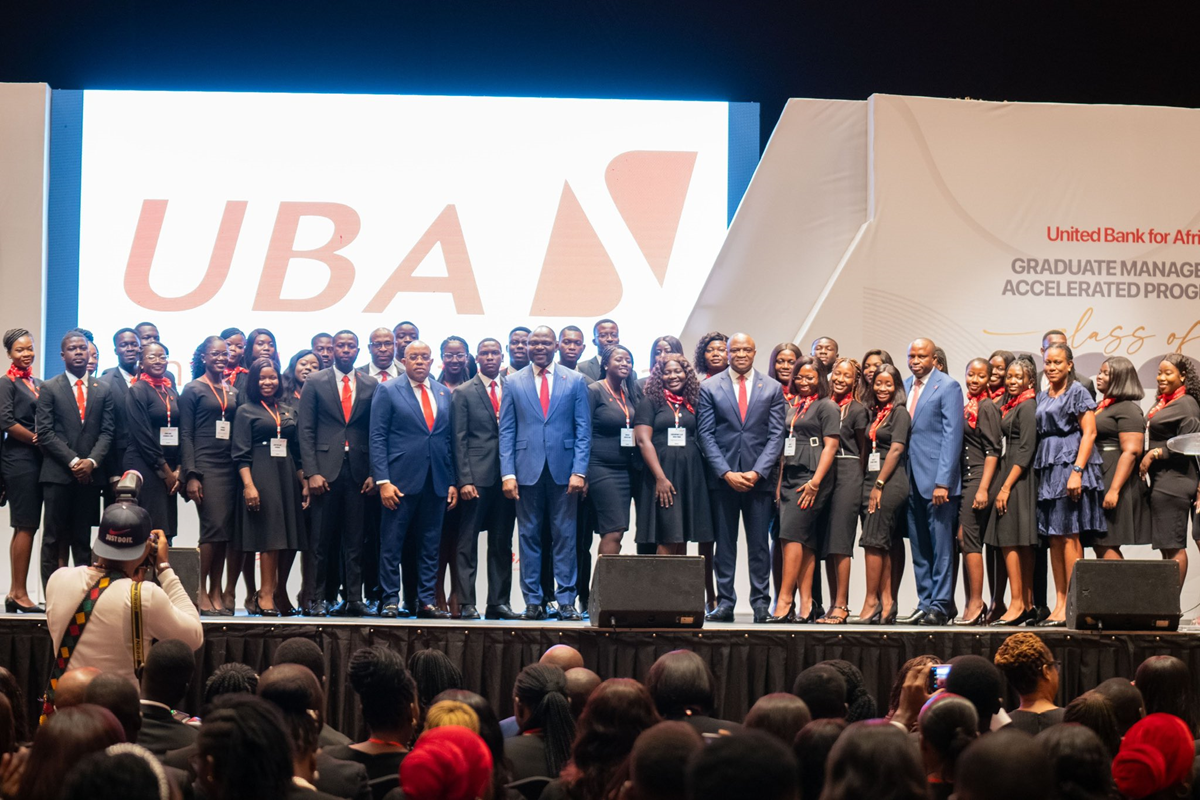
United Bank for Africa (UBA) Plc, Africa’s Global Bank, has continued to make significant impacts in developing the next generation of banking and finance professionals across Africa through its Graduate Management Acceleration Programme (GMAP). Since its inception three years ago, the GMAP has produced over 3,222 young professionals, providing them with the necessary skills, knowledge, mentorship, training, and hands-on experience for leadership roles in UBA.

On Wednesday, a ceremony was held at the Landmark Event Centre to induct another cohort of 1,138 successful graduates who were absorbed by the bank following intensive training. The event was graced by the UBA Group Chairman, Tony Elumelu, the Group Managing Director/CEO, Oliver Alawuba, and other Board Members, Executive Management, faculty members, mentors, families, and friends of the graduates.

Elumelu expressed his excitement over the new graduates, highlighting the bank’s passion for youth empowerment in Africa while bridging the unemployment gap. “At UBA, we believe that Africa’s transformation is in the hands of young, dynamic, and ambitious professionals such as you. Through GMAP, we are not only shaping future leaders but also reinforcing our commitment to excellence and impact,” he said.

He advised the graduands, “Remember that success is built on hard work, resilience, and a commitment to continuous learning. The world is waiting for you to make your mark.”

Speaking earlier at the event, UBA’s Group Managing Director/CEO, Oliver Alawuba, expressed immense pride in the graduands and reiterated the bank’s unwavering commitment to human capital development. “This moment marks the beginning of a transformational journey that will shape your careers, your contributions to society, and Africa at large,” Alawuba stated.
He pointed out UBA’s commitment to gender diversity and inclusion, highlighting that of the fresh 1,138 graduands, 666 (representing 58%) are women, a reflection of the bank’s dedication to fostering an equitable and inclusive workplace.
Alawuba charged the graduands to uphold UBA’s core values of Excellence, Enterprise, and Execution, while embracing the bank’s Persona of Simplicity, Responsiveness, and Goal-oriented (SRG).
The ceremony featured inspiring testimonies from GMAP alumni who have made significant strides within the bank.

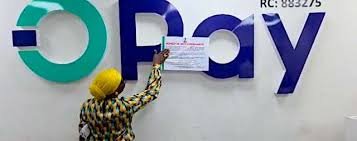
Nigeria’s tax authority, the Federal Inland Revenue Service (FIRS), has reportedly shut down the Lagos and Abuja offices of fintech company OPay over alleged breaches of provisions in the Nigeria Tax Act 2025, particularly concerning Value Added Tax (VAT) and Companies Income Tax (CIT) obligations.
According to reports, officials from the tax agency visited OPay’s offices in both Lagos and Abuja and sealed the premises, placing official notices at the locations. The notices reportedly warned that the seals must not be tampered with or removed without the approval of the Executive Chairman of the FIRS, suggesting an ongoing compliance issue between the fintech firm and Nigerian tax regulators.

OPay, a Chinese-backed digital payments company that launched operations in Nigeria in 2018, has rapidly expanded to become one of the most widely used mobile payment platforms in the country. The enforcement action has, however, sparked renewed debate about how foreign-owned technology companies operate within Nigeria’s fast-growing digital economy.
Commenting on the situation, public policy analyst Emmanuel Adeniyi, Executive Director of the Coalition for Indigenous Digital Advancement, said such regulatory disputes are not unusual when foreign technology firms expand quickly into emerging markets. He noted that companies often grow aggressively in new markets but tend to push back when regulators begin scrutinizing their financial flows and compliance structures.
The development comes amid increasing global scrutiny of international technology firms. For example, concerns over data security and ownership prompted regulatory pressure on TikTok during the administration of former U.S. President Donald Trump.
In Nigeria, authorities are also intensifying oversight of how foreign digital platforms handle financial transactions and user data within the country’s financial ecosystem.
As regulatory reviews continue, industry stakeholders and millions of users are closely monitoring the situation to see how the dispute will be resolved and what implications it could have for Nigeria’s digital payments sector.
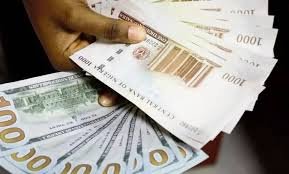
The Nigerian foreign exchange market opened on Wednesday, March 11, 2026, with the naira trading within a narrow range across official and parallel markets. Market analysts say the gap between the official window and the parallel market remains relatively small. However, exchange rates continue to fluctuate based on demand, supply, and liquidity in the forex market.
In the official market, the US dollar is quoted at between ₦1,390 and ₦1,405, while the parallel market sees the dollar trading at ₦1,405 to ₦1,415. The mid-market indicative rate for the dollar stands at ₦1,400. The euro is exchanging at ₦1,520 to ₦1,540 in the official window and between ₦1,630 and ₦1,660 on the parallel market, with a mid-market rate of ₦1,640. The British pound trades at ₦1,800 to ₦1,830 officially and at ₦1,920 to ₦1,950 on the black market, while the mid-market rate is ₦1,935.
The Chinese yuan is quoted at ₦190 to ₦195 in the official market and between ₦200 and ₦205 on the parallel market, with a mid-market rate of ₦202. The Japanese yen exchanges at ₦9.5 to ₦9.9 officially and at ₦10.2 to ₦10.6 on the parallel market, while the mid-market rate stands at ₦10.4. The Canadian dollar trades at ₦1,010 to ₦1,040 in the official window and between ₦1,090 and ₦1,120 on the parallel market, with a mid-market rate of ₦1,105.
The Swiss franc is exchanging at ₦1,560 to ₦1,590 officially and between ₦1,650 and ₦1,680 on the parallel market, while the mid-market rate is ₦1,670. The Saudi riyal trades at ₦370 to ₦375 in the official market and between ₦385 and ₦395 on the parallel market, with a mid-market rate of ₦390. The UAE dirham is quoted at ₦375 to ₦380 officially and between ₦390 and ₦400 on the black market, while the mid-market rate stands at ₦395.
The official rate represents transactions within the Nigerian Foreign Exchange Market regulated by the Central Bank of Nigeria. Meanwhile, the parallel market rate reflects prices quoted by Bureau de Change operators across major cities such as Lagos, Abuja, and Kano. The mid-market rate is the global benchmark rate used by international currency platforms. It does not include transaction charges or local dealer margins.
Exchange rates can change several times during the day. Therefore, traders and travelers should always confirm the current rate before carrying out foreign exchange transactions.
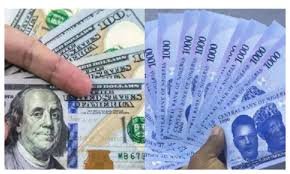
The naira ended the second week in a significant depreciation against the dollar in official and parallel foreign exchange markets.
On Friday, the Central Bank of Nigeria’s data showed that the Naira further slipped to N1,393.26 per dollar, down from N1,387.45. This means that on a day-to-day and week-on-week basis, the Naira dropped by N5.81 and N29.87, respectively, against the dollar. Meanwhile, in the last two weeks, the naira has slumped by N46.94 to the dollar at the official market.
Similarly, at the black market, the Naira dipped by N45 to N1,415 on Friday, down from around N1,370 per dollar on February 23, 2026, according to multiple Bureau de Change operators in Wuse Zone 4, Abuja.
The local currency decline across foreign markets comes after the apex bank mopped up dollars from the market by way of intervention, a move that was confirmed by President Bola Ahmed Tinubu in a recent remark.