
World News
US SUBMARINE SINKS IRANIAN WARSHIP OFF SRI LANKA, KILLING 87 SAILORS

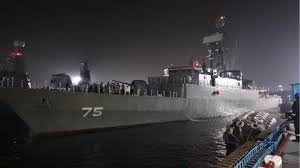
A US submarine sank an Iranian warship off the coast of Sri Lanka on Wednesday, killing at least 87 sailors and leaving dozens missing, officials said. The sinking came as the war sparked by a joint US-Israel attack on Iran continued to spread across the Middle East.
An American submarine sunk an Iranian warship that thought it was safe in international waters. Instead, it was sunk by a torpedo, US Defense Secretary Pete Hegseth told reporters in Washington. He called the attack quiet death and the first US sinking of an enemy ship by a torpedo since World War II. Like in that war, Hegseth said, we are fighting to win.
The Sri Lankan navy recovered the bodies of 87 sailors from waters near the southern city of Galle, but 61 remained missing, police and defence officials said. A search is still on for the others, a navy official told AFP on condition of anonymity.
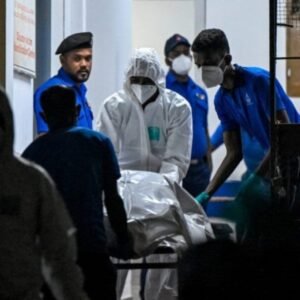
Earlier, Foreign Minister Vijitha Herath said Sri Lankan forces had rescued 32 sailors, many wounded, from the stricken Iranian frigate IRIS Dena. The rescued sailors are being treated in Galle, where an AFP photographer saw the first batch of over two dozen bodies being transported into a hospital on Wednesday evening.
The vessel issued a distress call at dawn but had completely sunk by the time a rescue ship reached the area within an hour, leaving only an oil patch on the surface, said Sri Lankan navy spokesman Buddhika Sampath. The warship was travelling after reportedly attending a military exercise in India’s eastern port of Visakhapatnam. The attack was just 40 kilometres south of Galle, the local navy said.
Iran has not yet commented on the sinking. Tehran’s ambassador in Colombo, Alireza Delkhosh, was not immediately available for comment.
Sampath said Sri Lanka’s response to the distress call was in line with its maritime obligations. This is within our search and rescue area in the Indian Ocean, Sampath told AFP.
Sri Lanka has remained neutral and has repeatedly urged dialogue to resolve the conflict in the Middle East. Just over a million Sri Lankans are employed in the region, and they are a key source of foreign exchange for the country, emerging from its worst-ever economic meltdown in 2022.
Both Sri Lanka’s navy and the air force said they were not releasing footage of the rescue because it involved the military of another state. Police stepped up security outside the Galle hospital as the wounded Iranians were brought there.








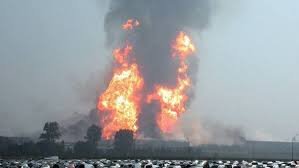
Authorities in Belgium have condemned an early-morning explosion outside a synagogue in the city of Liège as a serious act of anti-Semitism.
The blast occurred shortly before 4 a.m. on Monday outside the synagogue in Liège. No injuries were reported, though windows in buildings opposite the synagogue were damaged.
Police closed the street and established a security perimeter while the investigation continues.
Liège Mayor Willy Demeyer strongly condemned the incident, describing it as an extremely violent act of anti-Semitism. The mayor and the city council express their total condemnation of this extremely violent act of anti-Semitism, which is contrary to the Liège tradition of respect for others, Demeyer said, according to the Belga news agency.
He also warned against bringing international conflicts into the city, referring to the ongoing war involving Israel, the U.S. and Iran.
Yves Oschinsky, president of the Committee of Jewish Organizations in Belgium, described the blast as an extremely disturbing, serious and worrying anti-Semitic act.

Asian stock markets dropped Monday as oil prices soared 30 per cent on fears about supplies from the Middle East, as the US-Israeli war against Iran continued into a second week with no sign of letting up.
Investors, already spooked by concerns over extended tech valuations and the huge spending on AI, ran for the hills as crude rocketed to its highest level since the Russian invasion of Ukraine in 2022.
Fears grew that the Middle East conflict could last for some time after US President Donald Trump said only the unconditional surrender of Iran would end the war. He added at the weekend that the spike in prices was a small price to pay to eliminate Irans nuclear threat, reiterating the White Houses insistence that the rise is temporary.
Both main contracts, which had surged more than a quarter last week, spiked as Iran carried out retaliatory strikes against crude-producing Gulf nations. West Texas Intermediate, the main US oil benchmark, jumped as much as 30 per cent to hit a high of $118.88 per barrel, while Brent spiked 28 percent to as much as $118.73.
Since the beginning of the war, WTI is up more than 75 per cent and Brent more than 60 per cent.
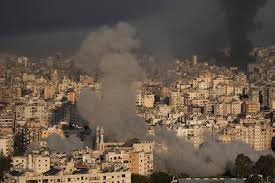
Attacks on oilfields were reported in southern Iraq and in the northern autonomous Kurdistan region, which forced a US-run oilfield to cease production, while the United Arab Emirates and Kuwait have started reducing output. That came with maritime traffic in the Strait of Hormuz through which a fifth of global crude and gas passes halted since the war began on February 28.
The prospect of high energy prices for a sustained period has fanned fears of a fresh spike in inflation that could hit the global economy while preventing central banks from cutting interest rates to support growth.
With the prospect of the global economy taking a blow from the crisis, equity markets extended last weeks losses. Seoul, which had been the best performer this year thanks to a tech rally, tumbled more than eight percent at one point, while Tokyo shed seven percent and Taipei fell more than five percent. Hong Kong, Shanghai, Sydney, Singapore, Manila, and Wellington were also sharply lower.
Futures for all three main indexes on Wall Street were down more than two percent, while the dollar jumped against its peers as traders sought out its safe-haven status.
The deeper shock is spreading across the production chain, said SPI Asset Managements Stephen Innes. Gulf producers are scaling back output because storage hubs are filling up and export flows are seizing. Qatar has halted liquefaction at key gas facilities, a move that will take weeks to reverse even if the conflict cools tomorrow. In other words, the market is not dealing with a headline shock. It deals with a physical disruption of oil molecules. Oil above $100 is not just a commodity rally. It becomes a tax on the global economy.
However, Trump sought to offer reassurance that the spike in crude would not last long. Short term oil prices, which will drop rapidly when the destruction of the Iran nuclear threat is over, is a very small price to pay for U.S.A. and World, Safety and Peace, he wrote on social media Sunday evening Washington time.
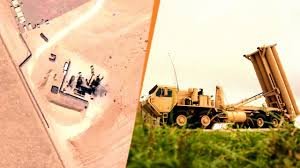
Iran has destroyed a key 300 million dollar radar system crucial to directing US missile defence batteries in the Gulf, a move that risks further straining the region’s ability to counter future attacks, according to a US official. The AN/TPY-2 radar and support equipment used by US THAAD missile defence systems was destroyed at Muwaffaq Salti Air Base in Jordan in the opening days of the war, CNN reported earlier, citing commercial satellite imagery. The destruction of the equipment was later confirmed by a US official.
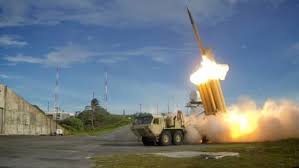
The US has eight THAAD systems globally, including in South Korea and Guam. The batteries cost about one billion dollars each, with the radar comprising about 300 million dollars of that, according to the Center for Strategic and International Studies. These are scarce strategic resources and its loss is a huge blow, said Tom Karako, a missile defence expert with the Centre for Strategic and International Studies. The army’s current eight-battery force is still below the force structure requirements of nine set back in 2012, so there aren’t exactly any spare TPY-2 lying around, he said.
Data gathered by the Foundation for Defense of Democracies think tank show two reported Iranian strikes in Jordan: one on February 28 and one on March 3. Both were reported to have been intercepted. Air and missile defence systems in the Gulf region have been stressed and, at times, overwhelmed by Iranian retaliatory attacks of drones and ballistic missiles. It has prompted fears that stockpiles of advanced interceptors such as THAAD and PAC-3 will soon run dangerously low.