International
U.S., Iran Resume Geneva Talks Amid Military Buildup and Strike Threats

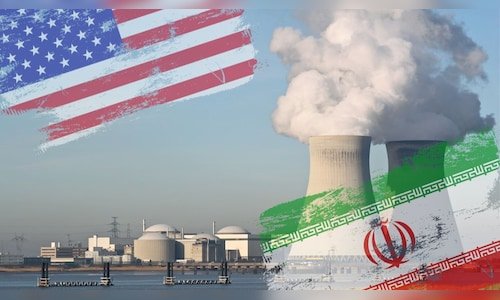
The United States and Iran are set to hold a new round of indirect negotiations in Geneva on Thursday, as both sides attempt to resolve their long-running nuclear dispute and prevent further U.S. military action following a significant American troop buildup in the Middle East.
The latest engagement comes after renewed diplomatic efforts earlier this month aimed at breaking decades of deadlock over Tehran’s nuclear programme. Washington, several Western governments, and Israel argue that Iran’s enrichment activities are geared toward developing nuclear weapons; a claim Tehran firmly rejects, insisting its programme is strictly for civilian purposes.
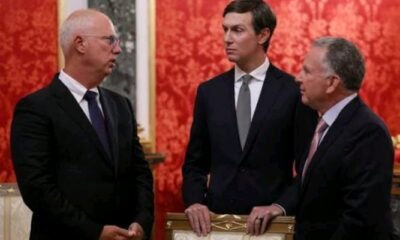
According to a U.S. official who spoke to Reuters, U.S. Special Envoy Steve Witkoff will be present at the talks alongside Jared Kushner, son-in-law of U.S. President Donald Trump. Iran will be represented by Foreign Minister Abbas Araqchi. As with previous discussions, the negotiations will be facilitated by Omani Foreign Minister Badr Albusaidi, who mediated last week’s talks in Geneva.
Earlier this week, President Trump signalled that while diplomacy remains his preferred route, military action remains on the table if Iran moves closer to acquiring a nuclear weapon. In his State of the Union address on Tuesday, he stressed that Washington would not permit Tehran to obtain such capability. The U.S. has deployed fighter aircraft, aircraft carrier strike groups, destroyers, and cruisers to the region in what analysts describe as its largest military presence there since the 2003 invasion of Iraq.
Though the immediate focus of the talks is Iran’s nuclear programme, U.S. Secretary of State Marco Rubio underscored Washington’s concerns about Iran’s ballistic missile development. Speaking to reporters in Saint Kitts on Wednesday, Rubio described Tehran’s unwillingness to discuss its missile programme as a “major problem,” adding that progress on nuclear issues would likely be
necessary before missile negotiations could advance. He characterised the missiles as weapons designed to target the United States and destabilise the region.
On Wednesday evening, Araqchi met with Albusaidi to finalise proposals Iran intended to present at the negotiations, according to a statement shared by Oman’s foreign ministry on X. Albusaidi is expected to meet with the American delegation on Thursday morning to relay Tehran’s positions and receive Washington’s response.
Tensions remain high. The United States joined Israel in striking Iranian nuclear facilities in June last year, and Tehran has warned of severe retaliation should it face another attack. Trump has also issued a deadline, saying on February 19 that Iran had 10 to 15 days to reach an agreement or face unspecified but serious consequences.
Global oil markets are closely monitoring developments. Prices edged upward on Thursday amid concerns that a military confrontation could disrupt energy supplies, although gains were limited by a rise in the U.S. crude inventories. Meanwhile, Saudi Arabia is reportedly increasing oil production and exports as a precautionary measure in case renewed hostilities affect regional supply chains.
Iran has signalled willingness to compromise. Araqchi said this week that Tehran seeks a fair and swift agreement but will not relinquish what it describes as its legitimate right to peaceful nuclear technology. Washington, however, maintains that uranium enrichment inside Iran presents a pathway to weaponisation.
“A deal is within reach, but only if diplomacy is given priority,” Araqchi wrote on X.
Reuters reported that Tehran is prepared to offer new concessions in exchange for sanctions relief and international recognition of its right to enrich uranium. However, significant disagreements remain, particularly over the scale and timing of lifting crippling U.S. sanctions, according to a senior Iranian official.
Domestically, Iran’s leadership faces mounting pressure. Supreme Leader Ayatollah Ali Khamenei is confronting what observers describe as the most severe crisis of his 36-year rule. The country’s economy is strained under intensified sanctions, and recent protests following violent unrest and a crackdown in January have further destabilised the political climate.
Iranian President Masoud Pezeshkian reiterated on Thursday that Khamenei has issued a religious decree banning weapons of mass destruction, asserting that the ruling clearly prohibits the development of nuclear arms. Iranian authorities maintain that their nuclear activities remain within the framework of the Nuclear Non-Proliferation Treaty (NPT), which permits civilian nuclear programmes in exchange for renouncing nuclear weapons and cooperating with the International Atomic Energy Agency (IAEA).
IAEA Director-General Rafael Grossi is also expected to be in Geneva during the talks for additional consultations, as he was during last week’s discussions.
Meanwhile, Israel; which has not signed the NPT, is widely believed by regional governments to possess nuclear weapons, though it has never publicly confirmed or denied such capabilities.