World News
Iran says ‘Ball in US Court’ After Receiving American Response on Fresh Talk Offer, Insists Strait of Hormuz Remains Closed

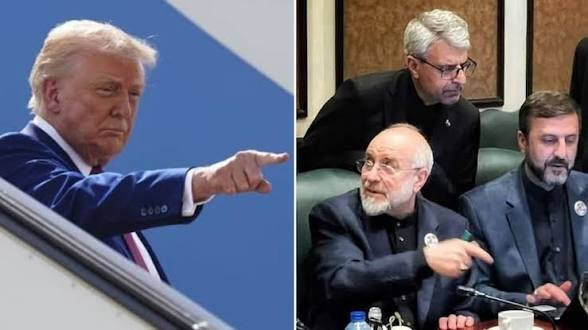
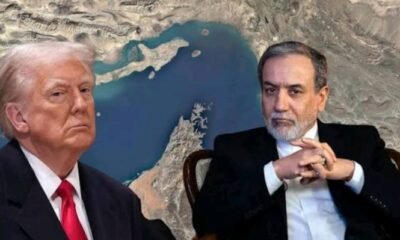
Iran has confirmed receiving the United States’ response to Tehran’s latest offer for talks, with a senior Iranian official declaring that the ball is now in Washington’s court while insisting that the strategic Strait of Hormuz will remain closed until American forces withdraw from the region. Deputy Foreign Minister for Legal and International Affairs Kazem Gharibabadi said Tehran delivered its latest proposals via Pakistani mediators over the weekend, and that it is now up to the United States to choose between diplomacy or a continuation of confrontational approaches. Gharibabadi told a gathering of foreign ambassadors in Tehran that Iran believes resolution lies in diplomacy based on national interests, but that the country is prepared for both paths as it seeks to safeguard its national security.
The Iranian response comes after the United States officially replied to Tehran’s 14-point counterproposal, which was submitted in response to Washington’s earlier nine-point plan. According to reports from Iranian media, Tehran’s proposal demands a permanent end to hostilities rather than a temporary ceasefire, with Iran insisting that key issues must be resolved within 30 days instead of the two-month ceasefire requested by the United States. The Iranian proposal also calls for the withdrawal of all US military forces from areas surrounding Iran, the lifting of Washington’s naval blockade, the release of frozen Iranian assets, the payment of compensation, the easing of sanctions, and an end to the US-Israeli war on all fronts including in Lebanon.
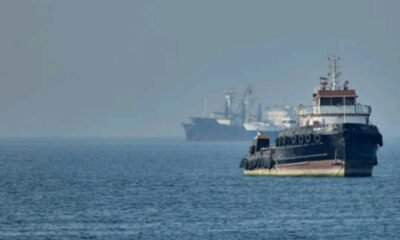
On the critical issue of the Strait of Hormuz, Iranian officials made clear that the waterway will remain effectively closed under current conditions. Iran has been blocking nearly all shipping from the Gulf apart from its own for more than two months, and Tehran has linked any reopening of the strait to American concessions. A senior Iranian official said Tehran’s latest proposal offers to open the strait and restore maritime traffic in exchange for an end to the war, a guarantee of non-aggression from the United States and Israel, and the lifting of the American blockade. However, the official confirmed that under the proposed framework, negotiations over Iran’s nuclear programme would be deferred to a later stage, with Tehran demanding Washington recognise its right to enrich uranium for peaceful purposes even if it agrees to a suspension.


United States President Donald Trump has indicated he is inclined to reject Iran’s latest diplomatic overture. Speaking to reporters in Florida, Trump said he was reviewing Iran’s proposal but could not imagine it would be acceptable, adding that Iran has not yet paid a big enough price for its actions over the last 47 years. Trump also said there is a possibility that strikes against Iran could restart, telling reporters that if Iran misbehaves or does something bad, there is a possibility it could happen. When asked about his options, Trump said, “Do we want to go and just blast the hell out of them and finish them forever? Or do we want to try and make a deal?”
The US has also escalated economic pressure on Tehran in response to the continued closure of the strait. The US Office of Foreign Assets Control issued a warning on May 1, cautioning shipping companies that they could face sanctions for making payments to Iran to safely pass through the Strait of Hormuz. The US notice warned that payment demands could include transfers not only in cash but also digital assets, offsets, informal swaps, or other in-kind payments such as charitable donations and payments at Iranian embassies. The United States responded to Iran’s closure of the strait with a naval blockade of Iranian ports on April 13, preventing Iranian tankers from leaving and depriving Tehran of oil revenue. US Central Command has said 48 commercial ships have been told to turn around since the blockade began.
Diplomatic efforts have shown little progress. A planned second round of peace talks in Islamabad between Washington and Tehran was cancelled after the Iranian delegation, led by Foreign Minister Abbas Araghchi, left the Pakistani capital following a day of high-level meetings. Trump subsequently cancelled the scheduled visit of the US delegation led by Special Envoy Steve Witkoff and Senior Adviser Jared Kushner. Officials said Tehran delivered an official list of demands to Pakistani leaders for the United States and Israel in order to achieve a complete resolution to the conflict.
Meanwhile, the closure of the Strait of Hormuz continues to disrupt global energy markets. The waterway typically carries roughly one-fifth of global oil and gas flows, and the sustained disruption has pushed Brent crude above $126 a barrel at one stage. United Nations Secretary-General Antonio Guterres has warned that prolonged disruption could slow global growth, push inflation higher, and drive millions into poverty and food insecurity. Despite a ceasefire declared on April 8, the strait remains largely closed, and neither side has shown willingness to make the first move toward reopening the vital waterway.